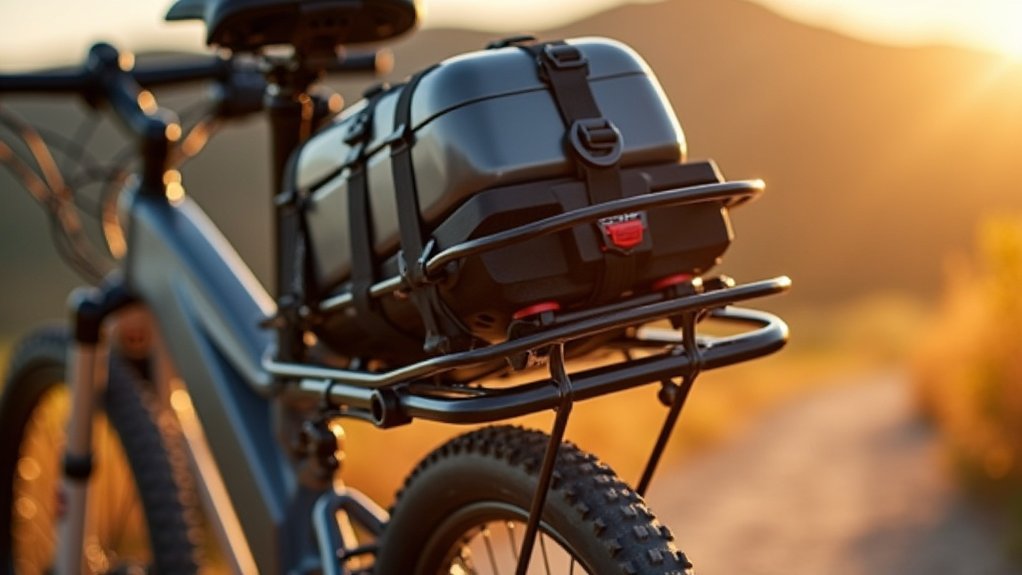
To stabilize a rear e-bike rack under load, guarantee proper weight distribution by keeping heavier components close to the hitch. Secure the bike using industrial-grade straps and consider adding wheel chocks or Velcro straps for added support. Regularly inspect attachment points and utilize stabilization devices like anti-rattle pins to eliminate play. Always verify that the total load adheres to the rack’s weight limit. Mastering these techniques will help you transport safely and securely, while enhancing your travel experience.
Key Takeaways
- Ensure proper tongue weight by maintaining it around 10% of the vehicle’s total weight for optimal stability during transit.
- Use anti-rattle devices to eliminate play in the hitch connection, enhancing overall stability of the bike rack.
- Distribute the load evenly across the rack, placing heavier components like batteries close to the hitch to minimize leverage.
- Secure bikes with industrial-grade straps and use wheel chocks or Velcro straps to stabilize the front wheel during transport.
- Regularly inspect stabilization devices and rack components for wear and effectiveness to ensure safe loading and travel.
Understanding the Importance of Stabilization
When you’re transporting your e-bike, understanding the importance of stabilization is essential to guarantee both safety and performance.
Effective rack stabilization minimizes excessive movement, safeguarding both your bike and vehicle during transit. Properly managing tongue weight, ideally around 10% of your vehicle’s total weight, is critical for maintaining balance and preventing overloading the hitch.
Utilizing anti-rattle devices can eliminate play in the hitch connection, enhancing stability under load. Regular inspections of hitch components and securing mechanisms are imperative to confirm they withstand the dynamic forces experienced while driving, thereby reducing the risk of accidents caused by swaying or bouncing racks.
Selecting the Right Bike Rack for E-Bikes
Selecting the right bike rack for e-bikes is essential for guaranteeing safe and efficient transport. Opt for hitch racks, as they offer superior stability for the added weight of e-bikes, which can exceed 40 lbs.
Choose a rack with a weight capacity that accommodates your bike and any gear. Look for features like anti-rattle systems or stabilization straps to minimize movement during transit.
Additionally, consider racks with built-in ramps for easier loading. Confirm the rack supports your e-bike’s wheelbase and frame geometry to prevent tipping or swaying, maintaining safety and stability on the road.
Preparing Your E-Bike for Transport
To guarantee your e-bike is ready for safe transport, it’s crucial to conduct a thorough pre-travel inspection and make necessary adjustments.
Start by weighing your e-bike with a digital scale to confirm it fits within the limits of your hitch-mounted bike rack. Check the brake system, gear alignment, and tire pressure for ideal performance.
Remove the battery to reduce weight and prevent damage during transit. Stabilize the front wheel with wheel chocks or Velcro straps, and align the handlebars with the vehicle width before securing the bike. This ensures a snug fit and minimizes swaying while you drive.
Techniques for Proper Loading
Loading your e-bike onto a rear rack requires careful attention to weight distribution and secure attachment to verify safe transport. Start by lifting the front wheel first, placing it securely in the tray. Use industrial-grade straps to tighten all attachment points, minimizing movement. Incorporate wheel chocks or Velcro straps for added stability. Always ascertain the rack connections are secure and the bike doesn’t obstruct lights or license plates. Finally, perform a test shake of the rack to confirm stability.
| Step | Action | Notes |
|---|---|---|
| 1 | Lift front wheel | Distribute weight evenly |
| 2 | Secure with straps | Tighten all attachment points |
| 3 | Use chocks or Velcro | Stabilize front wheel |
| 4 | Check rack connections | Ensure tightness |
| 5 | Test shake | Confirm stability |
Utilizing Stabilization Straps and Devices
While securing your e-bike for transport, utilizing stabilization straps and devices is essential for maintaining stability and safety on the road.
Stabilization straps effectively anchor the bike rack to your vehicle frame, minimizing bouncing and swaying under load. Pairing these straps with anti-rattle devices eliminates any play between the hitch and rack connection, enhancing overall stability.
Verify that straps are anchored to solid points to avoid stress on vulnerable areas, like hybrid trailer frames. Regularly inspect your straps for wear and tear, as damaged straps can compromise stability.
Opt for nylon straps that stretch to absorb shock loads during travel.
Conducting Safety Inspections Before Travel
Before you hit the road, conduct a thorough visual inspection of the bike rack, ensuring all components, including bolts and straps, are securely fastened.
Verify the hitch connection for any signs of wear or looseness, as these factors can greatly affect stability.
Finally, confirm that the total weight of the e-bike and any additional gear stays within the rack’s specified weight capacity for safe handling.
Visual Inspection Checklist
Conducting a visual inspection checklist is essential for ensuring the safety and stability of your rear e-bike rack before any travel.
Start by examining all hitch components—drawbars, balls, and securing pins—for rust, corrosion, or deformation. Check straps and connections for wear, replacing any frayed parts immediately.
Confirm the bike rack is tightly fastened to the hitch, with all bolts torqued to the manufacturer’s specifications to maintain stability under load. Inspect the attachment points on the rack for tightness, ensuring the bike is snugly held.
Finally, test for play or noise while parked, identifying loose components needing adjustment.
Secure Connections Verification
Ensuring secure connections is essential for the safety and stability of your rear e-bike rack during travel. Conduct secure connections verification by inspecting all fasteners and securing mechanisms; tighten any loose components to prevent instability.
Examine hitch mounting points for rust or corrosion, as these can compromise structural integrity under load. Check that all straps and tie-downs are in good condition and properly anchored, avoiding the risk of failure.
Before driving off, test the rack’s stability by shaking it lightly, ensuring no excessive movement. Maintain awareness of weight distribution to stay within the recommended tongue weight for a heavy-duty setup.
Addressing Common Challenges During Transport
When transporting your e-bike, guarantee you install the rack correctly to prevent instability.
Utilizing anti-rattle devices will minimize movement, and paying attention to weight distribution will enhance overall stability.
Proper Rack Installation Techniques
To achieve a stable and secure installation of your rear e-bike rack, it’s crucial to focus on the attachment to the hitch, as loose connections can compromise safety during transport.
Follow these proper rack installation techniques to guarantee stability:
- Securely attach the bike rack to the hitch, adhering to the proper torque specifications.
- Regularly inspect bolts and securing pins for wear and tightness.
- Distribute the weight evenly across the rack, staying within the hitch’s tongue weight limit.
- Consider additional support mechanisms, like wheel chocks or Velcro straps, to prevent shifting.
Anti-Rattle Devices Usage
While transporting your e-bike, incorporating anti-rattle devices is crucial for maintaining stability and preventing any unwanted movement of the bike rack.
These devices, often a pin or bolt, secure the rack to the hitch receiver, effectively eliminating wobble caused by road vibrations. Users frequently find that solutions like locking pins or stabilization straps enhance performance, especially with heavier e-bikes.
Verify proper installation by tightening these devices to the manufacturer’s specifications for peak effectiveness.
Regularly inspect your anti-rattle devices for wear and tear to prevent equipment failure, thereby enhancing your overall transport safety.
Weight Distribution Considerations
Anti-rattle devices play a significant role in keeping your e-bike rack stable, but weight distribution is equally important for safe transport.
To guarantee proper weight distribution and enhance stability, consider the following guidelines:
- Keep the combined weight within the hitch’s specified tongue weight limit (around 10% of the vehicle’s total weight).
- Position heavier components, like batteries, close to the hitch to minimize leverage.
- Distribute the load evenly across the rack to prevent tipping.
- Use stabilization devices, such as anti-rattle pins, to secure the rack and mitigate movement from dynamic forces during driving.
Regularly inspect these aspects for maximum safety.