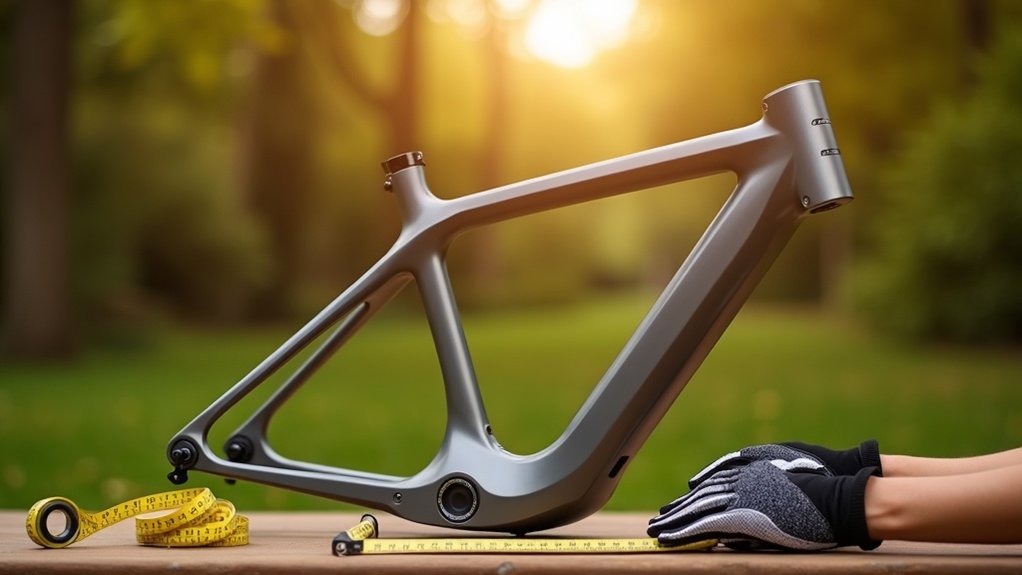
To size an e-bike frame, start by measuring your inseam and height. Aim for at least one inch of standover height above the top tube for stability. For a more exact fit, multiply your inseam measurement by 0.68 to determine frame size in centimeters. Consider adjusting seat height for ideal leg extension, ensuring a slight bend in your knee at the bottom of the pedal stroke. There’s more to mastering e-bike sizing, including tips for comfort and proper handling.
Key Takeaways
- Measure your inseam accurately by standing against a wall and using a tape measure from your crotch to the floor.
- Multiply your inseam measurement by 0.68 to determine the ideal frame size in centimeters.
- Aim for at least one inch (2.5 cm) of standover height above the top tube for stability.
- Adjust the seat height to ensure a slight bend in your knee at the bottom of the pedal stroke.
- Test ride different frame sizes and check manufacturer-specific sizing charts for the best fit.
Understanding E-Bike Frame Sizes
When you’re choosing an e-bike, understanding frame sizes is essential for ensuring a comfortable ride.
E-bike frame sizes are measured in centimeters, indicating the distance from the saddle attachment to the bottom bracket. To find the right bike size, you’ll need to measure your height and inseam. Aim for about an inch of standover height when standing flat-footed over the top tube.
Since there’s no universal sizing standard, check individual manufacturer recommendations. Always test ride different sizes in-store; personal comfort and riding style can greatly influence your ideal frame size, ensuring you enjoy every ride.
Measuring Your Inseam
To accurately measure your inseam, stand against a wall with your feet approximately 20 cm apart.
Remove your shoes for the most accurate fit, then use a tape measure to check the distance from your crotch to the floor.
This inseam measurement is essential for determining the right frame size of your electric bike, as it guarantees comfortable leg extension during your pedal stroke.
Once you have your inseam, multiply it by 0.68 to estimate your ideal frame size in centimeters.
If you’re using a bike with suspension seat posts, remember to subtract 4 cm for a suitable fit.
Assessing Standover Height
After determining your inseam, it’s important to assess the standover height of the bike frame. This vertical distance from the ground to the top tube guarantees stability when mounting and dismounting. Aim for about one inch (2.5 cm) of clearance above the top tube for a proper fit.
Assessing standover height ensures stability and comfort; aim for about one inch of clearance for the best fit.
Consider these factors:
- A standover height that allows your feet to touch the ground indicates a potential fit issue.
- Insufficient clearance may signal the bike’s too small.
- Proper standover height enhances balance and control when starting or stopping.
Always prioritize safety and ease of use in your bike selection process.
Adjusting Seat Height
Adjusting the seat height is crucial for optimizing your riding experience, as it directly influences your comfort and efficiency. Use the heel-toe method: sit on the bike, place your heel on the pedal, and make sure your leg is fully extended without hip rocking. Aim for a slight bend in your knee at the bottom of the pedal stroke. An adjustable seat post with a quick release mechanism makes height changes easy. Online calculators using your inseam measurement can help refine your fit.
| Knee Position | Seat Too High | Seat Too Low |
|---|---|---|
| Extended Leg | Yes | No |
| Slight Bend | No | Yes |
| Hip Rocking | Yes | No |
Choosing the Right Type of E-Bike
Finding the right type of e-bike is fundamental to ensuring an enjoyable and efficient riding experience.
When choosing the ideal bike, consider your primary use and riding style, as this affects the eBike frame and frame sizes you need.
Here are three important factors:
- Purpose: Commuting, mountain biking, or leisure riding influences the bike type.
- Style: Upright for comfort or aggressive for speed impacts frame design.
- Types: Road, mountain, and hybrid e-bikes cater to different conditions and preferences.
Trying Before You Buy
How can you guarantee that your e-bike choice fits you perfectly? Visiting a local bike shop allows you to physically test ride various models and sizes, helping you find the right fit for your body type and riding style.
Knowledgeable store representatives can provide insights based on your measurements, including measuring your inseam. Taking demo rides lets you assess comfort and handling, while evaluating standover height and saddle adjustments guarantees you find a comfortable riding position.
Testing multiple sizes, especially if you’re between sizes, helps you identify differences in fit, guiding you to the perfect pair for your needs.
Listening to Your Body
Listening to your body during rides is essential for identifying discomfort signals that may indicate a poor bike fit.
If you feel pain or strain in your back, arms, or legs, consider adjusting saddle height or handlebar position to enhance comfort.
Regularly evaluating your comfort level will help you make necessary changes, ensuring a more enjoyable riding experience.
Recognizing Discomfort Signals
While riding, paying attention to discomfort signals can reveal essential information about your bike fit. Discomfort during or after rides often indicates a misfit, such as incorrect frame size or improper setup.
Here are key signals to watch for:
- Pain in knees, back, or wrists may point to saddle height or handlebar positioning issues.
- Numbness or tingling in hands or feet suggests adjustments are needed.
- Fully extended or overly bent arms signal an incorrect frame size.
Listening to your body allows you to address discomfort early, enhancing your biking experience and preventing long-term injuries.
Adjustments for Comfort
Recognizing discomfort signals is the first step toward achieving a comfortable ride, but making the right adjustments is equally important.
Verify your bike size is appropriate by checking the seat height; there should be a slight bend in your knees at the lowest pedal stroke. Aim for 80-85% leg extension for efficiency.
While riding, monitor your upper body posture; a slight bend in your arms is ideal. If you experience discomfort, adjust the handlebar height or reach.
Test rides on different bike sizes can help you find what feels best, and regularly reassessing your bike fit is essential for ongoing comfort.
Final Tips for Finding the Perfect Fit
To guarantee you find the perfect fit for your e-bike frame, start by accurately measuring your inseam. This vital measurement helps determine the correct frame size.
Remember to:
- Straddle the bike and confirm at least an inch (2.5cm) of clearance between the top tube and your body.
- Adjust the seat height so there’s a slight bend in your knee at the pedal’s lowest point.
- Test ride different models to assess comfort and handling, as personal preference plays a significant role in fitting.
Always consult manufacturer-specific sizing charts, since sizes can vary across brands and models.