
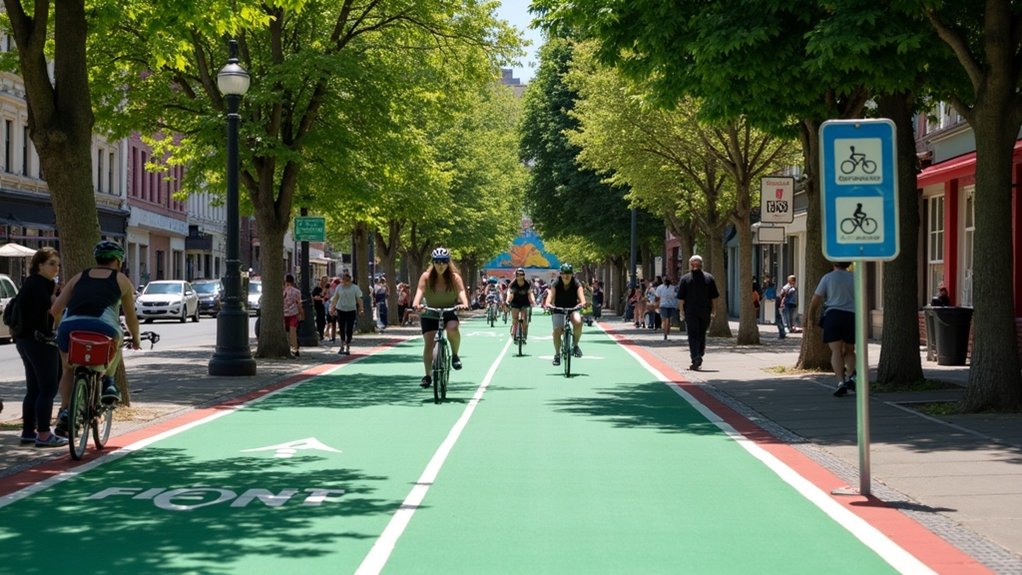
To set boundaries for sidewalk riding where it’s legal, familiarize yourself with local laws that govern cycling on sidewalks. Always prioritize pedestrian safety by yielding to them, signaling your intentions clearly, and maintaining a moderate speed that matches a relaxed jog. Use wide sidewalks when possible and stay alert in crowded areas. By doing so, you mitigate risks and enhance safety for everyone. There are more strategies to explore that can further improve your sidewalk cycling experience.
Key Takeaways
- Familiarize yourself with local sidewalk riding laws to understand where cycling is permitted and prohibited.
- Always yield to pedestrians on sidewalks, ensuring their safety and right of way.
- Use clear signals, such as bells or verbal cues, to communicate your presence to pedestrians.
- Maintain a moderate speed, ideally no faster than a relaxed jog, to minimize accidents.
- Choose wide, well-maintained sidewalks for better visibility and safer navigation around pedestrians.
Understanding Local Sidewalk Riding Laws
How well do you know the local sidewalk riding laws in your area? Understanding these local regulations is vital for cyclists.
In many places, including Houston, sidewalk riding is prohibited in business districts and areas marked with signs. According to the Texas Transportation Code, cyclists have the same rights as motor vehicle drivers, but specific rules vary by municipality.
Always remember to yield to pedestrians while riding, providing audible warnings before overtaking them. Additionally, some laws may restrict sidewalk cycling to certain age groups, making it essential to familiarize yourself with local statutes to avoid fines or penalties.
Best Practices for Safe Sidewalk Cycling
While you may enjoy the freedom of sidewalk cycling, adhering to best practices guarantees not only your safety but also that of pedestrians.
Always yield to pedestrians, signaling audibly before overtaking. Maintain a moderate speed, ideally no faster than a relaxed jog, to react quickly to unforeseen obstacles.
Opt for wide, well-maintained sidewalks to enhance visibility and minimize conflicts. Exercise caution at driveways and intersections, as vehicles may not anticipate a cyclist.
Familiarize yourself with local ordinances and traffic laws governing sidewalk riding to assure compliance and promote safe riding practices.
These safety tips are essential for a harmonious coexistence on sidewalks.
Communicating With Pedestrians Effectively
To communicate effectively with pedestrians, you should always announce your presence with a clear signal, whether it’s a bell or a verbal cue.
Using hand signals can further enhance your interactions, helping pedestrians anticipate your movements.
Maintaining a safe distance while riding not only respects their space but also allows for a smoother flow on the sidewalk.
Announcing Your Presence
When traversing sidewalks, how do you guarantee pedestrians are aware of your presence? Employ an audible warning before overtaking, like a bell or a polite verbal cue. This approach fosters clear communication and helps avoid startling pedestrians.
Always yield the right-of-way; prioritize their safety. As you navigate through pedestrian traffic, approach pedestrians slowly and maintain a safe distance. This allows them to anticipate your movement and react accordingly.
Stay vigilant, ready to stop or adjust your speed to accommodate unexpected movements, especially in crowded areas. By following these guidelines, you promote a safer and more enjoyable environment for everyone.
Using Hand Signals
Effective communication with pedestrians is crucial for safe sidewalk navigation, and using hand signals is a key strategy.
When riding your bike on the sidewalk, make your intentions clear by:
- Raising your left arm for a left turn.
- Extending your right arm for a right turn.
- Giving audible signals, like “on your left,” when approaching pedestrians from behind.
- Making eye contact to confirm they acknowledge your presence.
These practices help create a respectful environment, reducing the risk of collisions while enhancing mutual awareness.
Maintaining Safe Distance
Maintaining a safe distance of at least 3 feet from pedestrians isn’t just a guideline; it’s an essential aspect of sidewalk riding that enhances safety for everyone.
When you ride near sidewalks, use an audible signal before overtaking to alert pedestrians of your presence, preventing surprises. Slow down considerably in crowded areas to allow ample reaction time for sudden movements.
At intersections, always yield to pedestrians and communicate your intentions clearly. Practicing patience and courtesy not only fosters a safer environment but also reinforces positive interactions with pedestrians, ensuring compliance with local jurisdictions and promoting safer traffic dynamics for all sidewalk users.
Navigating Crowded Areas Responsibly
Maneuvering crowded areas requires careful attention to both speed and surroundings to secure safety for all.
Maneuvering through crowded spaces demands vigilance regarding both pace and environment to ensure everyone’s safety.
When you ride a bike on sidewalks, especially in local areas, adhere to the following guidelines:
- Maintain a speed no faster than a relaxed jog to minimize collisions with pedestrians.
- Always yield the right-of-way to pedestrians and signal your intentions clearly.
- Use an audible signal, like a bell, before overtaking pedestrians to alert them.
- Be aware of hazards, such as potholes, and adjust your path accordingly to guarantee safe passage for everyone.
Following these rules of the road promotes a safer environment.
Legal Implications of Sidewalk Cycling Violations
While you may enjoy the freedom of cycling on sidewalks, it’s important to understand the legal implications that come with it.
Sidewalk cycling can lead to hefty penalties, sometimes reaching $500, especially when vulnerable road users are involved. Local ordinances may prohibit riding on sidewalks in specific areas, like business districts, and non-compliance can result in citations.
Additionally, accidents on sidewalks can make you liable if you fail to yield to pedestrians. It’s vital to know whether it’s legal to ride on sidewalks in your area and to adhere to safety regulations, including helmet laws, to avoid misdemeanor charges.
Resources for Cyclists and Safety Advocacy
To navigate sidewalk riding regulations effectively, you should leverage local government resources that outline specific bicycle laws in your area.
Connecting with community support networks, like cycling groups and advocacy organizations, can provide valuable insights and updates on safety measures.
Local Government Resources
Accessing local government resources is essential for cyclists seeking to navigate the complexities of sidewalk riding regulations.
Familiarizing yourself with state laws is vital, as they dictate where bicycles on sidewalks are permitted. Here are four key resources to take into account:
- Local Government Websites: Check for specific sidewalk riding regulations and restrictions in business districts.
- Municipal Courts: Explore programs that educate cyclists about legal implications.
- Cycling Organizations: Utilize guidelines from groups like the Bike League for safe riding practices.
- Community Groups: Engage with local cyclists to share experiences and strategies for safe navigation.
Community Support Networks
Local government resources play a pivotal role in understanding the regulations surrounding sidewalk riding, but community support networks amplify these efforts by fostering collaboration among cyclists. Local cycling advocacy groups provide essential guidance on safe riding practices and sidewalk use. Engaging with these organizations not only informs you about cycling regulations but also enhances perceived safety through shared experiences.
| Resource Type | Benefits |
|---|---|
| Local Cycling Advocacy | Educational materials, guidelines |
| Community Clubs | Sense of belonging, shared tips |
| Social Media Platforms | Discussion, collaboration on safety |
| Government Websites | Updates on regulations, safety campaigns |