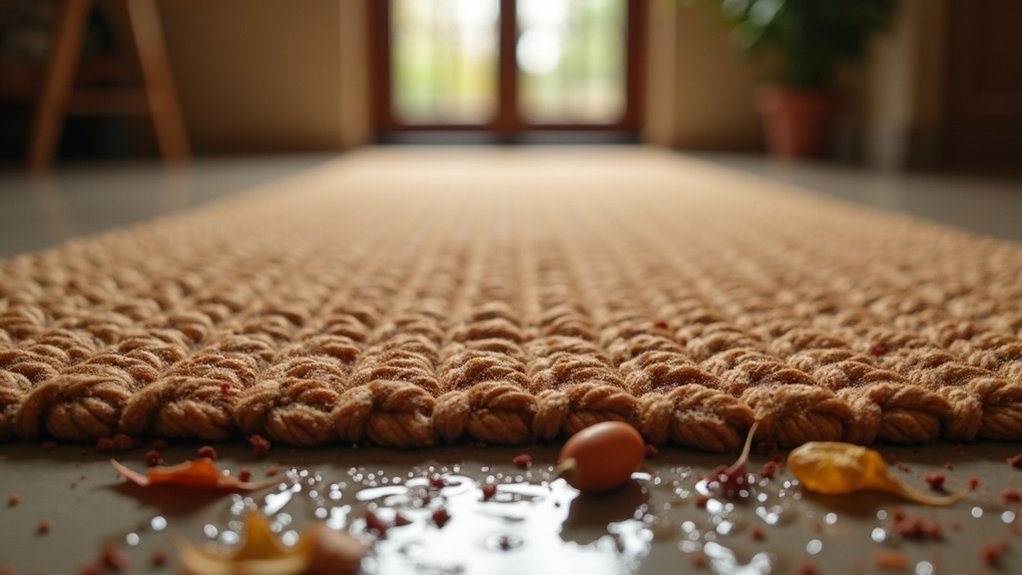
To select effective indoor mats that catch water and grit, prioritize materials like nylon or microfiber for absorbency, and consider mats with nitrile rubber backing for durability and slip resistance. Ascertain the mat spans at least 80% of the doorway and accommodates 6-10 feet of footfalls for maximum coverage. Look for textured surfaces that enhance scraping capabilities. Regular maintenance, such as vacuuming and deep cleaning, is key to maintaining performance, and there’s more to explore on this topic.
Key Takeaways
- Choose mats made from absorbent materials like nylon or microfiber for optimal water and grit retention.
- Ensure the mat size covers at least 80% of the doorway width for maximum effectiveness.
- Look for textured surfaces with raised patterns to enhance scraping capabilities and capture more dirt.
- Consider mats with nitrile rubber backing for improved slip resistance and durability.
- Regularly maintain mats through vacuuming and deep cleaning to ensure their performance and longevity.
Understanding the Importance of Indoor Mats
While you mightn’t think about it often, indoor mats play an important role in maintaining cleanliness and safety within your space.
These mats effectively trap moisture and dirt, especially in high-traffic areas, greatly enhancing overall cleanliness. By absorbing water and fine particles, they help prevent slip-and-fall accidents, ensuring a safer environment.
Indoor mats are essential for trapping moisture and dirt, enhancing cleanliness and preventing slip-and-fall accidents in high-traffic areas.
Quality indoor mats utilize specialized fibers for maximum water absorption and dirt trapping, improving indoor air quality by capturing allergens. Proper placement just inside entrances optimizes their performance.
Regular maintenance, including vacuuming and deep cleaning, is vital to prolonging their lifespan and maintaining appearance, ensuring ongoing effectiveness.
Key Materials for Effective Water and Grit Absorption
When selecting mats for effective water and grit absorption, consider the materials that best suit your needs.
Nylon and microfiber offer high absorbency and durability, while cotton provides excellent moisture-wicking properties for indoor use.
Additionally, guarantee the mat’s backing, like nitrile rubber, enhances its lifespan and slip resistance, especially in high-traffic areas.
Absorbent Material Options
To guarantee effective water and grit absorption in indoor settings, it’s crucial to choose mats made from materials specifically designed for this purpose.
Here are three absorbent material options you should consider:
- Cotton Mats: Highly absorbent, perfect for capturing moisture and fine particles in kitchens and entryways.
- Microfiber Mats: Utilize capillary action for superior absorption, ideal for high-traffic areas.
- Nitrile Rubber Mats: Durable and effective at scraping away dirt, designed for frequent washing.
Selecting mats with absorbent nylon fibers and rubber backing enhances water retention, ensuring safety and cleanliness in your indoor spaces.
Durable Performance Considerations
Choosing the right materials for indoor mats is essential for ensuring both durability and effective water and grit absorption.
For high-traffic areas, nylon mats excel due to their strength and moisture absorption capabilities, effectively managing grit accumulation.
If you’re on a budget, consider polypropylene mats; they provide good moisture resistance for lower-traffic zones.
Cotton mats are excellent for water absorption, keeping spaces dry.
For superior dirt trapping, microfiber mats utilize capillary action.
Don’t overlook non-slip backing options like nitrile rubber, which enhance durability while preventing slips, making your indoor mats both functional and safe.
Sizing Your Mats for Maximum Coverage
Selecting the right size for your indoor mats is essential for maximizing coverage and ensuring effective dirt and moisture removal.
Consider the following factors:
- Doorway Dimensions: Choose mats that span at least 80% of the doorway width to trap water and grit effectively.
- Mat Length: Aim for mats that allow 6-10 feet of footfalls, enabling multiple steps for thorough cleaning.
- Traffic Level: In high-traffic areas, opt for larger mats or runner styles to enhance coverage and absorption capability.
Textured Surfaces: Enhancing Scraping Capabilities
When selecting indoor mats, consider the surface material and design patterns that enhance scraping capabilities.
Textured surfaces, featuring raised patterns and grooves, effectively capture dirt and moisture, while the right layering can boost efficiency.
Surface Material Importance
Textured surfaces on indoor mats play an essential role in enhancing scraping capabilities, as they efficiently trap and remove dirt, grit, and moisture from shoes before they enter your home.
When selecting mats, consider the following:
- Surface Materials: Choose mats made from nylon or microfiber to improve scraping action and moisture retention.
- Texture Design: Opt for mats with raised patterns or grooves to increase friction and collect larger debris effectively.
- Combination of Properties: Select mats that blend scraping and absorbent materials for peak performance in high-traffic areas, ensuring cleanliness and reduced dirt and moisture indoors.
Design Patterns Effectiveness
While the design patterns of indoor mats considerably influence their effectiveness, the right combination of texture and material can enhance their scraping capabilities.
Textured surfaces grip shoe soles, effectively removing dirt, grit, and moisture before they enter your space. Mats with raised patterns or grooves trap larger debris and improve moisture absorption, vital in high-traffic areas.
Studies show mats featuring aggressive textures can capture up to 80% more dirt and moisture compared to smooth options.
Opt for durable materials like nylon or polypropylene to guarantee longevity and maintain peak scraping effectiveness, even after frequent washing.
Layering for Enhanced Efficiency
The effectiveness of indoor mats can be greatly enhanced through a strategic layering approach.
By combining different types of mats, you maximize dirt capture and moisture absorption, particularly in high-traffic areas.
Consider these three key elements:
- Scraper Mats: Utilize textured surfaces with raised patterns to dislodge dirt and grit from shoe soles.
- Absorbent Wiper Mats: Place these mats after scraper mats to soak up moisture effectively.
- Tailored Textures: Choose materials suited for specific environments, ensuring ideal performance in both dirt and water management.
This layering for enhanced efficiency can considerably reduce slip-and-fall accidents and improve entryway cleanliness.
Regular Maintenance for Optimal Performance
To guarantee your indoor mats perform at their finest, regular maintenance is essential.
Start with regular vacuuming to remove surface dirt, preserving their moisture-absorbing capabilities.
Every three months, conduct deep cleaning, like hot water extraction, to restore absorbency and appearance.
For washable mats, a monthly wash at 30-40°C with non-biological detergent is recommended to prevent allergens and odors.
Don’t forget to inspect mats for wear and tear; damaged areas compromise their ability to trap moisture effectively.
Utilizing a maintenance checklist guarantees all care aspects, including vacuuming, deep cleaning, and inspections, are consistently addressed for peak performance.
Choosing the Right Style to Match Your Decor
How can you guarantee that your indoor mats enhance your decor rather than clash with it? Start by considering the following:
- Colors and Patterns: Choose mats that complement your existing decor, enhancing aesthetic appeal.
- Absorbent Materials: Opt for nylon or cotton mats with moisture-wicking properties that secure functionality and cleanliness.
- Customizations: Look for options like logo mats or unique designs to match your style and reinforce brand identity.