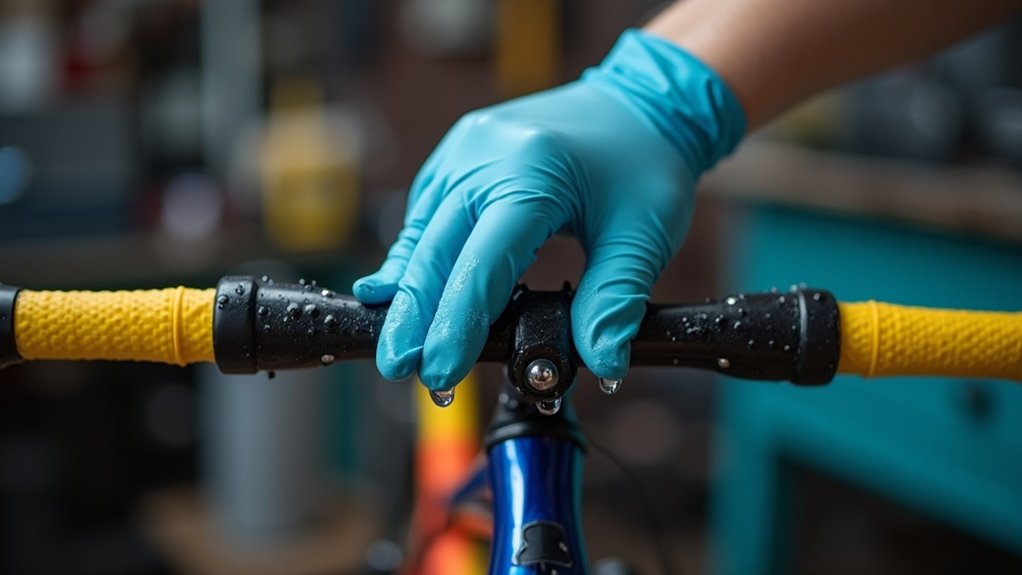
To sanitize grips and contact points, start by removing any visible debris with a disposable cloth. Then, select an EPA-registered disinfectant proven effective against a range of pathogens. Apply the disinfectant evenly and guarantee the surface stays wet for the recommended dwell time, usually between 1 to 10 minutes. Afterward, wipe down the surfaces to remove any residual disinfectant and contaminants. Following these steps regularly helps maintain hygiene standards. Learn more about best practices and techniques for effective sanitization.
Key Takeaways
- Begin by removing any visible dirt or debris from grips and contact points using a disposable cloth.
- Select an EPA-registered disinfectant suitable for the material of the grips and contact points.
- Apply the disinfectant evenly, ensuring it contacts the surface for the recommended dwell time of 1 to 10 minutes.
- Wipe down the surfaces after the dwell time to remove disinfectant and any remaining contaminants.
- Regularly sanitize high-touch areas at least twice daily to maintain a hygienic environment.
Understanding the Importance of Sanitizing High-Touch Surfaces
When it comes to maintaining a healthy environment, understanding the importance of sanitizing high-touch surfaces can’t be overstated.
These surfaces, like door handles and office phones, are high-risk for germ transmission due to frequent contact. Proper cleaning of these areas is essential for infection prevention.
Studies show that regular sanitization can greatly reduce the risk of cross-contamination, helping to curb the spread of bacterial infections and viruses.
Implementing a consistent cleaning schedule, ideally twice a day, guarantees that you actively protect yourself and others from potential illnesses in shared spaces, fostering a safer, more hygienic environment for everyone.
Selecting the Right Disinfectant for Effective Cleaning
How can you guarantee effective cleaning of grips and contact points? Start by selecting a disinfectant proven to eliminate a wide range of pathogens, including tough non-enveloped viruses like Adenovirus.
Ascertain the product is EPA-registered and explicitly labeled for high-touch surfaces, meeting infection control standards. Pay attention to the required dwell time; most disinfectants need to stay wet for 1 to 10 minutes for peak effectiveness.
Also, consider the surface material since some chemicals may damage finishes. Regularly consult guidelines from the CDC or WHO for the best disinfectants and application methods to maintain effective cleaning practices.
Step-by-Step Guide to Cleaning Grips and Contact Points
To guarantee grips and contact points are thoroughly sanitized, start by eliminating any visible debris with a disposable cloth or towel.
Next, select a broad-spectrum disinfectant suitable for the materials involved. Apply the disinfectant evenly and generously, ensuring it’s in contact with surfaces for the recommended dwell time. This step is essential for effective cleaning and disinfecting, particularly in communal spaces where touch points are frequently handled.
After the dwell time, wipe down the surfaces with a clean disposable cloth to remove any remaining disinfectant and contaminants.
Regularly sanitize these areas, ideally twice a day, to promote health care standards.
Best Practices for Maintaining Sanitization Standards
Maintaining sanitization standards is essential for minimizing the spread of germs in any environment.
Regularly clean and disinfect high-touch surfaces, like door handles and light switches, at least twice daily to reduce germ accumulation and cross-contamination risks. Use a broad-spectrum disinfectant that’s effective against common pathogens, ensuring surfaces remain wet for the necessary dwell time to maximize germicidal efficacy.
Implement a systematic cleaning schedule that includes pre-cleaning to remove debris and thorough disinfection. Always utilize disposable gloves when handling these surfaces to prevent transferring germs, and train staff on effective cleaning techniques to enhance sanitization efforts.
Training and Resources for Continued Hygiene Compliance
Effective training and resources are essential for ensuring ongoing hygiene compliance in healthcare settings.
Interactive eLearning modules, like those for Curos disinfecting port protectors, provide concise training in under 20 minutes, enhancing compliance among healthcare professionals.
Interactive eLearning modules offer quick, effective training to boost compliance in healthcare settings, enhancing patient safety.
Continuing education programs focus on infection prevention and control, aligning with CDC recommendations and best practices.
Proper training emphasizes using disinfecting caps for all intraluminal access points, helping reduce central line-associated bloodstream infections (CLABSIs).
High compliance rates correlate with improved patient outcomes, demonstrating the importance of education in disease control and prevention.
Regular updates and ongoing research further support the necessity of effective training resources.