
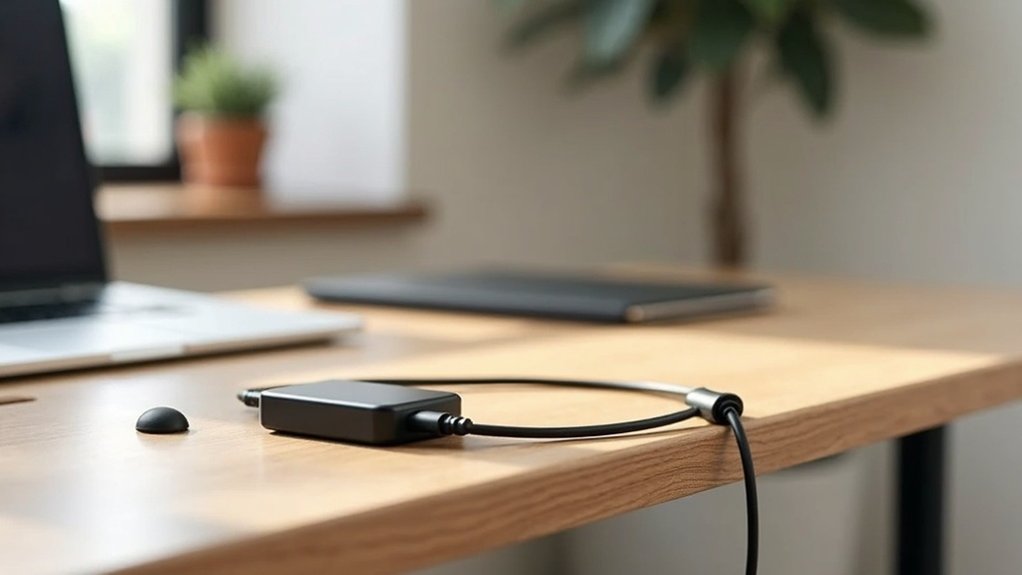
To route charger cables and prevent trips, elevate them using overhead hooks or cable trays. Install cable raceways along walls to keep them organized and out of the way. Use rubber cable covers for high visibility, and designate specific charging station areas to minimize foot traffic. Regularly inspect cables for wear and replace any damaged ones promptly. Maintaining a neat setup not only enhances safety but also guarantees efficiency. Want tips for child and pet safety around cables?
Key Takeaways
- Elevate charger cables using overhead hooks or cable trays to keep them above head level and out of walkways.
- Install cable raceways along walls to conceal and organize charger cables, reducing trip hazards.
- Utilize low-profile cord covers to minimize visibility while protecting cables from damage and preventing accidents.
- Designate specific charging station areas to streamline access and minimize foot traffic around cables.
- Regularly inspect and secure loose cables to prevent tangling and ensure a tidy, safe environment.
Importance of Cable Management for Safety
When you neglect cable management, you increase the risk of accidents in your home or workplace. Disorganized cables create trip hazards, particularly dangerous for children, who may suffer serious injuries like sprains or fractures.
Additionally, exposed live wires from damaged cables pose a significant electric shock risk. Effective cable management not only minimizes these dangers but also extends the lifespan of your cords by preventing damage from tripping.
Utilizing adhesive-backed cable clips and concealers keeps cables off the floor, fostering a safer environment. Implementing these strategies leads to a tidier space and enhances overall safety, making navigation easier.
Effective Methods to Elevate Cables
To effectively minimize trip hazards, you can employ several methods to elevate charger cables, ensuring they remain out of walkways.
Minimize trip hazards by elevating charger cables out of walkways using various effective methods.
Consider these techniques:
- Overhead hooks or cable trays: These keep cables above head level, eliminating ground clutter.
- Cable raceways: Securely install these along walls or ceilings for a neat appearance while maintaining safety.
- Adjustable cable supports: Use pulleys to route cables overhead, allowing for flexibility and access.
Utilizing Cable Covers for Trip Prevention
Utilizing cable covers is a practical approach to minimizing trip hazards in your environment.
You’ll find various types designed for different settings, and understanding their installation techniques is essential for maximizing safety benefits.
Types of Cable Covers
While various types of cable covers are available, selecting the right one is vital for effectively preventing trip hazards. Here are three popular options to evaluate:
- Rubber cable channels: High visibility and conceal wires, reducing trip risks in any space.
- Low-profile cord covers: Easy to install and protect cables while minimizing accidents in high-traffic areas.
- ADA-compliant cable covers: Feature a gentle taper for wheelchair and stroller access, ensuring safety for everyone.
Using a suitable cable protector not only enhances safety but also maintains the aesthetics of your environment, making it important to choose wisely.
Regular inspections will keep them secure.
Installation Techniques
Choosing the right installation technique for cable covers can greatly reduce trip hazards in your space.
Utilizing low-profile cord covers, or cable raceways, conceals charger cables effectively in high-traffic areas. Make certain you install covers with a gentle taper and a sturdy center channel to keep cables secure while providing a smooth walking surface.
For overhead routing, use hooks or cable trays to elevate cables, further minimizing trip risks. In locations where cables cross pathways, heavy-duty rubber cable strips add visibility and protection.
Regularly inspect your cable covers for wear and tear to maintain their effectiveness in preventing trips.
Safety Benefits
Cable covers play an essential role in enhancing safety by effectively minimizing trip hazards associated with charger cables.
By using cable covers, you can:
- Keep cables flat and secure, reducing tripping risks in high-traffic areas.
- Improve visibility, making it easier to spot potential hazards.
- Protect cables from wear and tear, extending their lifespan.
These benefits not only enhance safety but also create a tidier environment, reducing distractions.
Regularly checking and maintaining cable covers guarantees they lie flat and remain effective, allowing you to navigate your space confidently without worrying about accidents caused by exposed cables.
Organizing Charging Stations for Efficiency
To enhance the efficiency of your charging stations, it is essential to designate a specific area that minimizes foot traffic, thereby reducing the risk of tripping over cables. Utilize cable management solutions like adhesive-backed clips or raceways to secure cables along walls. Charging stations with built-in organization features streamline access and storage. Label each cable and device to prevent unnecessary movement.
| Solution | Benefits | Implementation |
|---|---|---|
| Cable Clips | Keeps cables secured | Attach along walls |
| Charging Station Design | Reduces clutter | Choose models with features |
| Labeling System | Enhances organization | Use clear labels |
Regular Maintenance of Cable Placement
You need to conduct routine inspections of your cables to identify any signs of wear and tear that could lead to safety hazards.
Secure any loose ends to prevent tangling and guarantee a neat workspace, while replacing worn cables promptly to maintain safety and functionality.
Routine Cable Inspections
Regular inspections of cables are essential for maintaining safety and functionality in any environment. By conducting routine checks, you can identify potential hazards before they escalate.
Focus on these key areas during your inspections:
- Wear and Tear: Look for frayed or broken insulation that could expose live wires.
- Placement: Verify cables are securely fastened and not lying across walkways.
- Management Solutions: Evaluate the effectiveness of clips or covers in preventing hazards.
Schedule these periodic maintenance checks every few months to maintain safety, especially in high-traffic areas or where children play.
Stay proactive to guarantee a safe environment.
Secure Loose Ends
Maintaining a tidy workspace is essential for minimizing trip hazards associated with loose charger cables. Regularly inspect and secure cables using adhesive-backed cable clips, elevating them off the floor. This simple action greatly reduces risks.
Utilize velcro bundlers to keep cables organized and prevent tangling, ensuring loose ends are neatly managed. Implement routine checks to verify that cable covers are intact, as wear can expose hazards.
Establish a habit of repositioning cables after use, tucking them away or securing them to walls. By encouraging a clean workspace and proper cable management, you enhance safety and reduce clutter effectively.
Replace Worn Cables
Inspecting charger cables frequently is essential for safety and functionality. Regular maintenance helps you identify when to replace worn cables, preventing hazards.
Look for these signs during your checks:
- Fraying or exposed wires
- Cracks in protective coverings
- Frequent connection issues
If you spot any of these, replace worn cables immediately. Not only does this guarantee safe usage, especially in homes with children, but it also reduces the risk of electric shocks.
Schedule routine checks every three months, and opt for high-quality cables designed for durability. Secure new cables properly to minimize trip hazards and maintain an organized space.
Tips for Child and Pet Safety Around Cables
To guarantee a safe environment for both children and pets, it is crucial to manage charger cables effectively. Use adhesive-backed cable clips to secure cables high on walls, eliminating trip hazards. Conceal them with cable raceways to minimize exposure. Implement child safety kits that include wire looms and cord covers, ensuring thorough management in play areas. Regularly inspect cables for wear, as damaged wires can pose electric shock risks. Educate kids about the dangers of cords, and use stainless steel braided sleeving to deter pets from chewing.
| Solution | Benefit | Implementation |
|---|---|---|
| Cable clips | Keeps cables out of reach | Attach to walls |
| Cable raceways | Reduces exposure | Install along baseboards |
| Child safety kits | Thorough cable management | Use in play areas |
| Regular inspections | Identifies damage | Conduct monthly checks |
| Braided sleeving | Prevents chewing | Cover floor-level cables |