To route cables and avoid snags, position them close to the mount’s center. Use loops to alleviate tension and prevent sharp bends that could snag. Secure cables with clips or Velcro ties to reduce unnecessary slack. Employ 90-degree elbow connectors in tight spaces to minimize friction and pinching. Regularly inspect the cable paths during use to guarantee they remain unobstructed. There’s more to mastering cable management effectively, so explore further best practices to enhance your setup.
Key Takeaways
- Route cables close to the center of mounts to minimize the risk of damage and snags.
- Avoid sharp bends and tight corners to reduce friction and snagging potential.
- Use loops in cables to allow movement and relieve tension during operation.
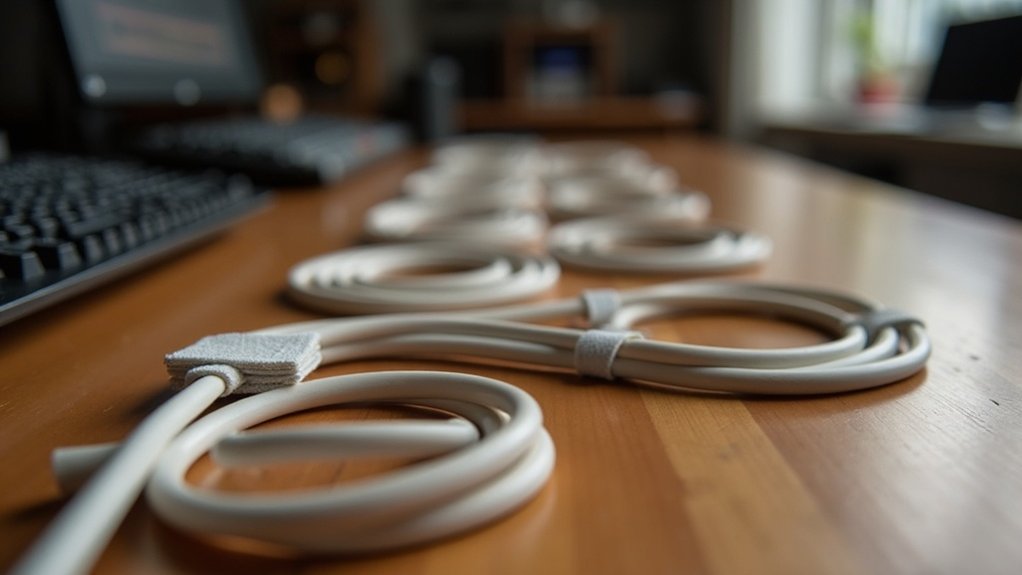
- Secure cables with clips or Velcro ties to prevent slack and tangling.
- Conduct regular inspections to identify and rectify potential snagging points.
Effective Cable Routing Techniques
Effective cable routing is essential for maintaining equipment functionality and preventing damage. To enhance cable management, you should route cables close to the center of the mount, avoiding sharp bends that could lead to snagging.
Use loops to allow for movement and reduce tension at critical points. Employ cable clips or Velcro straps to secure power cables, minimizing slack that might tangle or catch on other equipment.
Additionally, utilize 90-degree elbow connectors in tight spaces to relieve tension. Regularly inspect cable positions to verify they’re free from potential snags, promoting ideal performance and reliability in your setup.
Tools and Materials for Cable Management
A variety of tools and materials are essential for effective cable management, helping to streamline installation and maintenance.
To guarantee your cables remain organized and snag-free, consider using:
- Cable clips to secure cables along their intended paths
- Velcro ties for adjustable cable bundling
- 90-degree elbow connectors to relieve tension and prevent bending
- Electrical tape for additional insulation and securing loose ends
Incorporating these elements, along with high-quality cables and methods like beaded chains for fishing, will help maintain slack and flexibility.
This reduces the risk of snagging in your power systems and dew heaters.
Common Cable Snagging Issues
How can improperly routed cables lead to snagging issues? Cable snags often occur at tight corners and sharp bends, where movement can cause friction or pinching. To keep cables from snagging, guarantee there’s enough slack to allow for movement without creating loops. Using specialized tools can facilitate routing through insulated walls or tight spaces, minimizing snagging risks. Regularly inspecting cable positions is vital for identifying potential snagging issues before they escalate. The following table outlines common snag locations and solutions:
| Snag Location | Potential Issues | Solutions |
|---|---|---|
| Tight Corners | Pinching or bending | Increase slack |
| Sharp Bends | Friction damage | Use protective sleeves |
| Equipment Mounts | Pinch points | Secure with cable ties |
| Insulated Walls | Friction and obstacles | Employ specialized tools |
Best Practices for Cable Position Monitoring
While monitoring cable positions may seem straightforward, it’s essential to implement specific best practices to prevent snagging and guarantee peak functionality.
Make sure your cables go where they need to without obstruction. Here are some best practices:
- Manually run equipment through its intended path before securing cables.
- Stop exposures periodically during imaging to inspect cable positions.
- Conduct regular checks for wear and tear on flexible USB cables.
- Observe cable routing in daylight to identify potential snag locations.
Community Insights and Experiences
As you navigate the complexities of cable management, community insights offer valuable perspectives that can enhance your approach to avoiding snags.
Users recommend manually testing movement before securing cables to identify snag points. It’s essential to use Velcro ties and clips to keep cables together, preventing tangling during movement.
Many emphasize maintaining enough slack in cables, ensuring they accommodate full movement without excess that could snag. Regular inspections based on shared experiences can greatly improve setup efficiency.