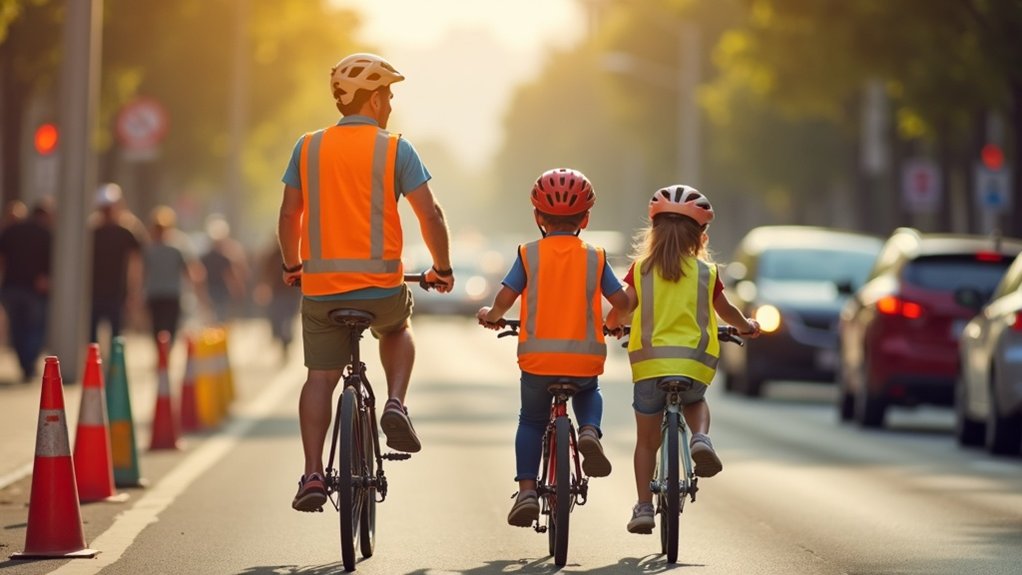
To ride with kids safely on busy streets, choose routes with dedicated bike lanes or quiet residential areas. Confirm everyone wears properly fitted helmets and bright clothing for visibility. Teach kids road signals and encourage them to use hand signals when turning. Maintain close supervision, keeping a single-file line and a safe distance. Always check for hazards and traffic before crossing. Following these tips can create a safer biking experience for you and your children while exploring more safety strategies.
Key Takeaways
- Choose routes with dedicated bike lanes or quieter streets to lessen interactions with vehicles and traffic hazards.
- Ensure children wear properly fitted helmets and bright clothing for visibility and protection.
- Teach children to obey traffic signals and use hand signals for turning or stopping.
- Supervise children closely, encouraging them to ride in a single file and maintain safe distances.
- Scout busy routes beforehand for safe crossing points and potential hazards to plan safe rides.
Choosing Safe Routes for Biking
When planning your biking routes, it’s essential to prioritize safety to keep your kids secure on busy streets. Choose routes with dedicated bike lanes or paths, as they minimize interactions with motor vehicles.
Opt for quieter residential streets to reduce traffic exposure and hazards. Utilize maps or apps that highlight bike-friendly routes, ensuring they’re well-maintained and obstacle-free.
Familiarize yourself with local traffic regulations regarding biking, including sidewalk restrictions. Always scout the route beforehand, checking for safe crossing points and potential hazards like potholes or road construction.
Following these safety tips will help everyone stay safe on the road.
Essential Safety Gear for Kids
Safety gear is essential for kids biking on busy streets, as it greatly reduces the risk of injury.
To help your children stay safe while crossing a street, make sure they’ve the following essential safety gear:
- Helmets: Properly fitted helmets can reduce head injury risk by up to 85% in case of a fall or collision.
- Bright Clothing: Opt for bright colors or reflective materials to enhance visibility, especially in low-light conditions.
- Knee and Elbow Pads: These pads protect against scrapes and bruises, absorbing impacts during falls.
With the right gear, your kids can enjoy biking safely!
Teaching Kids About Road Signals
Equipping your kids with safety gear is just the beginning of ensuring their safety while biking on busy streets. Teach them about traffic signals: a red light means stop, while green indicates they can proceed with caution.
Explain pedestrian signals, too; a green walking symbol means it’s safe to cross, while a red hand signals them to stop. Reinforce the importance of looking left and right before crossing the street, regardless of the signals.
Encourage them to wait for the pedestrian signal to change, fostering patience and attentiveness. Real-life examples will help illustrate how these rules keep them safe.
Strategies for Maintaining Visibility
To guarantee kids are seen while biking on busy streets, it’s crucial to prioritize their visibility. Here are three strategies to help guarantee safety:
- Dress children in bright colors to enhance visibility, especially near parked cars or during low-light conditions.
- Equip bicycles with reflective materials and use lights on the front and back, guaranteeing they’re visible from all angles.
- Teach kids to listen for traffic and maintain a safe distance from the curb while crossing the street, riding in a straight line, and using hand signals to communicate their intentions effectively.
Supervising Children While Riding
While riding can be an enjoyable experience for children, keeping a close eye on them is essential for their safety. Make sure you’re always supervising them closely, ensuring they stay within your sight and follow your instructions.
As you’re getting ready to ride, teach them to maintain a single file line and keep a safe distance from each other, especially near busy streets. Encourage signaling when turning and checking for oncoming traffic. Helmets and protective gear are crucial, too.
Reinforce obeying traffic signals and rules, emphasizing that they should ride only in designated bike lanes or safe areas, away from the edge of the road.