
To ride smoothly with a heavy backpack, balance your load by placing heavier items close to your back and the center of gravity. Adjust your straps for a snug fit, and use compression straps to secure loose gear. Practice gentle acceleration and braking to maintain control, and take breaks to relieve pressure. Strengthening your core and leg muscles will help you manage the extra weight. Want to discover more tips for effortless rides?
Key Takeaways
- Position heavier items close to your back to enhance balance and stability while riding.
- Adjust backpack straps for a snug fit, preventing shifting during movement.
- Practice smooth acceleration and braking techniques to manage the weight effectively.
- Take regular breaks to relieve pressure and maintain comfort throughout your ride.
- Use trekking poles for added support and to help maintain balance with a heavy load.
Understanding Weight Distribution for Cycling With a Heavy Load
When you’re cycling with a heavy backpack, understanding how to distribute that weight effectively is essential for a smooth ride.
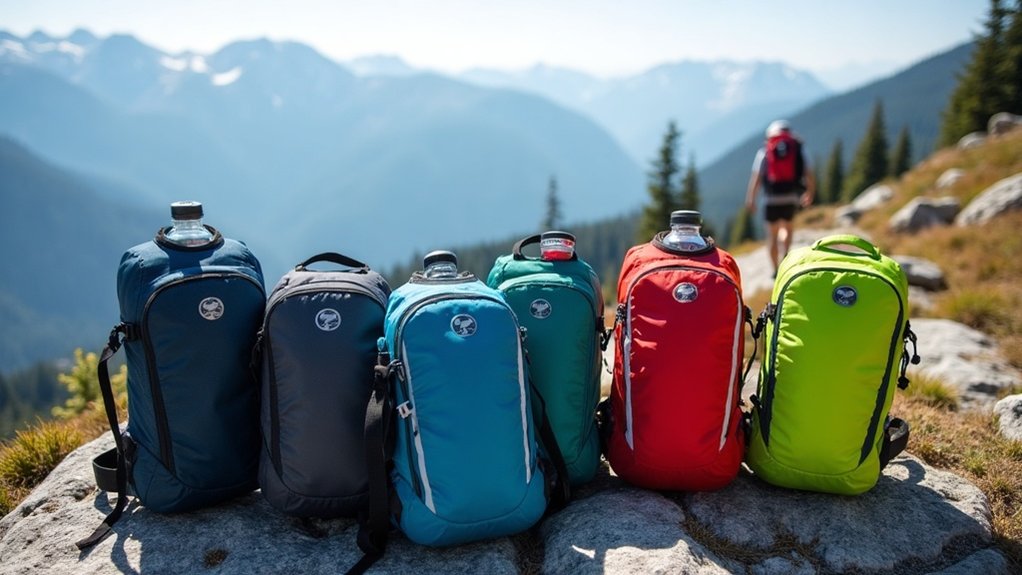
Position your heaviest items close to your body, near your center of gravity, to enhance balance and reduce strain on your arms and shoulders. Use your hip belt and shoulder straps to secure the load, while compression straps keep loose gear in check.
Techniques for Packing Your Backpack Efficiently
Properly packing your backpack can greatly enhance your cycling experience, especially when carrying a heavy load. Start by placing heavier items close to your back and near the upper middle of the pack to maintain balance.
Distribute the weight evenly on both sides to prevent strain. Use load lifters and compression straps to stabilize your gear, reducing movement during rides.
Organize your gear so frequently used items are easily accessible at the top or in outer compartments. Avoid packing external gear that can interfere with your riding posture, ensuring everything fits securely inside your backpack for a smooth journey.
Adjusting Your Backpack for Optimal Comfort While Riding
To guarantee a comfortable ride, adjusting your backpack for ideal fit is essential. Focus on these key adjustments:
- Align hip belts over your hip bones to transfer backpack weight away from your shoulders.
- Tighten shoulder straps to keep the pack snug enough against your back, aiding your center of gravity.
- Use load lifters to stabilize the weight evenly at a 45-degree angle.
- Clip the sternum strap across your chest for enhanced load stability, allowing freedom to breathe.
Regularly reassess and adjust every piece of your setup to secure a natural fit that accommodates your movements while riding.
Riding Strategies to Manage Heavier Loads
As you ride with a heavier backpack, effective strategies become crucial for maintaining control and comfort.
Keep your pack balanced by placing heavier items close to your back and evenly distributing the extra weight. This guarantees stability while riding.
Adjust your backpack straps for a snug fit, which can greatly enhance your comfort.
Practice smooth acceleration and braking to manage the challenges of carrying heavy loads, preventing abrupt movements.
Remember to take regular breaks to relieve pressure points on your body.
If needed, use poles for added support to maintain balance and stability during your ride.
Strengthening Exercises to Prepare for Heavy Backpacking
Preparing for the challenge of carrying a heavy backpack involves more than just loading it up; it requires building strength and endurance through targeted exercises.
Preparing for a heavy backpack challenge means focusing on strength and endurance through specific exercises.
Focus on these key areas:
- Core strengthening exercises like planks and Russian twists to stabilize your lower back.
- Leg workouts such as squats and lunges to boost muscle endurance for heavy packs.
- Shoulder rolls and stretches to enhance flexibility and ease tension from straps.
- Endurance training by hiking with gradually increasing weights for better acclimation.
Incorporate dynamic stretches like leg swings to prepare your hip bones and muscles, reducing injury risk while riding.