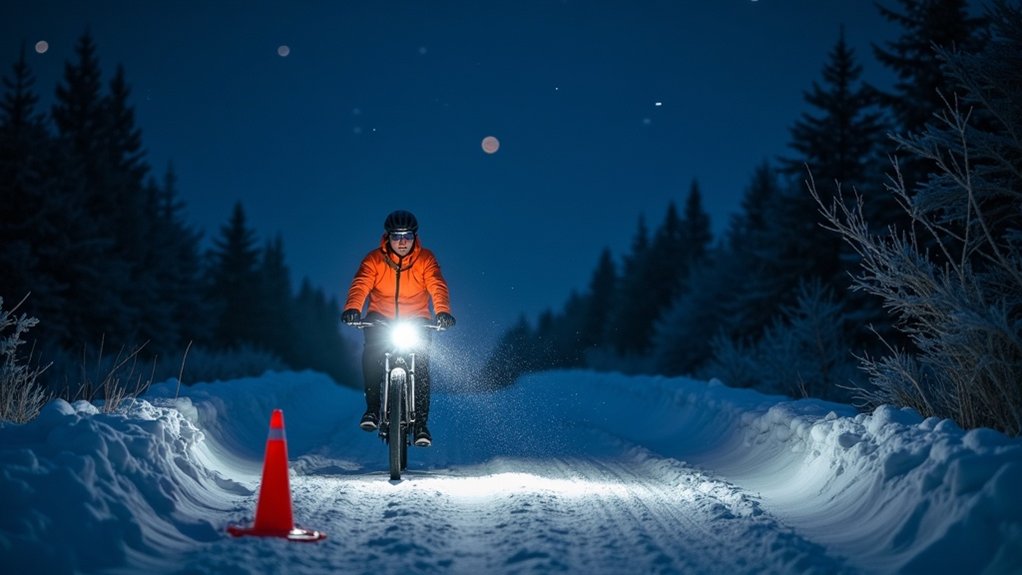
To ride safely after dark in winter, make certain you have a front light of at least 500-600 lumens and a reliable backup light. Dress in layers for warmth and invest in reflective gear for visibility. Stick to well-lit routes and adjust your speed to take into account limited visibility and potential hazards like ice. Stay aware of your surroundings, scanning for obstacles. There’s more to reflect on for a safe ride, so keep exploring additional tips.
Key Takeaways
- Ensure you have a high-quality front light (500-600 lumens) and a backup light for emergencies.
- Dress in layers and wear reflective clothing to stay warm and visible.
- Stick to well-lit roads and familiarize yourself with local terrain to avoid hazards.
- Adjust your speed to account for limited visibility and potential obstacles like ice.
- Regularly scan your surroundings and maintain a safe distance from other road users.
Importance of Proper Lighting
When you ride after dark in winter, having proper lighting isn’t just a convenience; it’s essential for your safety. A front light with a minimum of 500-600 lumens guarantees you can see obstacles and navigate effectively.
Don’t forget a backup light; if your primary light fails, it keeps you visible and helps prevent disorientation. Consider adding a helmet light for improved visibility from various angles, making it easier for motorists and other cyclists to spot you.
Additionally, side lights enhance your visibility at junctions and roundabouts, greatly reducing accident risks. Remember to use lower settings to extend battery life.
Weather Considerations for Night Riding
As temperatures drop considerably after sunset, you need to dress in layers to stay warm and comfortable during your night rides. A little bit of preparation can make all the difference.
Consider investing in reflective clothing to enhance your visibility. Here’s what to keep in mind:
- Ice can form on roads after dark, so be cautious.
- Black ice is hard to spot, so adjust your speed accordingly.
- Pre-plan your routes to avoid unfamiliar areas.
Make certain you’re aware of these weather considerations to guarantee a safer and more enjoyable ride after dark this winter.
Essential Safety Gear
To guarantee your safety while riding at night in winter, investing in the right gear is essential.
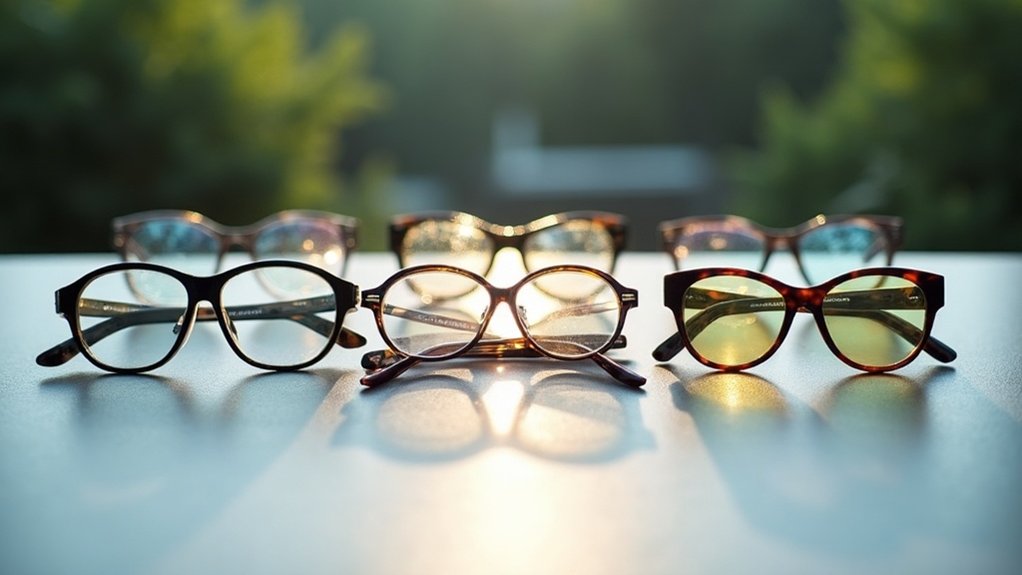
Clear lens glasses enhance visibility and protect your eyes from bugs and debris. Wear reflective clothing or cycling kits with reflective panels to make sure other road users see you.
Enhance your night riding safety with clear lens glasses and reflective clothing for maximum visibility on the road.
A high-quality front light with at least 500-600 lumens illuminates your path; don’t forget a backup light for emergencies. Equip yourself with a helmet light for added visibility.
Finally, dress in layers to combat the significant temperature drop after sunset. Gloves and thermal gear can keep you comfortable during those cold winter months.
Let’s know if you have questions!
Route Planning Tips
Planning your route in advance can greatly enhance your safety while riding after dark in winter. By choosing your path wisely, you can avoid hazardous situations.
Here are some tips to keep in mind:
- Stick to well-lit roads to improve visibility and safety.
- Familiarize yourself with local terrain and potential winter hazards like ice or snow.
- Use GPS or cycling apps for real-time tracking and alternative routes.
Riding Techniques for Nighttime
When riding at night, it’s essential to adjust your speed to account for limited visibility and unexpected obstacles.
Enhance your safety by using a strong front light and being aware of potential hazards like potholes and wildlife.
Staying alert and recognizing your surroundings will help you navigate the darkness more effectively.
Adjust Speed Accordingly
Adjusting your speed is essential for safe riding after dark, especially in winter conditions. Slowing down gives you the reaction time needed for unexpected obstacles.
Consider these key points:
- Potholes and wildlife are harder to see in low light.
- Black ice can form unexpectedly, particularly on bridges or shaded areas.
- Erratic movements can lead to accidents when visibility is limited.
Maintain a steady pace to enhance control and stability.
Remember, approaching intersections and roundabouts at a slower speed allows you to assess oncoming traffic better.
Prioritize safety, and adjust your speed accordingly to navigate the night confidently.
Recognize Surrounding Hazards
Recognizing surrounding hazards is essential for nighttime riding, especially in winter. Obstacles like potholes, road debris, and wildlife can be hard to see, so keep your speed in check and stay alert.
Use a powerful front light (500-600 lumens) to illuminate the road, allowing you to spot potential dangers early. Be cautious of black ice and slippery conditions, particularly on bridges and shaded areas.
Maintain a safe distance from other road users to react swiftly to unexpected stops. Regularly scan your environment, using your peripheral vision to enhance awareness of any hazards that might be obscured in the dark.
Use Enhanced Lighting
To ride safely after dark in winter, using enhanced lighting is essential for your visibility and safety. Equip yourself with:
- A front light of 500-600 lumens to clearly illuminate your path.
- A helmet light for 360-degree visibility, keeping you aware of your surroundings.
- Side lights, especially amber, at junctions to alert drivers to your presence.
Remember to differentiate between lights for seeing and being seen, and conserve battery life by lowering settings when possible.
With the right lighting, you’ll not only enhance your safety but also enjoy a more confident ride through the winter darkness.
Staying Aware of Surroundings
To ride safely at night, you need to stay alert and aware of your surroundings.
Regularly scan for hazards like potholes or ice, and use your peripheral vision to detect movement around you.
Don’t forget to listen for sounds that could indicate approaching vehicles or pedestrians, as this can help you react quickly to potential dangers.
Scan for Hazards
As you ride after dark during winter, staying alert to your surroundings is essential for your safety. Always keep your head up and eyes scanning the road ahead. Use your front light to illuminate 10-15 feet in front of you. Regularly check behind you for other road users.
Remember to:
- Watch for hidden hazards like potholes or black ice.
- Slow down in unfamiliar areas, giving you more time to react.
- Stay mindful of wildlife that may suddenly cross your path.
Use Peripheral Vision
Staying alert while scanning for hazards is just the beginning of riding safely after dark in winter. Use your peripheral vision by keeping your head up and your eyes moving. This helps you detect movement or hazards outside your direct line of sight.
Train yourself to notice changes in light and shadow, which can signal obstacles or other road users. Regular practice enhances your awareness, allowing quicker reactions to unexpected situations.
Position your helmet and bike lights effectively to illuminate your path while maintaining visibility in your periphery. Incorporate slight head movements to expand your field of vision without losing focus ahead.
Listen for Sounds
While riding at night, listening for sounds can be just as essential as keeping your eyes peeled for visual hazards. Your sense of hearing helps you detect changes in your environment when visibility is limited.
Pay attention to:
- The rumble of approaching vehicles that could pose a risk.
- The crunch of ice or snow under your tires, signaling slippery conditions.
- The faint sounds of other cyclists or pedestrians, alerting you to potential hazards.
Familiarizing yourself with daytime sounds makes it easier to identify unusual noises at night, keeping you aware and safer during your winter rides.
Stay vigilant!