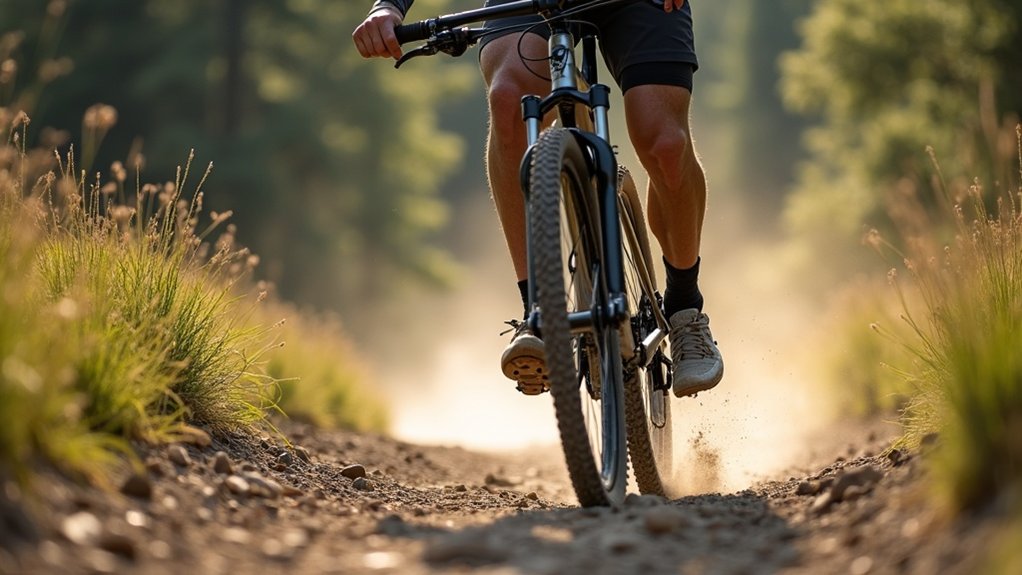
To ride on gravel or mixed surfaces, stay relaxed and engage your core for better control. Choose a bike with wide tires (at least 35mm) for improved traction, and keep tire pressure low to grip loose terrain. Anticipate changes in the trail, adjusting your weight accordingly while climbing or descending. Always check your bike’s components before heading out. If you’re keen to know more about techniques and gear adjustments, there’s plenty more to uncover.
Key Takeaways
- Choose a bike with a relaxed frame geometry and wide tires (minimum 35mm) for better stability and traction on mixed surfaces.
- Lower tire pressures improve grip and reduce the risk of punctures when riding on gravel.
- Engage your core and relax your shoulders to enhance control during climbs and descents.
- Shift to lower gears before steep climbs to maintain momentum and prepare for terrain changes.
- Maintain a relaxed grip on the handlebars to absorb shocks and improve balance over uneven surfaces.
Understanding Gravel Riding
When you hit the gravel, you’re stepping into a world where road cycling meets mountain biking, allowing you to tackle diverse terrains with confidence.
Gravel riding demands a bike fit that accommodates stability and comfort, so consider a relaxed frame geometry. Equip your ride with wide tires, ideally 35mm or more, to enhance traction on loose surfaces.
Adjusting your tire pressure is vital; lower pressures grip better and minimize punctures on uneven paths. Engage your core and keep your shoulders relaxed to maintain control during climbs and descents on mixed surfaces, ensuring a smooth and enjoyable experience on your adventures.
Essential Bike Setup
To guarantee an enjoyable gravel riding experience, you’ll want to focus on the essential bike setup that suits your adventures.
Start with a bike frame that offers ample tire clearance for wider tires, ideally 35mm or more. Choose wheel sizes based on terrain:
- 700c for smoother gravel
- 650b for rough trails
Optimize tire pressure for grip and comfort.
Additionally, make certain your gearing setup accommodates steep climbs, with wide-ranging cassettes (11–42T or 10–50T) being ideal.
Finally, select handlebar width proportional to your shoulders for better control and consider thicker tape for shock absorption on long rides.
Choosing the Right Tires
When it comes to choosing the right tires for your gravel adventures, tire width and tread patterns are vital.
Opting for tires at least 35mm wide enhances your stability and traction on unpredictable surfaces, while the right tread can make all the difference in grip.
Whether you prefer a knobbier design for loose gravel or a slick pattern for hard-packed trails, selecting the right combination will elevate your ride.
Tire Width Considerations
Choosing the right tire width for gravel or mixed surface riding is essential for optimizing your performance and comfort. A minimum width of 35mm is recommended, but wider gravel tyres, ranging from 38mm to 45mm, enhance grip and comfort on rough terrain.
Consider these points when selecting your tires:
- Verify proper tyre clearance to avoid frame issues.
- Opt for tubeless tires for better puncture protection and lower pressure.
- Choose knobby tires for loose surfaces, while slicks excel on hard-packed trails.
With the right tire width, you’ll tackle gravel with confidence, enjoying every ride.
Tread Patterns Selection
The right tire width sets the stage for your ride, but the tread pattern can make all the difference in your performance on gravel and mixed surfaces.
For hard-packed gravel, opt for gravel tires with slick or semi-slick tread patterns, ideally 35-40mm wide for efficiency.
When tackling rough terrain, choose wider tires (45-53mm) featuring aggressive knobs for superior grip.
Consider weather too; wider knob spacing helps with mud clearance.
Finally, don’t forget about tire pressure—lower pressures can boost your contact patch, enhancing grip and comfort on challenging surfaces, making your mixed-surface rides smoother and more enjoyable.
Pre-Ride Preparations
Before you hit the trails, it’s important to take some time for pre-ride preparations that can make all the difference in your gravel adventure.
Start by checking the air pressure in your tires, lowering it for better traction on gravel surfaces. Next, perform a safety check to verify everything’s functioning properly:
Check tire air pressure for optimal traction on gravel, then ensure all components are functioning properly for a safe ride.
- Verify brake pads and chain condition
- Pack necessary repair tools and first aid equipment
- Communicate your ride plans, including route and return time
These steps help you avoid mechanical issues and stay safe, letting you focus on enjoying the ride ahead.
Prepare well and ride smart!
Navigating Different Surfaces
As you navigate through diverse surfaces on your gravel ride, adjusting your approach can greatly enhance your experience.
Start by lowering your tire pressure; this boosts traction and comfort while minimizing the chance of punctures on rough terrain.
Maintain a relaxed grip on the handlebars to absorb shocks and guarantee stability over uneven surfaces.
Shift your weight strategically—back on descents for better control, forward on climbs for improved traction.
Always anticipate changes in terrain and adjust your speed accordingly.
Using wider tires with suitable tread patterns will further enhance your traction and control, allowing you to conquer various gravel types confidently.
Techniques for Climbing and Descending
Maneuvering varying surfaces sets the stage for mastering climbing and descending techniques that can make your gravel ride exhilarating.
To tackle loose gravel effectively, keep these tips in mind:
- Shift down to a lower gear before steep climbs to maintain momentum and prevent stalling.
- Engage your core and relax your shoulders for improved stability and control.
- On descents, shift your weight back, bend your knees and elbows, lowering your center of gravity to enhance balance.
Remember to look ahead, anticipating terrain changes, which keeps you prepared for adjustments while tackling climbs and descents with confidence.
Time Management on Gravel Rides
When planning a gravel ride, understanding the need for time management is crucial, especially since these rides often take longer than their paved counterparts.
Aim for an average speed of 12-16 km/h, factoring in climbs and technical trails. Start with shorter gravel rides on local trails to gauge your pace, gradually increasing distance as you gain comfort.
Remember to allow breaks to recharge, especially on challenging routes. Communicate your expected return time to someone not on the ride; this guarantees safety and accountability.
Staying Safe and Engaged
Staying safe and engaged during your gravel ride is essential for both enjoyment and performance, especially as you navigate unpredictable terrain.
Before you hit the trail, make sure to:
- Communicate your route and estimated return time to someone.
- Perform a thorough safety check using the ABCs: Air pressure, Brakes, Chain maintenance.
- Regularly hydrate and fuel to maintain stamina.
Adjust your tire pressure for better traction on mixed surfaces, and stay alert by keeping your weight centered on the bike.
With these tips, you’ll enhance your ride’s safety and engagement, making it a memorable adventure for gravel bike buyers and enthusiasts alike.