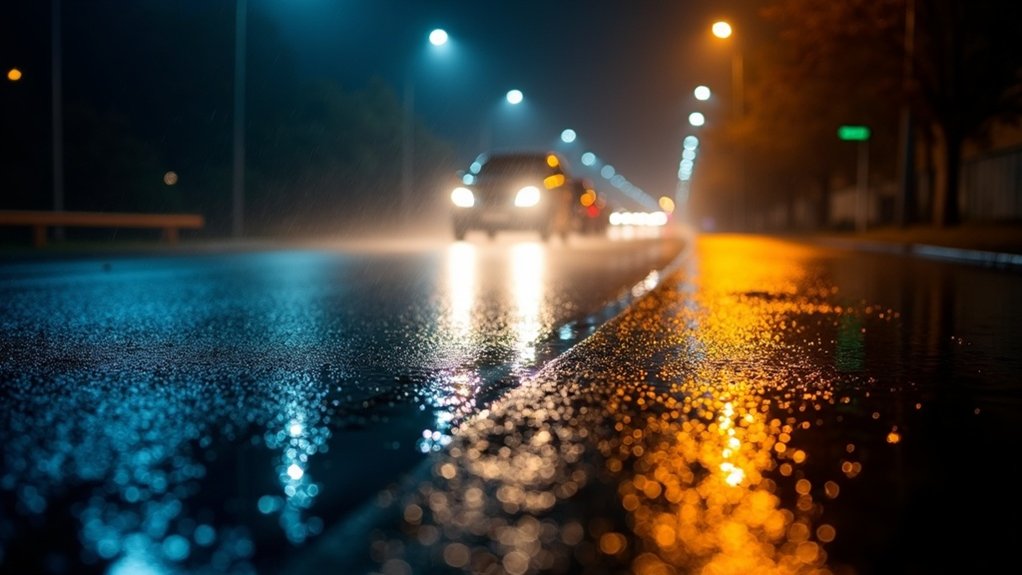
To reduce glare from wet roads at night, keep your windshield clean inside and out to minimize reflections. Adjust your mirrors to avoid direct light and use anti-reflective eyewear for better visibility. Dim your dashboard lights to reduce distractions, and consider upgrading to anti-glare headlights. Always drive cautiously, maintaining a safe speed and following distance. Planning for extra driving time can help you navigate challenging conditions more safely, and there are even more tips to explore.
Key Takeaways
- Keep your windshield clean to minimize glare from headlights and maximize visibility during night driving on wet roads.
- Adjust side mirrors downward and use night mode on the rearview mirror to reduce direct reflections from trailing vehicles.
- Dim dashboard lights to lessen competing brightness and help your eyes adjust better to the darkness outside.
- Drive at a reduced speed to improve visibility and allow for better reaction time while navigating wet conditions.
- Use low-beam headlights to decrease glare impact and avoid sudden movements to maintain control on slippery roads.
Keep Your Windshield Clean Inside and Out
When you drive at night, especially on wet roads, maintaining a clean windshield is essential. A dirty windshield scatters light, greatly increasing glare and compromising your visibility.
Regularly cleaning both the inside and outside of your windshield helps reduce glare from oncoming headlights. Opt for a glass cleaner that leaves no residue to achieve a streak-free finish, vital for night driving.
Additionally, promptly repair or replace any chips or scratches to minimize light distortion. By ensuring your windshield is clear of dirt and grime, you enhance your safety and reaction times on reflective surfaces during nighttime conditions.
Adjust Your Mirrors to Minimize Glare
To minimize glare while driving at night, you should adjust your mirrors carefully.
Tilting your side mirrors slightly downward can help reduce the direct reflection of headlights, while using the manual night mode on your rearview mirror enhances comfort and visibility.
If you have an automatic dimming mirror, it can greatly decrease brightness from trailing vehicles, improving your overall safety.
Side Mirror Adjustment
Adjusting your side mirrors properly is essential for minimizing glare from headlights of trailing vehicles, especially during night driving on wet roads.
To reduce glare effectively, tilt your side mirrors slightly downward. This adjustment helps limit the reflection of bright headlights, enhancing your visibility.
Regularly check and adjust your mirrors for ideal angles; doing so is a simple yet effective safety measure. If available, consider using automatic dimming mirrors, which greatly decrease brightness from approaching headlights.
These adjustments collectively improve your focus, allowing for safer navigation in challenging driving conditions, ultimately reducing glare and enhancing your overall driving experience.
Rearview Mirror Functionality
Although many drivers may overlook the importance of their rearview mirror, its functionality is essential for minimizing glare during nighttime driving.
Adjusting your rearview mirror to “night” mode can greatly reduce glare from headlights behind you, dimming reflections effectively. Additionally, properly aligning your side mirrors slightly downward helps prevent direct light from hitting your eyes, further minimizing glare.
Before hitting the road at night, consistently check and adjust your mirrors to guarantee peak visibility. If your vehicle has automatic dimming features, take advantage of them to enhance comfort and safety while driving in low-light conditions.
Automatic Dimming Benefits
When driving at night, the benefits of automatic dimming mirrors become clear as they greatly enhance your visibility and comfort.
These mirrors effectively reduce glare from bright headlights, allowing you to focus on the road. Here’s how they help:
- Sensor Technology: Automatically detects trailing vehicle headlights and adjusts brightness.
- Improved Focus: Minimizes distractions, keeping your attention on night driving.
- Safety Features: Standard in many modern vehicles, they enhance overall road safety.
Use the Right Eyewear
To enhance your night driving experience, choosing the right eyewear is essential for minimizing glare from wet roads. Prescription glasses with an anti-reflective coating considerably reduce glare from headlights and streetlights, improving visibility. Avoid yellow-tinted night driving glasses, as they can limit light entry and hinder your sight. Instead, consider specialized low vision glasses with absorptive filters to enhance visual comfort. Regular sunglasses are unsuitable for night use since they decrease contrast and overall visibility. Investing in quality eyewear designed for night driving can reduce eye strain and enhance safety.
| Eyewear Type | Benefits | Drawbacks |
|---|---|---|
| Prescription Glasses (AR) | Reduces glare, enhances clarity | Requires prescription |
| Night Driving Glasses | Minimizes glare | Often ineffective |
| Low Vision Glasses | Improves comfort, reduces reflections | May be expensive |
| Regular Sunglasses | Protects from sunlight | Reduces night visibility |
Dim Your Dashboard Lights
Dimming your dashboard lights can greatly enhance your night driving experience by reducing eye strain and improving your ability to see the road.
Here’s why you should dim your dashboard lights during nighttime driving:
- It reduces glare that competes with external light sources, helping you focus on the road.
- Proper brightness allows your eyes to adjust better to darkness, enhancing visibility.
- Most vehicles have adjustable settings, enabling you to find your ideal comfort level.
Upgrade to Anti-Glare Headlight Options
Upgrading to anti-glare headlight options can make a significant difference in your nighttime driving experience, especially on wet roads. High-intensity discharge (HID) or LED headlights provide brighter illumination than older halogen bulbs, enhancing visibility.
These advanced headlight technologies are designed to reduce glare by minimizing light scatter, which improves overall driving safety. Proper installation is essential, as misaligned headlights can worsen glare issues.
Regular maintenance, like cleaning and checking headlight conditions, also guarantees peak performance. Studies indicate that vehicles with upgraded headlights face fewer glare-related accidents, making the investment in anti-glare options worthwhile for safer night driving.
Watch Your Speed and Following Distance
While driving at night on wet roads, it’s essential to be mindful of your speed and following distance. Reducing your speed not only enhances visibility but also improves reaction time to unexpected obstacles.
To stay safe, consider these guidelines:
- Maintain a speed that allows for better tire grip, mitigating hydroplaning risks.
- Keep a following distance of at least three to four seconds behind the vehicle ahead, ensuring ample time to react.
- Adjust your speed to combat glare from headlights, preventing overdriving your visibility.
These practices are vital for maneuvering wet roads securely and avoiding accidents.
Plan for Extra Driving Time
When driving at night on wet roads, it’s essential to allow extra time for your journey.
This not only helps you adjust your speed appropriately but also reduces the stress that comes from maneuvering through glare and reduced visibility.
Planning ahead guarantees you can respond to unexpected hazards without feeling rushed.
Allow More Time
To traverse wet roads safely at night, you should always allow extra time for your journey. This approach helps reduce the stress linked to managing conditions where visibility is diminished by glare.
Consider the following:
- Plan for potential delays due to weather changes, ensuring you’re not rushed.
- Adjust your reactions to account for longer stopping distances and reduced visibility.
- Arrive early, allowing you to focus on the road rather than the clock.
Adjust Driving Speed
Adjusting your driving speed is essential for safely traversing wet roads at night. By reducing your speed by at least 10-15 mph below the posted limit, you can improve your visibility and reaction time to unexpected hazards, as glare can greatly compromise your sight.
This adjustment not only helps reduce glare effects but also minimizes the risk of skidding or losing traction. Additionally, planning for extra driving time alleviates the stress of rushing, which often leads to poor decisions.