To react safely to sudden potholes, maintain a firm grip on the steering wheel and avoid sudden maneuvers. Increase your following distance to improve reaction time, and slow down when approaching potholes to minimize impact. Verify your headlights are functional for better visibility and be cautious of puddles that may hide deeper potholes. After encountering one, check your tires and vehicle handling for potential damage. You’ll discover more tips to protect your vehicle and guarantee safety ahead.
Key Takeaways
- Increase your following distance to allow for better reaction time when encountering potholes unexpectedly.
- Slow down as you approach a pothole to minimize impact on your vehicle’s suspension and tires.
- Maintain a firm grip on the steering wheel to manage any sudden changes in direction caused by hitting a pothole.
- Avoid sudden maneuvers; instead, steer straight to reduce the risk of losing control or causing further damage.
- Regularly inspect your tires and suspension components to ensure they are in good condition for handling pothole impacts.
Understanding Pothole Formation
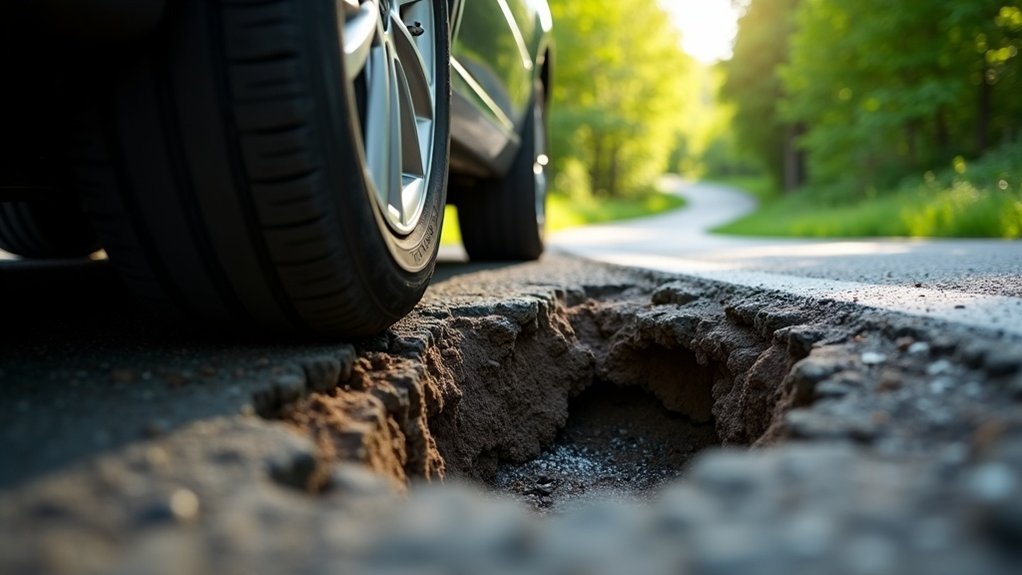
Potholes primarily form due to a combination of factors like water infiltration, freeze-thaw cycles, and heavy vehicle traffic.
When water seeps into cracks in the road surface, it freezes and expands, causing further damage upon thawing. This cycle leads to larger potholes over time.
Water infiltration creates a freeze-thaw cycle that progressively enlarges cracks, leading to more significant pothole formation.
Heavy vehicle traffic exerts pressure on already weakened pavement, exacerbating existing cracks and prompting significant pothole formation.
Poorly constructed or inadequately maintained roads are particularly vulnerable, especially in regions with extreme weather conditions.
Understanding these processes helps emphasize the importance of regular maintenance to mitigate the ongoing challenges of pothole emergence on our roads.
Risks and Damage Caused by Potholes
Hitting a pothole can lead to serious issues, like losing control of your vehicle and damaging your tires and rims.
The impact can bend rims, cause tire blowouts, and even lead to suspension component failure.
Understanding these risks can help you take preventive measures and react appropriately when encountering potholes.
Vehicle Control Loss
When you encounter a pothole on the road, the risk of losing vehicle control escalates considerably. Hitting a pothole can lead to serious pothole damage, including tire punctures and suspension issues.
It’s essential to understand how these factors affect your driving safety:
- Steering balance can be compromised, causing difficulty in maintaining control.
- Uneven tire wear may occur, leading to further handling problems.
- Suspension components can suffer damage, resulting in costly repairs.
To minimize vehicle control loss, always reduce your speed when approaching potholes. Being proactive can help you avoid dangerous situations and keep your vehicle in prime condition.
Tire and Rim Damage
Even a single encounter with a pothole can lead to significant tire and rim damage. You might experience tire damage like punctures or sidewall bulges, which could cause blowouts while driving. Wheel rims can bend or crack upon impact, resulting in air loss. To minimize risks, always apply your brakes before you hit a pothole. Regular inspections of your tires and rims are essential; damage can escalate quickly. Here’s a quick overview:
| Damage Type | Potential Consequences |
|---|---|
| Tire Punctures | Blowouts while driving |
| Sidewall Bulges | Increased blowout risk |
| Bent Rims | Air loss and tire damage |
| Wheel Misalignment | Uneven tire wear |
| Suspension Wear | Costly repairs, poor handling |
Suspension Component Failure
Potholes can unexpectedly compromise your vehicle’s suspension system, leading to serious safety issues.
Suspension component failure can cause alarming damage to your vehicle, affecting control and handling. When you hit a pothole, the force can misalign shock absorbers and struts, resulting in uneven tire wear and costly repairs.
- Repair costs can range from $300 to over $1,000.
- Regular inspection of suspension components can prevent severe damage.
- Suspension failure diminishes your vehicle’s stability and responsiveness.
Prioritize vehicle safety by addressing suspension issues promptly to maintain ideal vehicle handling and avoid dangerous situations on the road.
How to Safely Avoid Potholes
To safely avoid potholes, start by increasing your following distance, giving yourself ample time to spot hazards ahead.
Make sure your headlights work and your windshield is clear to enhance visibility on the road.
This proactive approach helps you react quickly and reduces the risk of damage to your vehicle.
Increase Following Distance
Maintaining a following distance of at least three seconds behind the vehicle in front of you is essential for safe driving, especially when maneuvering roads that may be riddled with potholes.
By increasing your following distance, you enhance your reaction time, allowing for better visibility of road conditions and the chance to avoid potholes without sudden maneuvers.
- Helps prevent rear-end collisions
- Encourages proactive driving habits
- Reduces risk of unexpected impacts
This increased distance not only gives you time to assess the road ahead but also promotes smoother adjustments, making your driving experience safer and more manageable.
Improve Visibility Techniques
When driving, it’s crucial to enhance your visibility to spot potholes before they become a problem. Make sure your headlights are functional and aligned to improve visibility at night.
Keep your windshield clean for better detection of road hazards. Maintain a following distance of at least three seconds, giving you more time to react to potential potholes.
Be cautious in areas with puddles, as they can hide deep potholes; reduce speed considerably to maintain control.
Finally, grip the steering wheel firmly to handle sudden changes in direction caused by unexpected potholes, guaranteeing a safer driving experience.
Tips for Minimizing Car Damage
While potholes can cause significant damage to your vehicle, there are effective strategies to minimize that risk.
Potholes can harm your vehicle, but with careful driving, you can reduce the risk of damage.
- Slow down before approaching a pothole to lessen impact on your suspension and tires.
- Maintain a firm grip on the steering wheel and keep it straight when driving over potholes to protect your rims and suspension.
- Regularly inspect and maintain your tires, ensuring proper pressure and tread depth to absorb shocks and avoid punctures.
Inspecting Your Vehicle for Pothole Damage
After hitting a pothole, it’s crucial to inspect your vehicle for any potential damage that could affect its performance and safety.
Start by checking your tires for visible damage like punctures or bulges. Pay attention to how your vehicle handles; if it pulls to one side, you might’ve a misalignment.
Listen for unusual noises or vibrations, which can indicate suspension problems. Regularly monitor tire pressure, as damage can occur without visible signs.
If you notice signs of bottoming out or bouncing, seek a professional inspection to address any suspension issues that may have arisen.
Who Is Responsible for Pothole Damage?
Determining who’s responsible for pothole damage can be tricky, as it often depends on local laws and regulations.
Generally, you’re considered responsible for damage incurred from hitting a pothole since it’s your duty to navigate the road safely. However, in some areas, you can file reimbursement requests with the local government or transportation authority.
- Research your area’s specific regulations.
- Report potholes to your public works department.
- Engage in community efforts to improve road safety.
Understanding these factors helps you handle pothole damage more effectively and may lead to quicker repairs and safer roads overall.
Does Car Insurance Cover Pothole Damage?
Have you ever wondered if your car insurance covers pothole damage? Typically, collision coverage helps with repair costs after hitting a pothole.
If the incident involves other vehicles or pedestrians, liability coverage may come into play. Before filing a claim, consider your insurance deductible; sometimes, it may not be financially beneficial to claim minor damage.
In certain areas, you might request reimbursement by reporting potholes to local authorities.
It’s wise to consult with an independent insurance agent to clarify your policy’s specifics regarding pothole-related damages and guarantee your vehicle is checked for any underlying issues.
Resources for Vehicle Maintenance and Repair
When it comes to maintaining your vehicle, having access to reliable resources can make all the difference in preventing costly repairs.
Regular vehicle maintenance, like checking tire pressure and scheduling suspension inspections, reduces the risk of pothole damage and enhances safety.
Consider the following resources:
- AAA Approved Auto Repair: Trustworthy facilities that guarantee quality service.
- Seasonal Check-ups: Assess potential pothole damage and optimize tire and suspension conditions.
- Maintenance Log: Keeping track of inspections helps identify wear and tear, guaranteeing vehicle longevity.
Utilizing these resources can greatly improve your vehicle’s reliability and save you money in the long run.