
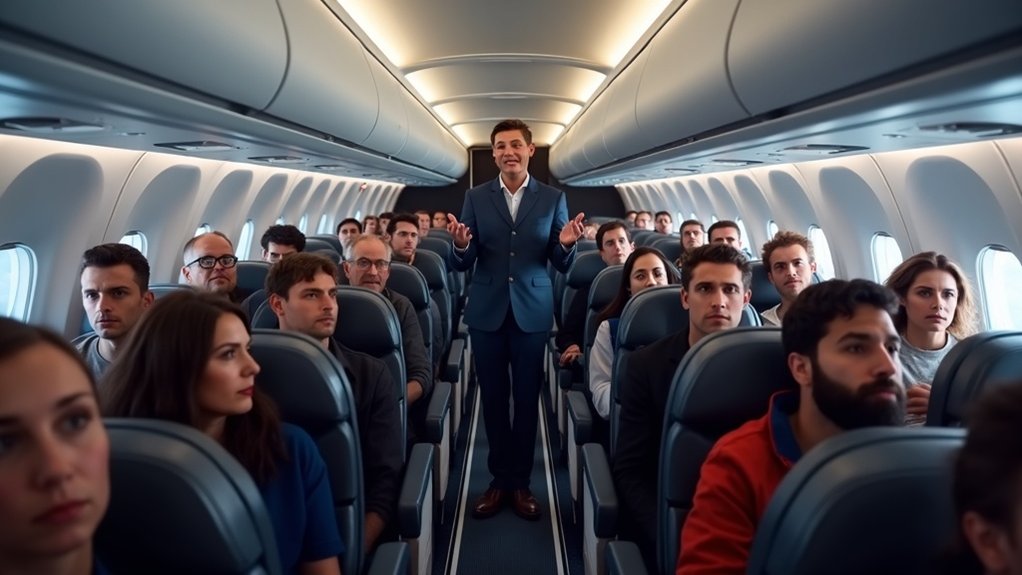
To practice emergency maneuvers with passengers, start with a clear safety briefing that outlines procedures and reassures them. Familiarize them with aircraft controls and expected maneuvers to ease anxiety. Encourage questions and emphasize securing loose items. During the flight, communicate calmly and provide updates if a situation arises. Monitor passenger reactions and be ready to adapt if needed. Knowing how to prepare makes a difference in emergencies, and there’s more to contemplate for effective execution.
Key Takeaways
- Conduct pre-flight briefings to inform passengers about emergency maneuvers and alleviate anxiety through clear communication.
- Secure loose items and personal belongings to prevent hazards during emergency maneuvers.
- Familiarize passengers with aircraft controls and their effects on flight dynamics to boost confidence.
- Emphasize the brace position and emergency exit locations during safety briefings for better preparedness.
- Monitor passenger reactions and seek consent before executing maneuvers to ensure comfort and readiness.
Preparing Passengers for Emergency Maneuvers
Before you commence on any emergency maneuvers, it’s crucial to inform your passengers about what to expect. Explain the nature of the maneuvers to help set their expectations, easing anxiety.
Emphasize securing loose items and personal belongings to prevent hazards during emergencies. Conduct a brief safety briefing that includes the brace position and emergency exit locations, preparing everyone for potential evacuation.
Always gauge passenger comfort by asking for their consent before executing any maneuvers.
Finally, continuously monitor their reactions and be ready to stop if you notice any signs of distress, ensuring their safety and comfort throughout the process.
Importance of Safety Briefings
Safety briefings are essential for preparing you and your fellow passengers for potential emergencies.
By communicating clear protocols and addressing concerns, you can feel more at ease and ready to follow instructions.
Clear Communication Protocols
When you’re on a flight, knowing what to do in an emergency can make all the difference, which is why clear communication during safety briefings is essential.
These briefings should explain emergency procedures, like how to brace for impact and secure personal items to prevent injuries. Informing passengers about the aircraft’s handling characteristics and expected maneuvers reduces anxiety and enhances comfort.
A well-structured briefing fosters trust and cooperation between you and the crew, enabling smoother actions during emergencies. Regular practice and feedback help refine these communication protocols, ultimately improving passenger preparedness for any unforeseen situations.
Pre-Flight Briefing Essentials
Effective pre-flight briefings set the stage for a successful flight experience. During your pre-flight briefing, you’ll inform passengers about the flight plan, safety procedures, and potential maneuvers. This clear communication helps alleviate anxiety and fosters a sense of safety.
Discussing types of maneuvers allows you to gauge passenger comfort levels and adjust accordingly. Emphasize securing loose items and preparing for emergencies, highlighting the critical role of passenger cooperation in maintaining safety.
Engaging in dialogue encourages passengers to voice concerns, establishing trust and ultimately leading to a more enjoyable and secure flying experience for everyone onboard.
Addressing Passenger Concerns
How can addressing passenger concerns during safety briefings enhance the overall flight experience? By openly discussing emergency maneuvers, you can alleviate fears and foster a sense of preparedness.
Here’s how to effectively address these concerns:
- Explain the types of emergency maneuvers, like emergency descents, to keep passengers informed.
- Emphasize the low accident rates in private aviation to reassure them.
- Encourage questions to clarify any uncertainties regarding procedures.
- Include a demonstration of safety equipment to boost confidence.
This approach not only enhances understanding but also creates a calm environment, ensuring everyone feels secure throughout the flight.
Familiarization With Aircraft Controls
Before you take off, it’s essential to familiarize your passengers with the aircraft controls.
Start by explaining the primary controls, like the throttle and yoke, and how they affect flight dynamics.
This understanding not only boosts their confidence but also prepares them for potential emergency situations.
Pilot Briefing Importance
While you’re preparing for a flight, a thorough pre-flight briefing is crucial for familiarizing passengers with the aircraft controls. This guarantees everyone knows what to do in an emergency.
Key points to cover include:
- The throttle and its role in power management
- The yoke for steering and maintaining control
- Elevator trim adjustments for stability
- Flaps selector for changing lift and drag
Emphasize calm communication, instructing passengers to listen carefully and respond.
Discuss how they can assist during unexpected maneuvers by securing loose items and understanding their roles, reinforcing the importance of situational awareness in emergencies.
Control Familiarization Techniques
Understanding the aircraft controls is key to ensuring safety during any flight, especially in emergencies. Familiarize yourself and your passengers with essential components like the throttle, yoke, elevator trim, and flaps selector.
Demonstrate how these flight controls influence aircraft dynamics, emphasizing the importance of maintaining airspeed within the green arc on the airspeed indicator to prevent stalling. Show how to stabilize the aircraft using smooth throttle and yoke inputs, reinforcing that gradual adjustments help maintain control.
Encourage questions about the controls and procedures, creating a collaborative environment that enhances everyone’s understanding during emergency maneuvers.
Simulating In-Flight Scenarios
Simulating in-flight scenarios with passengers is essential for preparing everyone for potential emergencies, as it fosters a sense of familiarity and confidence.
You can utilize a flight simulator or a mock cockpit setup to demonstrate emergency procedures effectively.
Consider these key elements:
- Discuss how to secure loose items.
- Practice assuming brace positions.
- Locate emergency exits together.
- Engage in role-playing exercises for scenarios like power loss.
Communicating During Emergencies
Effective communication during emergencies is essential for ensuring passenger safety and maintaining order.
Always provide clear, calm updates about the situation and give precise instructions. Use standard phrases to minimize confusion, so everyone knows their roles. Reassure passengers to help keep them calm and focused, explaining the steps you’ll take to manage the emergency.
Regularly practice these communication protocols with passengers, so they feel prepared. Designate a point person, like a flight crew member, to handle all communication, allowing the pilot to focus on flying and managing the emergency effectively.
Strong communication can make a significant difference during emergencies.
Passenger Responsibilities in Emergency Situations
When an emergency arises, your role as a passenger becomes vital for guaranteeing everyone’s safety. Follow these key responsibilities to help during an emergency landing:
- Listen carefully to the flight crew’s instructions.
- Secure loose items to prevent them from becoming projectiles.
- Familiarize yourself with the brace position—bend forward and tuck your chin.
- Identify the closest emergency exits and count the rows to them.
Staying calm and focused is important. Your cooperation with the crew enhances safety and guarantees a smoother evacuation process.