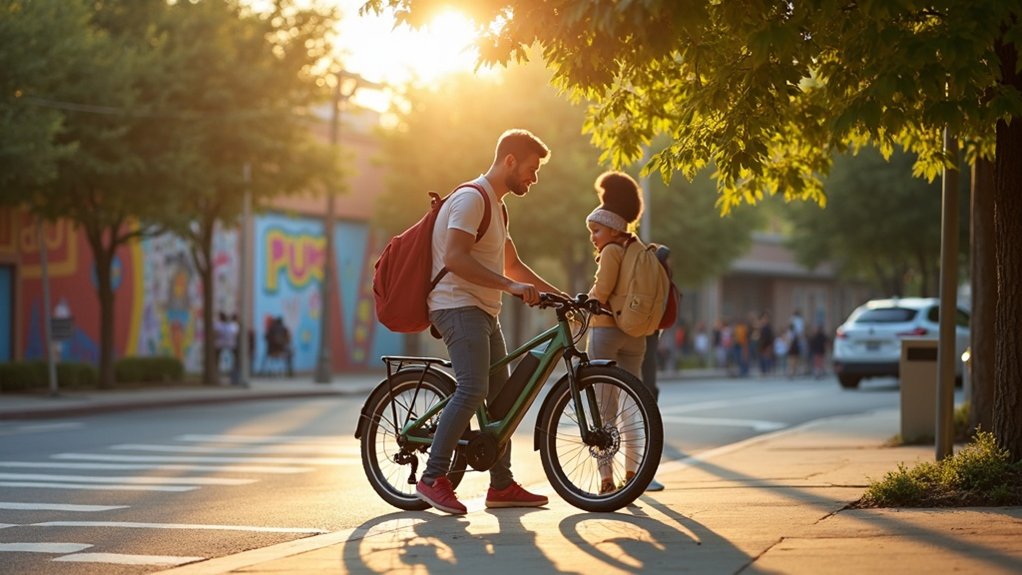
To plan safe school drop-offs by e-bike, start by selecting a stable, cargo-friendly e-bike with essential safety features like lights and reliable brakes. Equip your child with a properly fitted helmet and a safety vest for visibility. Choose quiet streets and bike paths to avoid heavy traffic, and familiarize yourselves with the safest routes. Finally, know your local e-bike laws to guarantee compliance while riding. You’ll find more vital tips on creating a secure biking experience.
Key Takeaways
- Choose an electric cargo bike for stability and ample carrying capacity to safely transport children and their gear.
- Select Class 1 e-bikes that require pedal assist for compliance and enhanced safety during rides.
- Plan routes using bike lanes and quieter streets to minimize exposure to heavy traffic and ensure safe commutes.
- Equip young riders with properly fitted helmets and safety vests to maximize visibility and reduce injury risks.
- Communicate with children during the ride to make the journey enjoyable and foster a positive biking experience.
Choosing the Right E-Bike for School Drop-Offs
When you’re selecting an e-bike for school drop-offs, it’s important to prioritize stability and carrying capacity.
An electric cargo bike, like the Radwagon, can accommodate multiple backpacks and gear, making it ideal for youth riding.
An electric cargo bike, such as the Radwagon, is perfect for transporting multiple backpacks and gear for youth riding.
Opt for Class 1 e-bikes that require pedal assist, ensuring safety and compliance with local regulations.
Evaluate essential safety features, such as integrated lights and reliable brakes, to navigate busy neighborhoods confidently.
Additionally, choose designs that enhance visibility, like bright colors or safety vests, ensuring both you and your passenger are seen during school drop-offs.
Choosing the right e-bike enhances both safety and convenience.
Safety Gear and Accessories for Young Riders
Selecting the right e-bike for school drop-offs also means prioritizing the safety of young riders. Start with properly fitted helmets, which can cut head injury risks by over 50%, and are often legally required for those under 16.
Enhance visibility by equipping children with safety vests, especially important in low-light conditions. Consider cargo bikes with safety features like running boards to keep little feet secure.
Look for padded seats to guarantee comfort during longer rides, enabling kids to enjoy their biking experience. Prioritizing these safety gear and accessories helps create a secure environment for young riders on their journeys.
Planning the Best Routes for School Commutes
When planning your child’s school commute, focus on selecting routes that prioritize safety by using local bike lanes and quieter streets.
Familiarizing yourself with bike-friendly paths in your area can greatly reduce exposure to heavy traffic.
Additionally, tools like Google Maps’ Bicycling Layer can help you identify the best routes for a smoother ride.
Safe Path Selection
To guarantee a safe commute for students using e-bikes, it’s vital to prioritize routes that minimize exposure to busy intersections and high-traffic areas.
Here are three key strategies for selecting safe paths:
- Utilize bike lanes and low-traffic residential streets to reduce risks for young riders.
- Familiarize yourself with designated bike paths for e-bike use, ensuring a safer commuting experience.
- Use mapping tools like Google Maps with the Bicycling Layer activated to identify bike-friendly routes and assess distance.
Regularly review your chosen routes to adapt to changing conditions, maintaining safety during school commutes.
E-bike education plays a significant role in promoting awareness.
Local Bike Lane Navigation
Maneuvering local bike lanes effectively can greatly enhance the safety of school commutes for students using e-bikes.
Utilize tools like Google Maps’ Bicycling Layer to identify safe routes that minimize exposure to heavy traffic. Familiarize yourself with designated bike paths in your area, as they often provide a safer environment for young riders.
Planning trips during off-peak hours reduces potential conflicts with vehicles. Consider the distance and terrain, selecting paths that match your child’s biking abilities.
Finally, stay informed about local regulations regarding e-bikes to guarantee compliance and safety while traversing these routes.
Communicating With Your Kids During the Ride
As you navigate the route to school, engaging your kids in conversation can transform the ride into a more enjoyable experience.
Engaging your kids in conversation during the ride to school can make the journey more enjoyable and meaningful.
Here are a few strategies for effective communication during your electric bike ride:
- Discuss the route, highlighting interesting landmarks or safe spots to make them feel involved.
- Use a shared phone holder for entertainment, ensuring they’re distracted yet attentive to the ride.
- Encourage open dialogue about their feelings, reinforcing confidence and comfort.
Understanding E-Bike Laws and Regulations
To guarantee safe school drop-offs by e-bike, it’s crucial to understand the classifications of e-bikes and the laws governing their use.
In Oregon, for instance, riders under 16 can’t operate Class 3 e-bikes, and anyone under 18 must wear a helmet.
Familiarizing yourself with these regulations will help you navigate local laws and enhance safety for both you and your child.
E-Bike Classifications Explained
Understanding e-bike classifications is essential for safe and legal riding, particularly as regulations can vary markedly across regions.
Here are three key classifications you should know:
- Class 1 E-bikes: Require pedaling for assistance up to 20 mph, ideal for young riders under 16.
- Class 2 E-bikes: Can use a throttle and assist up to 20 mph, but still require caution in usage.
- Class 3 E-bikes: Provide assistance up to 28 mph but often face restrictions, especially on sidewalks.
Awareness of these classifications helps you navigate safety regulations and avoid potential legal implications while riding.
Oregon Helmet Requirements
While riding an e-bike in Oregon, you must be aware of the helmet requirements that prioritize safety, especially for younger riders.
All cyclists under 16 are legally required to wear helmets, ensuring protection for young cyclists as they navigate the roads.
Oregon’s regulations also prohibit these riders from operating Class 3 e-bikes, which can reach speeds of up to 28 mph. This distinction emphasizes the importance of age-appropriate e-bike use.
As advocacy continues to evolve, there’s a push to allow middle schoolers to ride Class 1 e-bikes, reflecting a growing recognition of youth transportation needs within the framework of safety.
Building a Positive Biking Culture in Your Community
Creating a positive biking culture in your community hinges on active engagement and collaboration among families, schools, and local organizations.
Here are three strategies to foster this culture:
- Organize community events like bike rodeos and safety workshops to educate youth about safe riding practices.
- Collaborate with schools to implement Safe Routes to School programs, enhancing safety and biking etiquette.
- Promote group rides or “bike buses” to boost visibility and make biking a fun, social activity for students, especially with the growing popularity of electric bikes.
These initiatives can transform your community’s biking landscape and promote safety for all.