When planning rest stops for longer rides, aim for locations every 15-20 miles to refuel and hydrate. Choose safe, well-lit areas with clean restrooms and visible security features. Schedule breaks for energy boosts and motivation, ideally longer stops every two hours. Look for amenities like hydration stations and energy-rich snacks. Incorporating scenic attractions can also enhance your ride. If you want to discover even more tips for a seamless experience, keep exploring the details!
Key Takeaways
- Identify rest stops every 15-20 miles to maintain energy and hydration levels.
- Choose safe, well-lit locations with clean facilities and visible security measures.
- Schedule breaks for motivation and mental refreshment, ideally every two hours or 100 miles.
- Ensure stops have essential amenities like hydration stations, snacks, and first aid supplies.
- Plan routes using maps or cycling apps to strategically incorporate rest stops.
Understanding the Importance of Rest Stops
When you’re out on a long ride, you mightn’t think about it at first, but rest stops play an essential role in your overall performance.
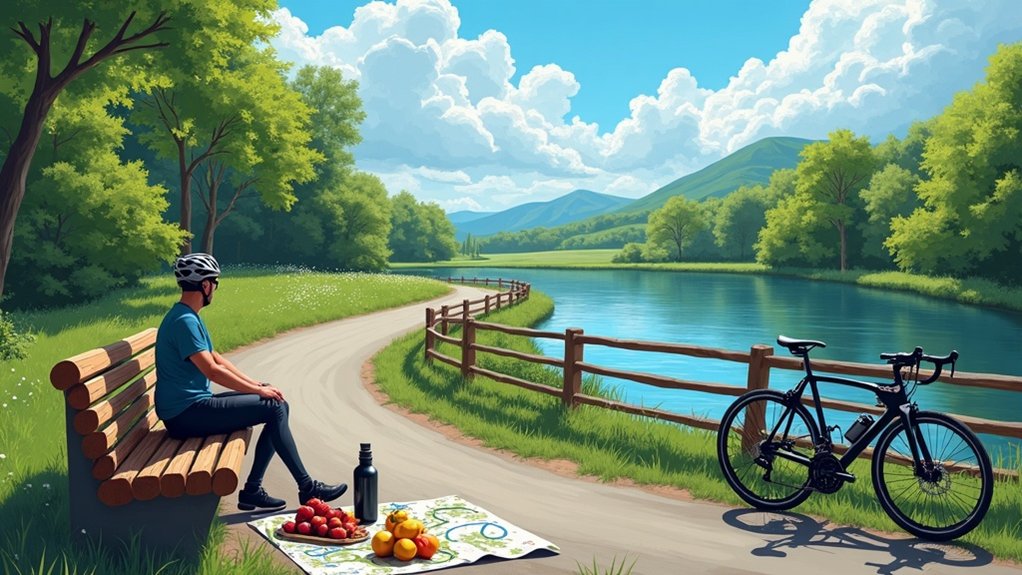
Recommended every 15-20 miles, these breaks are vital for maintaining your energy levels and hydration. They give you a chance to refuel with snacks and water, boosting your endurance.
Rest stops every 15-20 miles are crucial for hydration and energy, allowing you to refuel and enhance your endurance.
Plus, rest stops become social hubs where you can connect with fellow riders, sharing experiences and motivation.
Strategically planning these breaks helps prevent fatigue and injury, allowing you to manage your physical strain effectively, enhancing both your safety and enjoyment throughout the ride.
Identifying Safe and Convenient Locations
How can you guarantee your rest stops enhance your ride instead of hindering it? By planning ahead and identifying safe, convenient locations. Here are some tips to keep in mind:
- Look for rest stops 15-20 miles apart to sustain energy.
- Choose well-lit, maintained facilities with food, clean restrooms, and water.
- Ascertain visible security measures like surveillance cameras are present.
- Utilize maps or cycling apps to plot stops along your route.
- Opt for locations on level ground, providing ample space for cyclists.
With these strategies, your rest stops will be enjoyable and supportive, making your ride even better.
Timing Your Breaks for Optimal Performance
To keep your energy levels high during long rides, plan to take breaks every 15 to 20 miles.
These quick stops not only help prevent fatigue but also allow you to refuel and recharge mentally.
Ideal Break Frequency
Finding the right rhythm for breaks during long rides can greatly enhance your performance and enjoyment.
To maintain your average speed and combat fatigue, consider these tips for ideal break frequency:
- Schedule breaks every 15-20 miles.
- Plan for a longer stop approximately every two hours or 100 miles.
- Use breaks as social hubs for motivation and camaraderie.
- Take advantage of down times to refresh mental focus.
- Schedule Stops in Advance to avoid peak congestion.
Duration of Stops
When you’re on a long ride, timing your breaks is just as essential as planning your route. Aim for a break every 15-20 miles, limiting the duration of stops to around 10-15 minutes. This keeps your energy levels high and helps prevent fatigue.
Use these moments to hydrate, refuel, and socialize with fellow riders, sharing encouragement to boost morale. Avoid heavy meals during stops, as they can weigh you down. Instead, opt for light snacks that energize you without slowing you down.
Always listen to your body, adjusting stop frequency to balance speed with the need for recovery.
Essential Amenities to Look For
When you’re on a long ride, finding the right rest stops can make all the difference.
Look for hydration and nutrition stations to keep your energy up and your thirst quenched.
Plus, safety features like clear signage and shaded seating areas will guarantee you stay comfortable and protected while you recharge.
Hydration and Nutrition Stations
As you commence on longer rides, the significance of hydration and nutrition stations can’t be overstated. These stops are crucial for keeping you energized and hydrated.
Look for:
- Water stations for easy bottle refills
- Electrolyte drinks to prevent dehydration and cramps
- Energy-rich snacks like bananas and energy bars
- Basic first aid supplies for minor injuries
- Clear signage to guide you to these essential resources
Having access to these amenities will guarantee you maintain peak performance while enjoying your ride.
Prioritize your hydration and nutrition, and you’ll feel the difference as you pedal through those miles.
Safety and Accessibility Features
Finding the right rest stops during your longer rides can make all the difference in your overall experience.
Look for stops on level ground with ample visibility and easy access to guarantee your safety. Choose locations that provide enough space for multiple cyclists to pull off without congestion, enhancing accessibility.
Shaded areas or tents are essential for comfort against the sun or rain. Hard surfaces are preferable for resting your bike, avoiding grass or mud that can complicate maintenance.
Finally, clear signage for entrances and exits helps maintain a smooth flow, reducing potential hazards for everyone involved.
Incorporating Attractions Into Your Route
Incorporating attractions into your route not only breaks up the monotony of long rides but also transforms them into memorable adventures.
Incorporating attractions into your journey turns long rides into unforgettable experiences filled with exploration and joy.
As you plan your rest stops, consider:
- Parks for a quick stretch
- Local landmarks to explore
- Eateries for a tasty break
- Scenic viewpoints for stunning views
- Festivals or events for unique experiences
Use mapping tools to find these attractions within 15-20 miles of your stops.
Research their operational hours to avoid disappointment.
Prioritizing Safety and Security at Rest Stops
While enjoying the open road, it’s crucial to prioritize safety and security at your rest stops. Choose well-lit, well-maintained areas with visible security features like surveillance cameras or patrols.
Opt for bustling spots where fellow travelers add to the sense of community, deterring potential threats. Always lock your vehicle when you step away and hide valuables to protect your property.
Plan your route around rest stops known for their clean facilities and security measures. Utilize GPS to steer clear of higher-risk areas, ensuring your breaks aren’t only invigorating but also safe and secure for your journey.