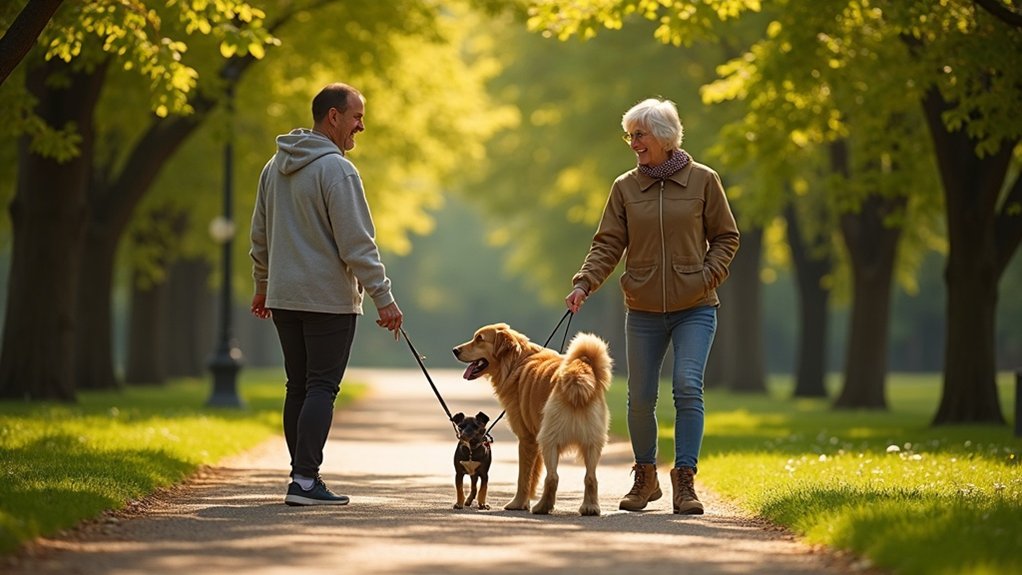
To pass dogs on leashes safely, maintain a distance of at least 6 feet and approach at an angle to reduce stress. Keep your leash loose and watch your dog’s body language for signs of discomfort, like a tucked tail or stiff posture. Use treats to reward calm behavior and create positive associations. Avoid direct eye contact to make interactions less intimidating. By practicing these techniques, you’ll enhance your experience and guarantee safe passing encounters. There’s more to learn about improving your interactions!
Key Takeaways
- Approach other dogs at an angle to reduce stress and respect their personal space.
- Maintain a distance of at least 6 feet to prevent discomfort and potential reactions.
- Keep the leash loose to promote a calm atmosphere during the encounter.
- Reward your dog with treats for calm behavior to create positive associations.
- Observe your dog’s body language closely and adjust distance if signs of discomfort appear.
Understanding Leash Reactivity in Dogs
When you encounter other dogs while walking your own, it’s important to recognize that leash reactivity often stems from stress and anxiety.
Tight leashes signal discomfort to your dog, increasing their chances of reacting aggressively. Understanding dog body language is key; watch for signs of discomfort early on to prevent escalation.
Instead of interpreting growling or barking as aggression, see these behaviors as communication signals that need empathy and positive reinforcement.
Growling and barking are not aggression; they are your dog’s way of communicating needs that deserve understanding and positive reinforcement.
Using training techniques like maintaining distance, offering treats to create positive associations, and gradual exposure can help manage leash reactivity, making walks more enjoyable for both you and your dog.
Techniques for Safe Passing
Recognizing leash reactivity in your dog sets the stage for implementing effective techniques for safe passing. Approach other dogs at an angle, maintaining at least 6 feet distance to minimize stress. Use treats to reinforce calm behavior and guarantee a positive association. Keep the leash loose to promote relaxed passing, avoiding tension that signals anxiety. Observe your dog’s body language; if they show discomfort, increase the distance to prevent escalation.
| Technique | Description |
|---|---|
| Angle of Approach | Approach at an angle, not head-on |
| Distance | Maintain at least 6 feet from other dogs |
| Treat Reinforcement | Use treats for positive behavior |
| Loose Leash Walking | Keep leash relaxed to reduce anxiety |
Body Language Signals to Watch For
Being aware of your dog’s body language is essential for guaranteeing safe interactions while passing other dogs on leashes.
As dog owners, you should look for these signs of discomfort:
- Stiff posture and a tucked tail indicate your dog may not be ready to approach.
- Ears pinned back suggest fear or aggression, while forward-facing ears indicate curiosity.
- Excessive barking or lunging means it’s time to increase distance and avoid approaching.
Recognizing these subtle body language signals helps you guarantee positive interactions and keep both dogs safe during encounters.
Stay observant and trust your instincts!
Best Practices for Calm Interactions
Understanding your dog’s body language sets the stage for calm interactions with other dogs.
Always approach at an angle, maintaining a comfortable distance to respect personal space. Use a long leash to allow your dog some freedom while staying in control.
Approaching at an angle and respecting personal space fosters positive interactions for your dog. Use a long leash for controlled freedom.
During encounters, avoid direct eye contact, which can be intimidating. Instead, focus on rewarding calm behavior with dog treats, creating positive associations.
Reinforce polite leash-walking skills in training sessions, ensuring your dog stays focused on you.
If your dog shows signs of discomfort, increase distance or redirect their attention to keep interactions stress-free.
Additional Resources for Dog Owners
How can you equip yourself with the right tools and knowledge to enhance your dog’s interactions on walks? Accessing resources can be invaluable. Here are three suggestions:
- Pet Resources Library: Find behavioral tips to teach your dog polite leash greetings and understand dog body language.
- Specialized Workshops: Participate in recall training and leash pressure response workshops to prepare for real-world situations.
- Professional Trainers: Seek guidance for complex reactivity issues, ensuring safe interactions.
These resources are full of tips to help you and your dog enjoy walks, making your leash back experiences much smoother.