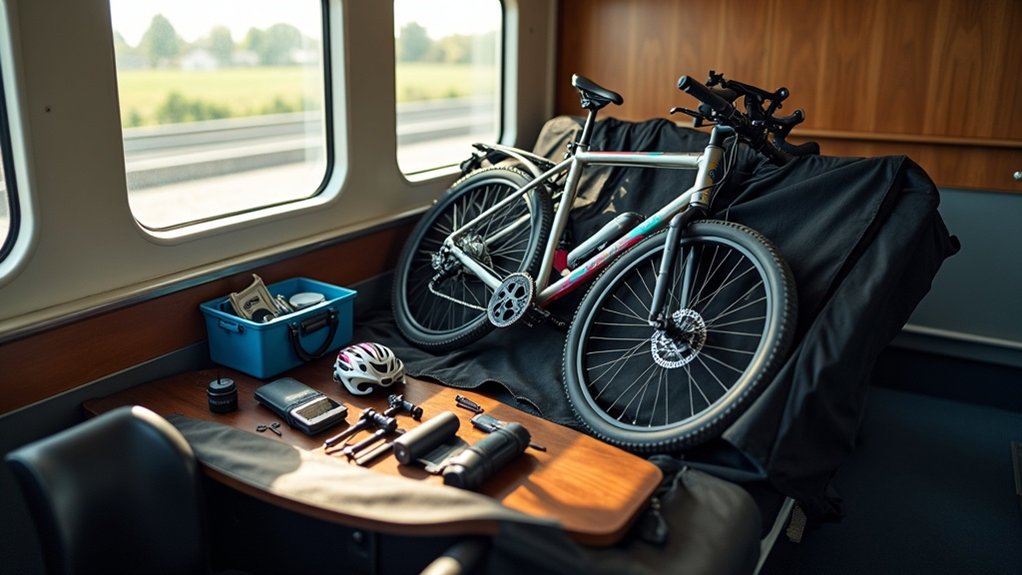
To pack your e-bike for a train trip, start by fully discharging the battery and detaching removable parts like the front wheel and handlebars. Use a sturdy bike box to protect it during transport, cushioning sensitive components with bubble wrap. Label the box clearly and seal it securely with tape. Arrive early at the station, ensuring everything is compact for inspection. When you follow these steps, you’ll be ready for a smooth journey—discover more tips as you go!
Key Takeaways
- Fully discharge the battery before packing to comply with safety regulations and avoid transport restrictions.
- Disassemble the e-bike by removing the front wheel and handlebars for compact packing.
- Use a sturdy shipping box, like Canyon Bikeguard, and cushion components with bubble wrap or foam.
- Clearly label and securely seal the box with multiple layers of packing tape for proper handling.
- Arrive early at the station to check in, ensuring the e-bike is clean and compact for inspection.
Preparing Your E-Bike for Travel
When you’re gearing up to take your e-bike on a train trip, the first step is to make certain it’s ready for travel.
Start by fully discharging the battery, as lithium batteries over 100 Wh may face restrictions. Next, detach any removable components like the front wheel and handlebars to save space.
Choose a sturdy shipping box, such as a Canyon Bikeguard, that meets oversized luggage limits and protects your electric bike. Don’t forget to label your box clearly and seal it with packing tape.
If needed, consider renting a battery upon arrival to simplify your journey. Bring your bicycle with confidence!
Packing Materials and Techniques
To guarantee your e-bike arrives safely at your destination, it’s essential to choose the right packing materials and techniques. Start with a sturdy bike box or a Canyon Bikeguard box that fits oversized luggage limits. Use cushioning materials like bubble wrap or foam around the frame and detached components to absorb impacts. Securely seal the box with packing tape and label it clearly to ascertain proper handling.
| Packing Material | Purpose | Tips |
|---|---|---|
| Sturdy Bike Box | Protects e-bike during transport | Check size requirements |
| Bubble Wrap/Foam | Cushions sensitive components | Wrap tightly |
| Packing Tape | Seals the box securely | Use multiple layers |
Battery Transport Regulations
Packing your e-bike isn’t just about safeguarding the frame and components; you also need to pay close attention to battery transport regulations.
Here are four key points to remember:
- Battery Size: Lithium batteries over 100 Wh are often prohibited—check local regulations.
- Discharge: Fully discharge your battery before packing to comply with safety standards.
- Condition: Never pack damaged or swollen batteries due to safety risks.
- Personal Baggage: Carry batteries as personal baggage, as some carriers may charge an additional fee.
Always confirm specific policies with your train company to guarantee a smooth journey.
Arriving at the Station
As you approach the station, arriving at least an hour before your train departs guarantees you’ve got plenty of time for check-in and any last-minute preparations.
Make certain your e-bike is clean and compact, as the Amtrak staff may inspect it before boarding the train. Bring necessary tools for disassembly since some e-bikes might need parts removed to meet transport guidelines.
Check ahead for bike box availability, as they can run out. Finally, be prepared to pay any bike transport fees, preferably in cash, to guarantee a smooth check-in process and a stress-free start to your journey.
Reassembly and Inspection Upon Arrival
Once you step off the train, the first thing you should do is carefully inspect your e-bike for any visible damage that might’ve occurred during transport.
Focus on these key areas:
- Frame – Look for any dents or cracks.
- Wheels – Check for true alignment and tire integrity.
- Components – Verify all parts are intact and functional.
- Battery – Confirm it’s securely connected.
Next, begin the reassembly by reversing your disassembly steps.
Tighten handlebars and pedals, then test the brakes and gears. If you packed tools, use them for adjustments.
Make certain your bike is ready for safe riding before leaving the station.