
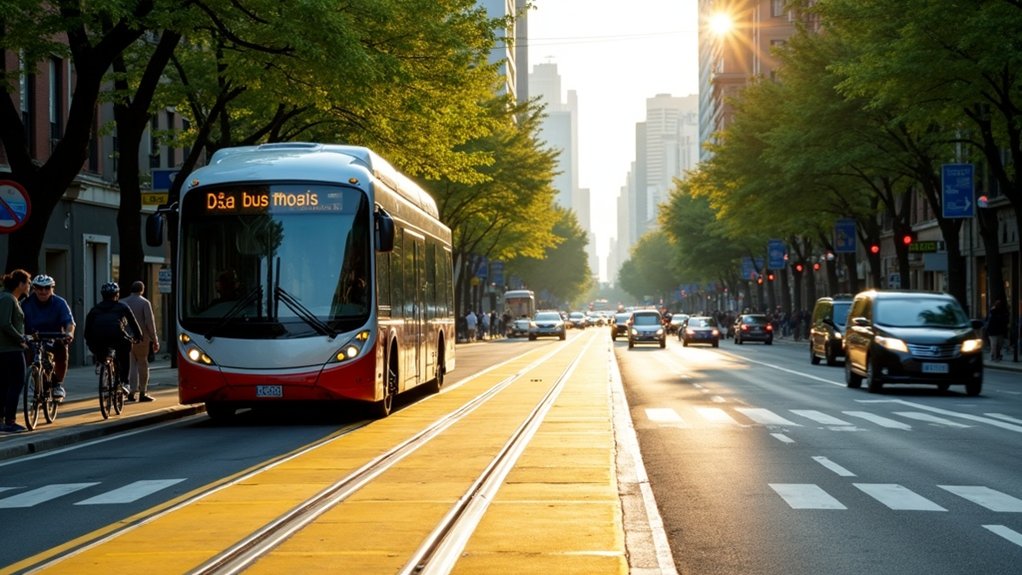
To navigate bus lanes where allowed, only use them for right turns at intersections and avoid parking or idling. Be aware that buses have the right of way when merging back into traffic, so yield accordingly. Keep an eye out for signage and road markings to guide your actions, and always maintain a safe distance from buses, as they can create blind spots. Understanding these rules will help guarantee safety and efficiency on the road, and there’s more on this topic ahead.
Key Takeaways
- Only use bus lanes when making a right turn at intersections; other uses are prohibited.
- Always yield to buses merging back into traffic to ensure their safe re-entry.
- Maintain awareness of bus lane signage and red markings to understand lane regulations.
- Avoid stopping, idling, or parking in bus lanes to keep them clear for public transit.
- Plan your route considering that bus lanes operate 24/7 to avoid violations.
Understanding Bus Lane Regulations
Understanding bus lane regulations is essential for maintaining efficient public transit operations and ensuring road safety. Designated bus lanes are reserved strictly for public transit vehicles, prohibiting single-occupancy vehicles except for right turns when allowed.
Compliance with these regulations is vital, as violations can impede transit efficiency. High Occupancy Vehicle (HOV) lanes further enhance traffic flow for carpoolers. The METRO Police Department actively enforces these rules to promote safety and efficiency.
Red markings and clear signage indicate bus lanes, educating all road users about their purpose and ensuring clear passage for transit vehicles, thereby optimizing overall traffic management.
Best Practices for Driving in Bus Lanes
Driving in bus lanes requires strict adherence to regulations to guarantee smooth transit operations and safety on the road.
Only use bus lanes for right turns at intersections, ensuring compliance with local traffic regulations. Avoid parking, idling, or drop-offs in these lanes to maintain clear paths for public transit.
Be aware that violations can lead to enforcement actions by the METRO Police Department, emphasizing the need to follow lane guidelines.
Understanding that bus lanes operate 24/7 helps you plan your driving routes effectively, reducing congestion and enhancing overall traffic flow.
Implement these best practices to navigate bus lanes successfully.
Yielding to Buses: Right of Way Rules
When maneuvering bus lanes, it’s crucial to recognize that buses have the right of way, especially as they merge back into traffic. Vehicles must yield to buses to guarantee safe re-entry, which is vital for maintaining efficient traffic flow.
When approaching a bus stop, reduce speed and be prepared to stop, as buses will pick up or drop off passengers.
In bus-only lanes, if you’re making a right turn, make sure you yield to any buses present. Compliance with these rules not only supports public transit but also greatly improves safety for all road users, including cyclists and pedestrians.
Safety Tips for Cyclists and Pedestrians
Maneuvering bus lanes requires awareness not just from drivers but also from cyclists and pedestrians.
As a cyclist, always stay in designated bike lanes or the right side of the road, keeping a safe distance from buses to avoid their blind spots and unexpected hazards from turning vehicles.
Pedestrians, especially at bus stops, should remain vigilant; look for oncoming traffic before crossing when a bus has halted.
Use turning signals to communicate intentions clearly to all road users.
Familiarize yourself with bus lane signage to understand where bus-only or shared-use lanes exist, ensuring safety for everyone involved.
Signage and Markings to Look Out For
As you navigate bus lanes, it’s essential to identify lane designation signage and road markings.
Look for red lane markings that clearly indicate bus-only areas, along with high-visibility signs displaying messages like “Bus Only” or “Carpool Lane.”
Understanding these elements guarantees compliance and enhances safety for everyone on the road.
Lane Designation Signage
To guarantee safe navigation through bus lanes, it’s essential to recognize specific lane designation signage and markings. Look for red lane markings indicating designated bus-only lanes that enhance visibility and safety for public transit. Pay attention to diamond symbols, which signify lanes reserved for buses and carpools. Familiarize yourself with signage detailing lane usage rules, including parking restrictions. Compliance with these markings is enforced by the METRO Police Department, ensuring adherence to transit regulations.
| Signage Type | Description |
|---|---|
| Bus Only Sign | Indicates lanes restricted to bus traffic |
| Red Lane Markings | Denote bus-only lanes |
| Diamond Symbols | Reserved for buses and carpools |
| Lane Usage Rules | Specify parking, idling, and drop-off rules |
Road Markings Identification
Understanding road markings is crucial for maneuvering bus lanes safely and efficiently.
Bus lanes are typically marked with bright red paint, clearly indicating their exclusive use for public transit vehicles. Look for high-visibility diamond symbols, which signify that these lanes are reserved for buses and carpool vehicles.
Dedicated bus lane markings differentiate them from regular traffic lanes, promoting safer transit flow. Pay attention to accompanying signage that outlines operational hours and specifies restrictions, like no parking, idling, pickups, or drop-offs.
This guarantees these important lanes remain unobstructed for public transit, enhancing overall traffic efficiency and safety.
Consequences of Improper Bus Lane Usage
Improper bus lane usage can lead to significant legal penalties, including fines and citations, enforced by the METRO Police Department.
Your actions in these lanes not only contribute to increased traffic congestion but also create safety risks for all road users, including bus passengers.
Understanding the repercussions of violating bus lane regulations is essential for maintaining an efficient and safe transit environment.
Legal Penalties for Violations
While maneuvering through bus lanes may seem straightforward, failing to adhere to regulations can result in significant penalties.
In jurisdictions like Houston, the METRO Police enforce compliance, issuing fines ranging from $100 to $500 for violations such as unauthorized lane usage and obstructing transit services.
You’re only permitted to use designated bus lanes for right turns; idling or making pickups and drop-offs is prohibited.
Offenders may receive citations, and repeated violations can lead to increased fines and points on your record, ultimately impacting your insurance rates and driving privileges.
Understanding these legal penalties is essential for safe navigation.
Traffic Congestion Impact
Failing to follow bus lane regulations not only incurs legal penalties but also considerably contributes to traffic congestion. Unauthorized vehicles in bus lanes disrupt the flow of public transit, leading to increased travel times, especially during peak hours.
Studies indicate that bus-only lanes can enhance bus speeds by up to 30%, but improper usage diminishes this advantage. Non-compliant vehicles create a ripple effect, escalating delays in adjacent lanes and extending overall commute times for all road users.
Effective enforcement of bus lane regulations is essential to preserving the efficiency of dedicated transit lanes and ensuring reliable public transportation for everyone.
Safety Risks Involved
When unauthorized vehicles occupy bus lanes, they not only compromise the efficiency of public transit but also elevate the risk of accidents.
Improper lane usage disrupts the flow of transit vehicles, increasing the likelihood of collisions between buses and other road users. This interference diminishes lane integrity, leading to traffic congestion that frustrates commuters and erodes trust in public transportation.
The METRO Police Department enforces penalties to discourage such behavior, but non-compliance ultimately discourages transit use. As fewer people rely on buses, commute times lengthen, undermining the benefits of dedicated transit infrastructure designed to enhance mobility and accessibility.