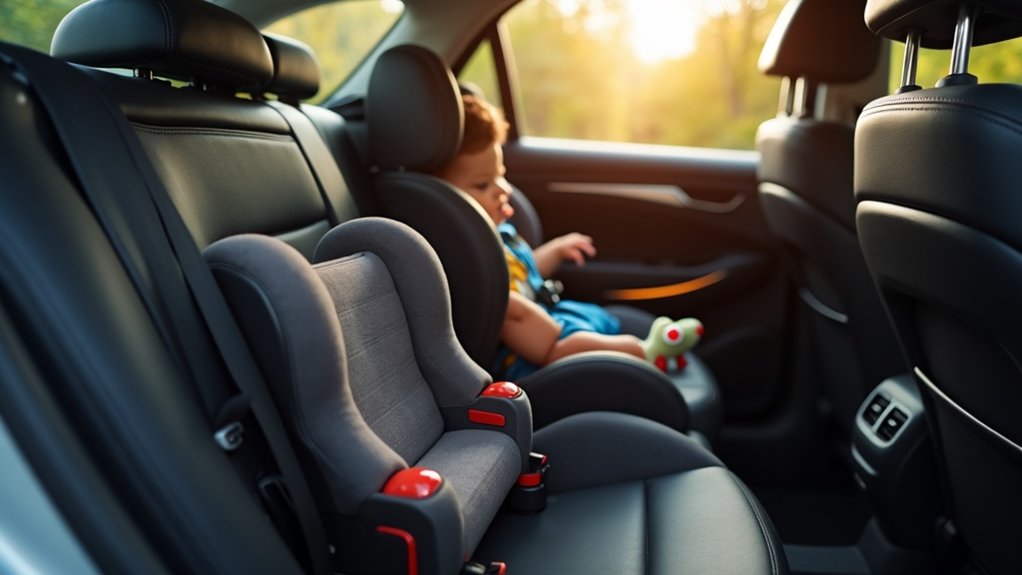
To mount a child seat safely, start by choosing the right seat based on your child’s age, weight, and height. Check your car seat and vehicle manuals for specific installation instructions. Utilize either the seat belt or LATCH system, but not both. Make sure the seat fits snugly, passing the Inch Test, with less than one inch of movement at the belt path. Regularly inspect for security and wear. There’s much more to learn about ensuring your child’s safety.
Key Takeaways
- Consult your car seat and vehicle manuals to ensure proper compatibility and installation requirements for mounting the child seat safely.
- Use either the seat belt or LATCH system for installation, but never both at the same time to prevent improper securing.
- Perform the Inch Test to confirm a snug fit, ensuring the seat does not move more than one inch at the belt path.
- Clear the back seat area of unnecessary items and secure lower anchors properly to minimize distractions and ensure a safe installation.
- Regularly check the installation and condition of the car seat every few months, especially after any accidents, to maintain safety standards.
Importance of Proper Car Seat Installation
When it comes to ensuring your child’s safety on the road, proper car seat installation is non-negotiable. It greatly reduces the risk of injury or death in a crash—by 71% for infants and 54% for toddlers.
Each car seat has unique installation requirements, so consulting both the car seat manual and your vehicle’s owner’s manual is essential. Always place children under age 13 in the back seat for maximum safety.
Use either the seat belt or LATCH system correctly, but never both at the same time. Finally, perform the Inch Test to confirm a snug and secure installation.
Selecting the Right Car Seat for Your Child
When selecting a car seat, consider your child’s age, weight, and height to guarantee it meets the American Academy of Pediatrics guidelines.
It’s crucial to choose a model with high safety ratings and a five-point harness, especially for younger children.
Also, double-check that the seat installs easily in your vehicle to maximize safety during use.
Age and Size Considerations
Selecting the right car seat for your child is essential for their safety during travel. Age and size considerations play a vital role in this choice. Always follow the manufacturer’s guidelines for weight and height limits.
| Age Range | Car Seat Type |
|---|---|
| Infants to 2 years | Rear-facing car seat |
| 4 years to 8-12 | Booster seat |
| 2 years to 40-65 lbs | Forward-facing car seat |
Ensure your child remains in the back seat until age 13. Always consult the car seat manual and your vehicle’s owner manual for proper installation and requirements.
Safety Ratings Importance
Safety ratings are essential for guaranteeing your child’s car seat is as protective as possible during travel. These ratings indicate how well a seat performs in crash tests, helping you make informed choices.
The National Highway Traffic Safety Administration (NHTSA) uses a 5-star rating system, evaluating both crash protection and ease of use. Research shows that car seats with higher safety ratings greatly lower the risk of injury in collisions.
Always look for seats that meet or exceed federal safety standards and regularly check for updated safety ratings and recalls to guarantee your child’s maximum safety on the road.
Installation Compatibility Check
How can you guarantee that the car seat you choose is compatible with your vehicle? Start by consulting both your vehicle’s owner manual and the car seat manual, as not all vehicles accommodate every type of car seat.
Check the weight and height limits to verify the car seat suits your child’s age and size. Look for a car seat that installs with either the vehicle’s seat belt or the LATCH system—never both simultaneously.
Make sure it fits snugly in the back seat, passing the Inch Test, allowing no more than one inch of movement at the belt path for proper installation.
Understanding Car Seat Types and Their Uses
When choosing the right car seat for your child, it’s crucial to understand the different types available and their specific uses.
Rear-facing car seats are ideal for infants and toddlers, recommended until about 2 years old or when reaching the seat’s weight limit.
Once your child outgrows this, forward-facing car seats come into play, suitable from around age 2 up to 65 pounds or more.
Finally, booster seats cater to older children, ensuring the seat belt fits properly until they reach 4 feet 9 inches.
Always refer to the owner’s manual for installation guidelines specific to your car seats for maximum safety.
Preparing Your Vehicle for Car Seat Installation
Before you begin installing a car seat, it’s essential to prepare your vehicle to guarantee a secure and safe fit. Start by consulting your owner’s manual to identify the safest seating position. Clear the back seat area of any unnecessary items to minimize distractions. Verify the car seat’s lower anchors are twisted downwards for proper connection. If needed, use a rolled towel or pool noodle to achieve the correct recline angle. Finally, secure the top tether for rear-facing installations to limit movement.
| Step | Action |
|---|---|
| Consult manual | Find safest seating position |
| Clear back seat | Remove unnecessary items |
| Check lower anchors | Verify they’re twisted downwards |
| Adjust recline angle | Use towel/pool noodle if necessary |
| Secure top tether | Limit movement for rear-facing seats |
Step-by-Step Guide to Using Lower Anchors
To use lower anchors effectively, start by locating the anchor points in your vehicle’s rear seat.
Once you’ve identified them, securely attach the anchors to the metal bars, ensuring they’re positioned correctly.
Finally, check the installation tightness to confirm that the car seat is firmly in place.
Identify Lower Anchor Points
Identifying lower anchor points in your vehicle is essential for safely installing a child seat, as these anchors provide a secure connection to the vehicle’s structure. Typically, lower anchors are found in the seat crease and connect to the vehicle’s metal frame. To guarantee proper use, follow the table below:
| Step | Action | Notes |
|---|---|---|
| 1 | Locate lower anchors | Check the seat crease |
| 2 | Prepare connectors | Twist and face downwards |
| 3 | Secure connections | Hook firmly into metal bars |
Always consult your vehicle and car seat manuals for specific guidance.
Securely Attach Anchors
Secure the lower anchors in your vehicle by following these straightforward steps for a safe child seat installation.
First, locate the lower anchors, usually tucked in the crease between the seat back and seat bottom.
Twist the lower anchors on your car seat to face downwards. Make certain you identify the correct belt path for rear-facing installation, with the anchors positioned in front of the buckle.
Next, hook the lower anchors onto the vehicle’s metal bar and listen for a click, confirming a secure connection.
Finally, perform the Inch Test to check that the child seat doesn’t move more than one inch in any direction.
Check Installation Tightness
Once you’ve attached the lower anchors correctly, it’s essential to check the installation tightness to confirm your child’s safety.
Grab the car seat at the belt path and pull it side to side. The movement shouldn’t exceed one inch in either direction. If it does, make sure the lower anchors are securely fastened to the vehicle’s metal bars, twisted down for stability.
Stand opposite the car seat while tightening for better leverage, achieving a snug fit. After securing, double-check that the car seat remains at the correct angle for rear-facing installation.
Safety requires diligence in every step.
Ensuring a Secure and Snug Fit
To guarantee your child seat fits snugly, start by performing the Inch Test, which checks for movement at the belt path. The car seat shouldn’t move more than one inch side to side or forward and back.
Here are key steps to ascertain a secure fit:
- Use either the seat belt or LATCH system, but never both simultaneously.
- Always utilize the top tether for forward-facing seats to enhance stability.
- If the seat isn’t level, place a rolled towel or pool noodle underneath for proper reclining.
Regularly check the installation to confirm it remains secure as your child grows.
Regular Maintenance and Safety Checks
Maintaining your child seat is essential for guaranteeing its effectiveness in protecting your little one. Check the installation every few months and after any car accidents to confirm it’s secure.
Use the Inch Test to verify the seat doesn’t move more than one inch at the belt path. Regularly inspect for wear, damage, or expired features, typically after 6 to 10 years.
Clean the seat cover to avoid dirt buildup that can affect safety. Finally, revisit the owner manuals for your vehicle and car seat to stay informed about weight limits and updated installation guidelines.
Resources for Assistance and Further Learning
Regular maintenance and safety checks help guarantee your child seat remains effective, but knowing where to find additional resources can further enhance your confidence in installation.
Here are some helpful options:
- Attend Safe Kids checkup events for expert guidance on proper installation techniques.
- Search for certified Child Passenger Safety Technicians in your area for personalized assistance, especially if you can’t make it to an event.
- Utilize owner manuals for both your vehicle and booster seat, which detail specific installation requirements.
Exploring these resources assures your child’s safety during travel, making every journey a secure one.