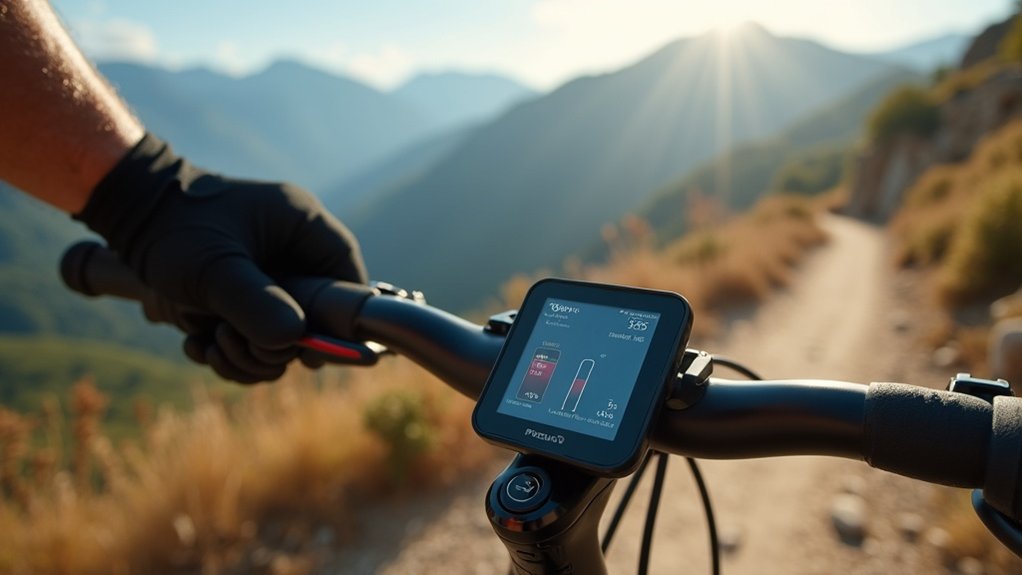
To monitor battery temperature on long climbs, utilize the onboard Battery Management System (BMS) and Onboard Diagnostic (OBD) systems. These systems provide real-time temperature readings and trigger alerts for overheating. Regular diagnostics help identify thermal imbalances. Implement cooling strategies, like activating auxiliary fans and guaranteeing proper airflow. Monitor historical data to understand temperature patterns and adjust your cooling approach as needed. Keeping an eye on these factors promotes ideal battery health and performance during challenging climbs.
Key Takeaways
- Utilize built-in Battery Management Systems (BMS) to continuously monitor battery temperature during long climbs.
- Employ Onboard Diagnostic (OBD) systems that provide real-time temperature readings and alerts for overheating.
- Conduct regular diagnostics to identify thermal imbalances or hotspots within the battery system.
- Implement cooling strategies, such as activating auxiliary fans and reducing power to non-essential systems.
- Maintain historical temperature data to analyze trends and adjust cooling strategies accordingly.
Understanding Battery Temperature Dynamics
As you tackle long climbs, it’s vital to understand how battery temperature dynamics can impact your vehicle’s performance. During these arduous ascents, battery temperature monitoring becomes essential due to increased load and energy demands.
Elevated temperatures can degrade battery performance and shorten its lifespan, often resulting in irreversible heat damage. Built-in battery management systems (BMS) continuously track internal metrics, ensuring ideal operating conditions.
If you’re aware that heavy loads can rapidly elevate temperatures, you can adjust your driving habits to mitigate risks. Effective temperature management strategies, combined with vigilant monitoring, can help maintain battery performance and extend its operational life during challenging climbs.
The Role of Onboard Diagnostic Systems
Onboard Diagnostic (OBD) systems play an essential role in monitoring battery temperature during long climbs.
They continuously track real-time data through built-in sensors and alert you if temperatures exceed safe thresholds, helping you avoid potential overheating issues.
Diagnostic System Functions
While traversing long climbs, the onboard diagnostic system (OBD) plays an essential role in monitoring battery temperature. It continuously tracks battery temperatures using built-in temperature sensors, ensuring peak performance.
When the system detects temperatures exceeding safe thresholds, it triggers warning lights or alerts, allowing you to take corrective action and prevent overheating. The data collected aids in trend analysis, enhancing your understanding of battery performance under various conditions.
Regular diagnostics can reveal thermal imbalances or hotspots, enabling timely maintenance that ultimately prolongs battery lifespan. Relying on OBD systems can greatly enhance your driving experience and battery management.
Real-Time Temperature Monitoring
Real-time temperature monitoring is essential for maintaining battery health during long climbs, especially when the risk of overheating increases. Onboard diagnostic systems (OBD) utilize built-in sensors for continuous monitoring, ensuring prompt detection of temperature spikes. This integration with other vehicle metrics enables thorough assessments.
| Metric | Real-Time Value | Historical Trends |
|---|---|---|
| Battery Voltage | 12.5 V | Stable |
| Current Draw | 50 A | Increasing |
| Battery Temp | 45°C | 40°C average |
Alerts for Overheating Issues
To prevent overheating during long climbs, effective alerts from onboard diagnostic systems are essential.
These systems continuously monitor battery temperature and trigger notifications when thresholds are exceeded, allowing you to take immediate action.
Key features include:
- Built-in sensors that detect abnormal temperature rises
- Real-time data alerts for proactive management
- Integration with vehicle management systems to adjust power output
- Historical data reviews to identify temperature fluctuation patterns
Utilizing OBD-II Scanners for Detailed Insights
As you tackle long climbs, utilizing OBD-II scanners can greatly enhance your understanding of battery performance.
These devices provide real-time data from your vehicle’s battery management system, allowing you to monitor battery temperature effectively. Many scanners display specific readings for both the high-voltage battery and individual cells, offering vital insights into thermal performance.
By tracking temperature trends during steep ascents, you can identify potential overheating issues early. Some advanced OBD-II scanners even allow customizable alerts for battery temperature thresholds, enabling proactive management of battery health.
Reviewing data logs post-climb informs future strategies to mitigate overheating risks effectively.
Recognizing Warning Signs of Overheating
During long climbs, you should closely monitor temperature warning alerts, as they indicate potential overheating risks.
Conducting visual inspections can help you identify any physical signs of distress in the battery system.
Staying proactive in recognizing these warning signs is essential for maintaining peak performance and avoiding failures.
Temperature Warning Alerts
Battery temperature monitoring systems play an essential role in identifying overheating issues, as they utilize built-in sensors to continuously track the internal temperature, voltage, and current during prolonged climbs.
Temperature warning alerts can notify you of potential battery problems, enabling proactive measures. Be aware of these common symptoms of battery overheating:
- Activation of power system indicator lights
- Noticeable reductions in acceleration on steep climbs
- Increased battery temperature during prolonged elevation
- Decreased overall performance
Maintaining ideal battery temperature is vital; high temperatures can permanently damage capacity.
Early detection through alerts helps prevent serious issues before they escalate.
Visual Inspection Techniques
Monitoring battery temperature is crucial, but visual inspections can also reveal warning signs of overheating.
Regularly inspect battery cooling vents for blockages from dirt or debris, which can restrict airflow. Look for swelling or deformation on the battery casing, indicating overheating or damage.
If available, monitor the battery temperature display for sudden spikes. Check for discoloration or corrosion around terminals, as these can signal overheating issues.
Finally, verify the battery management system (BMS) functions correctly; observe warning lights during steep climbs for early overheating alerts.
These visual inspection techniques are important for maintaining ideal battery performance.
Best Practices for Maintaining Optimal Battery Health
To maintain ideal battery health, it’s essential to implement effective strategies that counteract the thermal stress experienced during long climbs.
Maintaining ideal battery health requires effective strategies to combat thermal stress during long climbs.
Consider these best practices:
- Utilize built-in Battery Management Systems (BMS) to monitor battery temperature and prevent overheating.
- Implement cooling strategies by reducing power to non-essential systems and driving in eco mode.
- Regularly check and maintain battery air vents for maximum airflow, preventing hotspots.
- Use independent monitoring systems for redundancy, ensuring early detection of temperature-related issues.
The Impact of Climbing on Battery Performance
As you ascend steep hills, the increased power demands can greatly elevate battery temperature, which may compromise performance if not effectively managed.
A battery management system (BMS) plays an essential role in regulating this temperature, often reducing power output to prevent overheating.
During prolonged climbs, battery temperatures can rise several degrees Celsius, impacting performance and diminishing overall range if they exceed safe limits.
Be mindful that heavy loads and aggressive driving exacerbate heat increases.
Strategies for Effective Temperature Monitoring
Managing battery temperature effectively during long climbs is essential for maximizing performance and prolonging battery life. Here are some strategies to guarantee your battery pack remains within safe temperature limits:
- Utilize built-in battery management systems (BMS) for real-time monitoring of voltage, current, and temperature.
- Install additional temperature sensors on battery packs to detect localized heat variations.
- Use software applications to track battery temperature metrics and receive alerts for high temperatures.
- Implement cooling strategies, like activating auxiliary fans or reducing load, if temperatures approach critical levels.
Regularly review historical data to refine your approach and maintain peak battery performance.