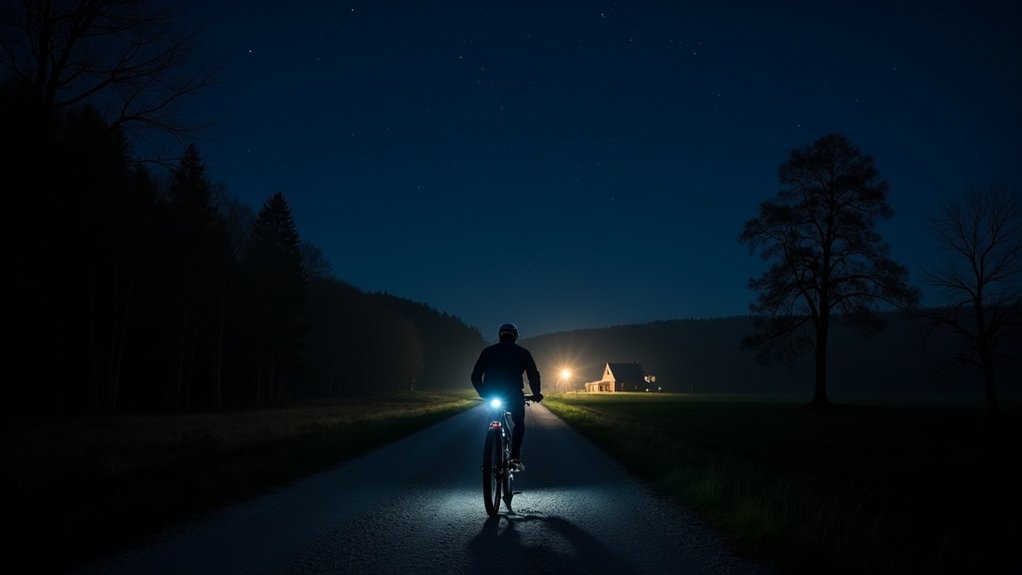
To manage night rides in rural areas, equip your bike with a high-lumen headlight (at least 800 lumens) and bright rear lights for visibility. Wear reflective clothing and scout the route beforehand to identify hazards. Stay aware of wildlife and road conditions, adjusting your speed as needed. For group rides, establish communication and signals to keep everyone safe. Make certain you’re ready for changing weather with proper gear. There’s much more to take into account for a successful night ride.
Key Takeaways
- Equip your bike with a high-lumen front headlight (at least 800 lumens) and bright rear lights for maximum visibility.
- Scout your route during daylight to identify potential hazards and obstacles.
- Wear reflective clothing and accessories to increase visibility against dark surroundings.
- Maintain heightened awareness for nocturnal wildlife and adjust your speed accordingly.
- Use hands-free communication systems for group riding to ensure safety and coordination.
Essential Preparations for Night Riding
When you venture out for a night ride in rural areas, it’s important to prioritize your visibility and safety. Equip your bike with a high-lumen front headlight (at least 800 lumens) and a bright rear light, including a backup, to enhance visibility on poorly lit roads.
Wear reflective clothing and accessories, as they stand out better than bright colors. Scout your route during daylight to identify hazards, and use GPS devices with night mode for safe navigation.
Carry essential items like a first aid kit, bike repair tools, and a portable power bank to address any unforeseen safety concerns.
Enhancing Visibility With Proper Lighting
Enhancing your visibility during night rides in rural areas is essential for your safety and that of others. Use front headlights with at least 800 lumens to clearly illuminate the road and spot hazards.
Installing additional rear lights with automatic brake signals greatly boosts your visibility to drivers. Consider side lighting options like spoke lights to further enhance your presence.
Applying reflective tape to your bike and gear increases your visibility in low-light conditions. Finally, layer reflective garments and accessories, such as light-up jackets, for maximum visibility against the dark backdrop of rural roads, ensuring effective traffic control during night riding.
Navigating Rural Roads Safely
Maneuvering rural roads at night requires heightened awareness due to reduced visibility and potential obstacles. Using high-quality headlights with a brightness of at least 800 lumens is essential for safe navigation.
Be particularly cautious of nocturnal wildlife, such as deer, which can appear suddenly; slow speeds enhance your reaction time. Familiarize yourself with road conditions during daylight to identify hazards that are harder to see in low light.
Employ reflective gear, like ankle straps and jackets, to increase your visibility to other motorists. Remember to toggle high beams off when approaching oncoming traffic to maintain safety on rural roads.
Communication and Group Riding Strategies
Effective communication is essential for ensuring safety during group night rides, especially in rural areas where visibility is limited and unexpected hazards may arise.
Utilizing hands-free communication systems enhances awareness, allowing you to alert fellow riders to unseen dangers. Establish a clear plan, designating a leader and tail-end position, so everyone knows the route and can react quickly to hazards.
Agree on signals for slowing down, stopping, or indicating obstacles to maintain cohesion. Regular check-ins through verbal communication or hand signals confirm that all group members are accounted for and comfortable with the pace and conditions, ultimately enhancing safety during night rides.
Weather Considerations and Emergency Readiness
As you navigate the challenges of group night rides, understanding weather considerations and being prepared for emergencies can greatly impact your safety.
Weather changes can happen rapidly, so layering clothing is essential. Equip yourself with waterproof gear and guarantee your lights are water-resistant to avoid failures.
Consider these tips for emergency readiness:
- Carry a portable charger to maintain battery life for communication devices.
- Familiarize yourself with local wildlife activity to avoid collisions.
- Share your location with someone before your ride.
- Use quality lights that help you see and be seen.
- Stay alert in areas without traffic to enhance safety.