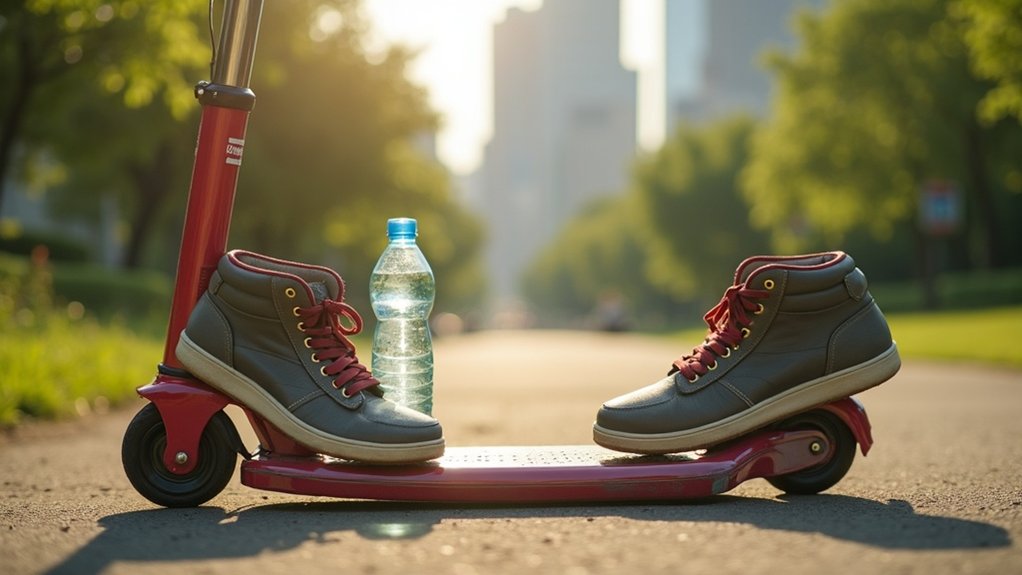
To manage foot fatigue on long scooter rides, wear comfortable footwear with stiff soles and adequate cushioning. Shift your foot position regularly and wiggle your toes to improve blood flow. Maintain proper posture by keeping your feet shoulder-width apart and engaging your core. Take breaks every 20-30 minutes to stretch and relieve pressure on your feet. Additionally, consider incorporating strengthening exercises into your routine. Exploring these strategies can enhance your riding experience greatly.
Key Takeaways
- Choose comfortable footwear with stiff soles and cushioning to provide support and minimize foot movement during long rides.
- Regularly shift your foot position and incorporate small movements like wiggling toes to enhance blood flow and reduce fatigue.
- Take breaks every 20-30 minutes to stretch and rest your feet, alleviating tension and improving circulation.
- Perform foot strengthening exercises like calf raises and toe curls to enhance endurance and distribute muscle workload effectively.
- Adjust your riding style based on terrain and utilize eco modes on flat surfaces to reduce foot strain and conserve energy.
Importance of Comfortable Footwear
When you commence a long scooter ride, the right footwear can make all the difference in how your feet feel by the end of your journey.
To guarantee a comfortable ride, you should choose footwear with a stiff sole, as it provides necessary support and minimizes foot movement, considerably reducing foot fatigue.
Look for shoes with adequate cushioning to absorb impacts, especially on uneven surfaces.
Breathable materials enhance comfort by allowing airflow, while a snug fit prevents blisters and unnecessary movement.
Finally, avoiding heavy footwear boosts agility and balance, ensuring a more enjoyable riding experience.
Techniques for Reducing Foot Fatigue
To effectively manage foot fatigue during your scooter rides, implementing a few key techniques can markedly enhance your comfort.
Regularly shift your foot position on the deck to distribute weight evenly and improve circulation. Incorporate small movements like wiggling your toes or flexing your ankles to encourage blood flow.
Footwear with a stiff sole and cushioning provides better support, reducing fatigue. Schedule breaks to stretch and rest your feet, alleviating tension.
Experiment with different foot angles and positions, using foot straps for added stability, to find your most comfortable setup that minimizes fatigue and enhances your riding experience.
The Role of Proper Posture
Maintaining an upright body position while riding your scooter is essential for effective weight distribution, which helps prevent foot fatigue.
By positioning your feet shoulder-width apart and keeping your knees slightly bent, you can enhance stability and comfort during longer rides.
Engaging your core will further support proper posture, allowing you to enjoy your ride without unnecessary strain on your feet.
Upright Body Position
Proper posture plays an essential role in preventing foot fatigue during scooter rides, as it helps to evenly distribute your weight across your feet. Maintaining an upright posture with your back straight and shoulders relaxed promotes spinal alignment, alleviating discomfort. Slightly bending your knees acts like a natural shock absorber, reducing strain on your feet. A relaxed grip on the handlebars prevents upper body tension that can lead to lower body fatigue. Engaging your core enhances stability and posture, contributing to better foot positioning.
| Benefits of Proper Posture | Impact on Foot Fatigue |
|---|---|
| Even weight distribution | Reduces localized pressure |
| Alleviates tension | Minimizes discomfort |
| Improves stability | Enhances overall comfort |
Weight Distribution Techniques
While you ride your scooter, effective weight distribution is crucial for minimizing foot fatigue. To enhance your riding experience, keep your feet shoulder-width apart on the deck, which improves balance and stability.
Engage your core muscles to evenly distribute weight, alleviating pressure points. Slightly bend your knees to act as a shock absorber, reducing strain on your feet and legs, especially on uneven terrain.
Regularly shift your weight between your feet to promote circulation and relieve fatigue. Maintain a straight back and relaxed shoulders to guarantee proper posture, helping you maintain control and further minimize foot discomfort during long rides.
Foot Placement Strategies
Finding the right foot placement on your scooter can greatly impact your comfort and performance. Position your feet shoulder-width apart on the deck to enhance balance and stability.
Slightly bending your knees allows for natural shock absorption, which helps reduce strain during long rides. To maintain an upright posture, keep a relaxed grip on the handlebars, distributing your weight evenly and minimizing fatigue in your feet and lower body.
Adjust your foot positioning based on terrain; shift weight forward on inclines and back on declines. Engaging your core muscles also supports better posture and further reduces foot fatigue.
Regular Breaks and Recovery Strategies
Taking regular breaks during your scooter rides is essential for managing foot fatigue effectively. Ideally, you should take a break every 20-30 minutes to allow for muscle recovery.
Taking breaks every 20-30 minutes during scooter rides is crucial for muscle recovery and reducing foot fatigue.
Here are three strategies to enhance your recovery during those breaks:
- Stretch your feet and legs: This improves blood circulation and reduces tightness.
- Sit down for a few minutes: Relieving pressure on your feet helps them recover from the strain of long rides.
- Shake out your feet and wiggle your toes: This encourages blood flow and prevents cramping, ensuring you’re ready for the next leg of your journey.
Strengthening Exercises for Endurance
To enhance your endurance on scooter rides, incorporating foot strengthening exercises, stretching techniques, and balance drills is essential.
These practices not only improve muscle stability but also help alleviate foot fatigue during longer journeys.
Foot Strengthening Exercises
As you begin longer scooter rides, incorporating foot strengthening exercises becomes essential for enhancing endurance and minimizing foot fatigue.
Here are three effective exercises to contemplate:
- Calf Raises: Strengthen your gastrocnemius and soleus muscles, boosting endurance.
- Toe Curls: Pick up small objects with your toes to improve intrinsic foot muscle strength and stability.
- Balance Exercises: Stand on one leg or use a balance board to strengthen stabilizer muscles, enhancing overall foot control.
Stretching Techniques for Relief
While enduring long scooter rides, incorporating effective stretching techniques can greatly alleviate foot fatigue and enhance overall comfort.
Start with calf stretches by standing on a step’s edge, lowering your heels to relieve tension.
Toe raises strengthen your calves, helping to reduce fatigue.
Try the seated foot stretch by extending one leg and gently pulling back your toes with your hand.
Ankle circles, whether seated or standing, improve mobility and circulation.
Regularly practice foot flexes by alternating between pointing and flexing your toes to enhance muscle endurance, ensuring your feet stay comfortable throughout your riding experience.
Balance and Coordination Drills
Foot fatigue during long scooter rides can be mitigated not just through stretching but by enhancing your balance and coordination.
Implementing specific drills can greatly improve your endurance. Here are three effective exercises to include in your routine:
- Single-leg stands or yoga poses, like tree pose, to boost stability.
- Dynamic drills, such as side lunges and toe raises, to strengthen lower extremities.
- Coordination activities, like juggling or using a balance board, to enhance neuromuscular control.
Adjusting Riding Modes for Comfort
To enhance your comfort during long scooter rides, adjusting riding modes can make a considerable difference in managing foot fatigue.
Switching to cruise control allows you to maintain speed without constant acceleration, reducing strain on your legs. Opting for a lower power mode eases the effort needed to control the scooter, especially during extended rides.
Cruise control maintains speed effortlessly, while a lower power mode reduces leg strain on long rides.
Utilizing regenerative braking conserves battery and minimizes foot adjustments. Experiment with different modes based on terrain; eco modes on flat surfaces can considerably lessen foot strain.
Regularly switching modes distributes the workload across muscle groups, promoting recovery and reducing the onset of foot fatigue.