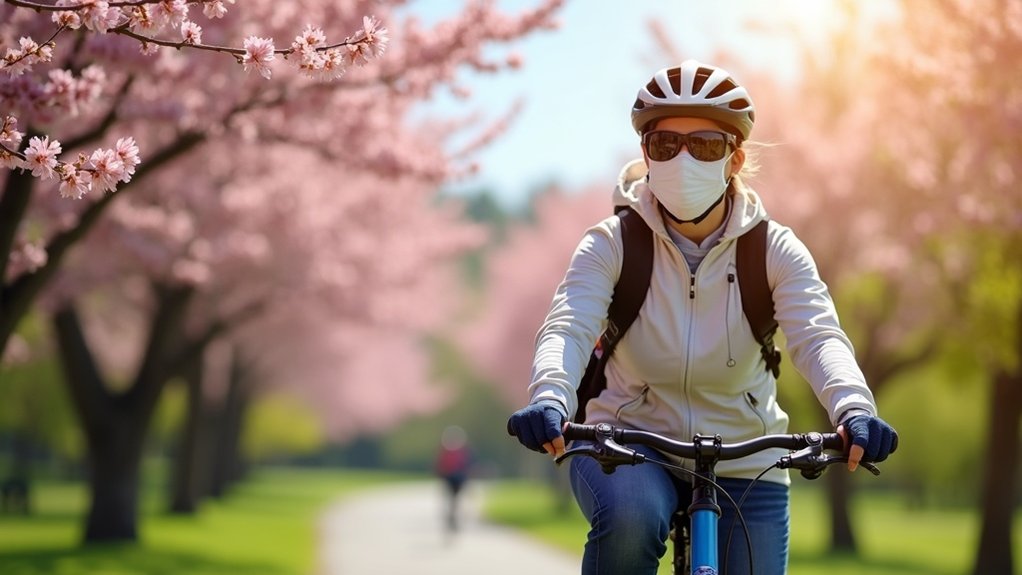
To manage allergies while riding in spring, time your rides for early mornings or evenings when pollen counts are lower. Stay updated on local pollen forecasts and opt for protective gear like masks. Use nasal sprays or eye drops prior to your ride to mitigate symptoms. After riding, shower promptly to remove pollen and change out of your riding clothes. With these strategies, you can enhance your riding experience while minimizing discomfort from allergens. Discover more tips for a smoother ride ahead!
Key Takeaways
- Take allergy medication before rides to proactively manage symptoms and improve comfort.
- Plan rides for early morning or evening to minimize exposure to pollen.
- Wear a mask while riding to filter out pollen and allergens effectively.
- Use nasal sprays and eye drops prior to riding for quick symptom relief.
- Shower and change clothes immediately after rides to remove pollen and allergens.
Understanding Allergies and Their Impact on Riding
As spring unfolds and pollen levels rise, understanding how allergies affect your riding experience becomes essential. Pollen acts as a significant allergen, triggering immune responses that lead to symptoms such as sneezing and nasal congestion. These distractions can impair your focus and control while riding.
During peak allergy times, typically late morning and afternoon, your exposure to allergens increases, making early morning or evening rides more favorable. Implementing effective allergy management strategies—like wearing masks, using nasal sprays, and showering after rides—can enhance your comfort.
Staying aware of local pollen forecasts also helps you plan more enjoyable rides.
Preparing for Spring Rides
To prepare for your spring rides, start by managing your allergies proactively with medication before heading out.
Choose ideal riding times, like early mornings or evenings, when pollen counts are lower.
Additionally, consider protective gear, such as masks, to enhance your riding comfort and minimize allergic reactions.
Pre-Ride Allergy Management
Before heading out for a spring ride, it’s essential to take proactive steps to manage allergies effectively. Utilize nasal sprays or eye drops for pre-ride allergy management, especially for sensitive individuals. Keep an eye on pollen counts, and consider wearing a mask to minimize exposure. Here’s a quick guide:
| Action | Benefits | Tips |
|---|---|---|
| Use nasal spray | Reduces nasal symptoms | Apply 30 minutes prior |
| Wear a mask | Limits allergen inhalation | Opt for a breathable option |
| Check pollen counts | Better ride planning | Use local forecasts |
| Shower post-ride | Removes allergens | Do this immediately after |
Taking these steps can enhance your riding experience.
Optimal Riding Times
Managing allergies effectively sets the stage for enjoyable spring rides. To minimize allergy symptoms, aim for ideal riding times like early morning and evening when local pollen counts are lower.
Stay informed about daily forecasts to plan rides during periods of reduced allergens. Riding after a rainstorm can also help, as precipitation clears pollen from the air.
Avoid windy days, as they can increase exposure by dispersing pollen. Additionally, cooler temperatures often correlate with lower pollen counts, so scheduling rides accordingly can help you stay safe and enjoy your time outdoors without the hassle of high allergy symptoms.
Protective Gear Choices
Choosing the right protective gear is essential for minimizing allergy symptoms during your spring rides.
Begin with a helmet with a visor to block pollen and other allergens from your face. Goggles or sunglasses protect your eyes from both sunlight and irritants, reducing allergic reactions.
Opt for lightweight, breathable clothing that can be easily washed afterward to eliminate pollen residue. Additionally, consider wearing a mask while riding to greatly reduce exposure to allergens.
Pre-treating with allergy medications before your ride enhances comfort, ensuring you can fully enjoy your outdoor activities without the distraction of allergy flare-ups.
Preventing Allergy Symptoms During Rides
As you prepare for spring rides, taking proactive measures to prevent allergy symptoms can greatly enhance your experience.
Consider wearing a mask to filter out pollen and allergens during your outdoor activities. Opt for early morning or evening rides when pollen counts are lower, minimizing exposure.
Before heading out, utilize nasal sprays to reduce inflammation and mucus, helping you breathe easier.
After rides, showering immediately removes pollen from your skin and hair, decreasing the chance of itchy eyes and lingering symptoms.
Don’t forget to shake out and wash your clothing thoroughly to eliminate any pollen that may have attached.
Treating Allergies Effectively
Addressing allergy symptoms effectively is key to enjoying your spring rides.
Here are some strategies to manage your allergies:
- Take non-drowsy antihistamines before riding to prevent allergy flare-ups.
- Use nasal sprays to reduce inflammation and mucus production during rides.
- Apply eye drops to soothe red, itchy, and dry eyes, enhancing your comfort.
- Implement post-ride care by showering and using nasal sprays or eye drops to alleviate residual symptoms after exposure to pollen.
Timing Your Rides for Lower Allergen Exposure
To enjoy your spring rides while minimizing allergy symptoms, it’s essential to time your outings when pollen levels are lower.
Early mornings and late evenings are ideal for outdoor rides, as they typically coincide with reduced allergen exposure. Consult local pollen forecasts to avoid peak allergen times, which usually occur mid-morning and afternoon.
Seasonal shifts indicate that tree pollen dominates early spring, with grass pollen following later; plan rides accordingly.
Additionally, riding during or immediately after rain can help, as it washes pollen from the air.
Finally, avoid windy days, since wind can greatly increase pollen exposure.
Post-Ride Care for Allergy Management
While enjoying your spring rides, it’s important to implement effective post-ride care to manage allergy symptoms.
Follow these steps to make sure you minimize exposure to allergens:
- Shower immediately to remove pollen from your skin and hair.
- Change out of outdoor clothing promptly to reduce prolonged allergen exposure.
- Wash riding clothes thoroughly to eliminate allergens, enhancing indoor air quality.
- Use eye drops and nasal sprays for quick relief from symptoms that may have flared up during the ride.
Maintaining proper hygiene, including wiping down surfaces, helps decontaminate your environment, promoting a more comfortable post-ride experience.
Enjoying the Spring Riding Experience
As spring unfolds and nature comes alive, you can still revel in the joy of riding without letting allergies dictate your experience. To enjoy spring riding, schedule your outings early or late when pollen grains are fewer. Wearing a mask can help keep the air free of allergens, while using HEPA filters in your environment reduces exposure. After riding, shower to eliminate pollen, and consider nasal sprays and eye drops to combat sneezing fits and watery eyes. Stay updated on pollen forecasts to plan rides effectively.
| Time of Day | Pollen Level | Action Needed |
|---|---|---|
| Early Morning | Low | Ride freely |
| Midday | High | Wear a mask |
| Evening | Moderate | Use eye drops |
| Post-Ride | N/A | Shower |