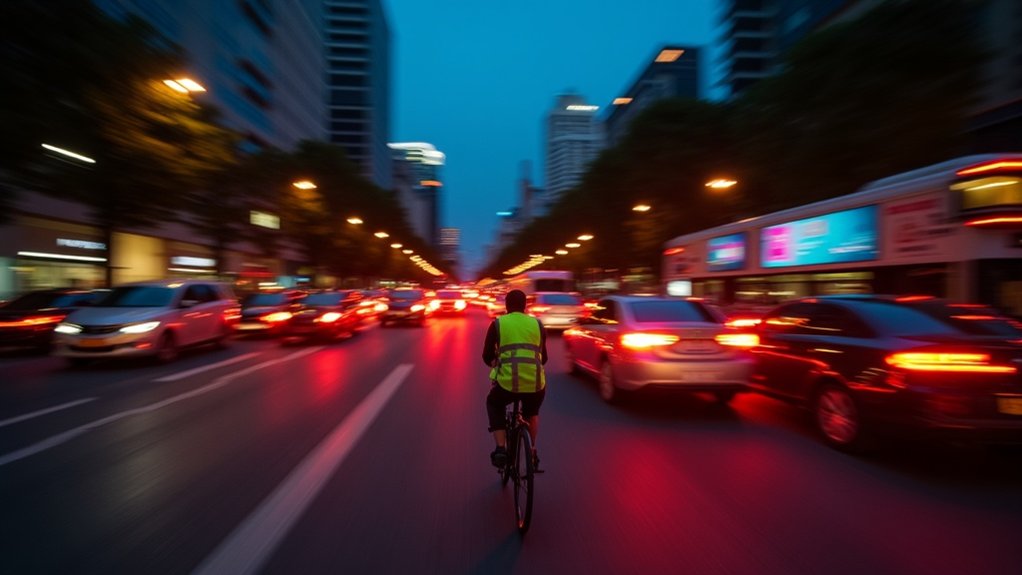
To maintain visibility in heavy traffic, choose a brightly colored vehicle to stand out. Always use your lights, ensuring they’re functional and activated in low visibility situations. Position yourself in the center lane, allowing for better awareness and maneuverability. Avoid other drivers’ blind spots by checking regularly and adjusting speed or position if necessary. Keep a safe distance of at least three seconds from the vehicle ahead, and stay alert to all surroundings. There’s more effective strategies to explore.
Key Takeaways
- Choose a brightly colored vehicle to enhance visibility and reduce the risk of accidents in heavy traffic.
- Regularly check and use your vehicle’s lights to ensure you’re seen, especially in low visibility conditions.
- Stay centered in your lane to improve your visibility to other drivers and increase your maneuverability.
- Frequently check your blind spots to avoid being in another driver’s blind spot, especially near larger vehicles.
- Maintain a safe following distance of at least three seconds to allow for better reaction times and visibility.
Choose a Bright Color
When maneuvering heavy traffic, choosing a brightly colored vehicle can greatly enhance your visibility on the road.
Vehicles painted in yellow or red markedly improve visibility for other drivers, reducing accident risks. Bright colors stand out against various weather conditions, ensuring you’re seen even in compromised visibility scenarios.
Brightly colored vehicles, like yellow or red, significantly enhance visibility, minimizing accident risks in all weather conditions.
This color choice not only promotes safer interactions but also aligns with branding strategies used by companies like McDonald’s, which leverage high-visibility colors to capture attention.
Research shows that brightly colored vehicles are less likely to be involved in collisions, emphasizing the importance of color selection for your safety on busy roadways.
Use Your Lights
Ensuring your vehicle’s lights are in ideal condition is essential for maintaining visibility in heavy traffic. Regularly check that your headlights, tail lights, and turn signals are functioning properly. This helps increase your visibility to other drivers, vital for safety.
In foggy conditions, use low beams to avoid blinding others while still improving your visibility. When approaching intersections or changing lanes, use your turn signals to communicate your intentions clearly.
Additionally, flashing your brake lights before stopping can alert following drivers, reducing the risk of rear-end collisions. Prioritize light maintenance for a safer driving experience in crowded environments.
Stay in the Correct Lane Position
Staying in the correct lane position is vital for maintaining visibility in heavy traffic. By positioning your vehicle in the center of the lane, you greatly reduce the chances of being overlooked by other drivers.
Additionally, using turn signals and checking your blind spots before making lane changes are essential practices that enhance your safety and that of others on the road.
Center Lane Positioning
Maintaining a center lane position greatly improves your visibility to other drivers, which is essential in heavy traffic situations.
Center lane positioning allows you to be more clearly seen, reducing the chances of collisions. Additionally, this positioning enhances your maneuverability and awareness of surrounding traffic. It creates a buffer zone for safer responses to sudden stops or obstacles.
Always check your blind spots before making lane changes to guarantee you’re aware of vehicles that may not be visible.
Use Turn Signals
Proper lane positioning not only enhances visibility but also underscores the importance of using turn signals effectively.
Always activate your turn signals well in advance of lane changes or turns to communicate your intentions clearly. This practice helps other drivers anticipate your moves, reducing the risk of collisions.
Verify your turn signals are functioning properly by regularly checking them and carrying a replacement bulb. Even when the road seems clear, use turn signals to build a habit of communication.
Check Blind Spots
Before changing lanes or merging, it’s essential to check your blind spots to guarantee a safe shift. Use your mirrors, but don’t rely solely on them; physically turning your head offers a clearer view of hidden vehicles.
Position your vehicle in the center of your lane to improve your visibility and that of other drivers, minimizing collision risks. Stay aware of larger vehicles’ blind spots, like trucks and SUVs, as they can obscure your presence.
Regularly adjust your lane position based on traffic flow, ensuring you maintain visibility and reduce the likelihood of accidents. Always prioritize safety.
Avoid Driving in a Driver’s Blind Spot
To enhance your safety on the road, it’s essential to check blind spots regularly and position your vehicle where other drivers can see you clearly.
If you can’t spot the driver in their rearview mirror, adjust your position or speed to avoid potential hazards.
Staying aware of blind spots, especially around larger vehicles, greatly reduces the risk of collisions.
Check Blind Spots Regularly
Many drivers underestimate the importance of regularly checking blind spots, especially in heavy traffic.
If you can’t see a driver in their rearview mirror, they likely can’t see you, making it essential to check blind spots before changing lanes. Use your mirrors frequently and turn your head to stay aware of surrounding vehicles.
Be particularly mindful of larger vehicles like trucks and buses, as their blind spots extend far beyond your standard view. Adjust your position on the road and maintain a safe distance to guarantee you’re visible, reducing the risk of ending up in a driver’s blind spot.
Stay Visible to Drivers
Staying visible to other drivers in heavy traffic is essential for your safety, as positioning your vehicle correctly can prevent dangerous situations. To effectively avoid blind spots, consider the following table:
| Vehicle Type | Blind Spot Area | Visibility Tips |
|---|---|---|
| Cars | Directly behind | Stay in the driver’s view |
| Trucks | Side and rear | Keep a safe distance |
| Buses | Extensive rear | Avoid lingering near them |
Always adjust your position if you can’t see a driver’s mirror. This awareness can greatly reduce collision risks and help you stay visible on the road.
Keep Your Distance
When maneuvering through heavy traffic, keeping a safe distance of at least three seconds behind the vehicle in front is essential for maintaining adequate reaction time.
This spacing not only allows you to see potential hazards, but it also enhances visibility for other drivers. Use roadside markers to gauge your following distance, ensuring you’re not too close, especially in poor weather when stopping distances increase.
Use Your Horn
Maintaining visibility in heavy traffic goes beyond keeping a safe distance; it also involves effectively communicating with other drivers. When approaching intersections or anticipating that another driver may not see your vehicle, use your horn assertively. Regularly check its functionality to guarantee it works properly. A louder replacement horn can enhance your presence on the road. Combine horn usage with visibility techniques like lights and lane positioning for maximum safety.
| Action | Purpose |
|---|---|
| Use your horn | Alert drivers who may not see you |
| Check horn functionality | Guarantee effective communication |
| Replace horn | Create a louder, more noticeable sound |
| Use horn strategically | Maximize safety in heavy traffic |
| Combine with lights | Increase overall visibility |
Stay Alert
Being alert in heavy traffic is essential for your safety and the safety of others on the road.
To stay alert, focus on these key practices:
- Regularly scan your environment; check mirrors and blind spots to anticipate hazards.
- Avoid distractions like mobile devices or loud music that can impair your focus.
- Maintain a defensive driving stance; keep a safe following distance and be ready for sudden stops.