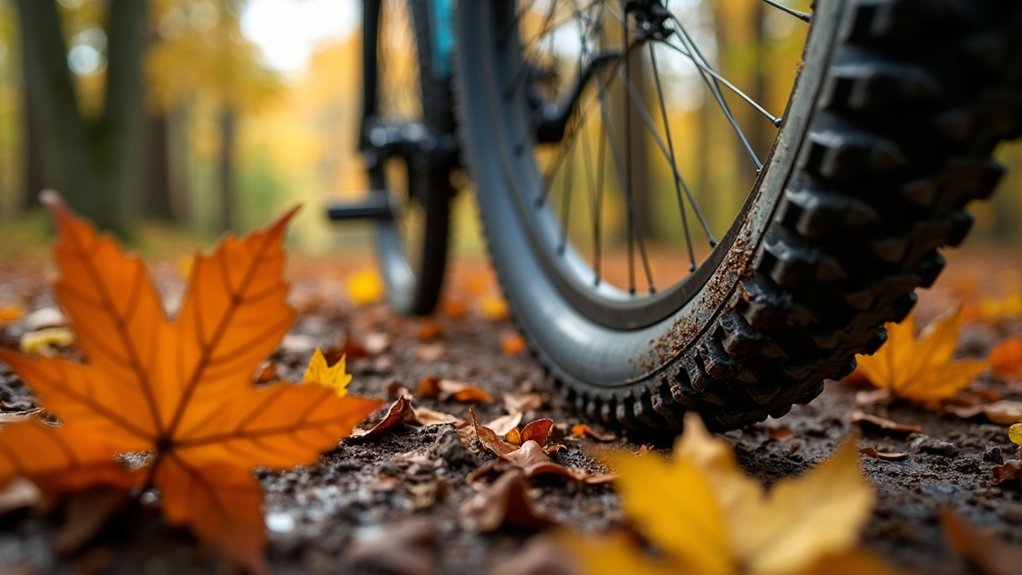
To maintain bike traction on leaves, adjust your riding technique by keeping a relaxed grip on the handlebars and slightly shifting your weight back. Approach wet leaves straight and at a steady speed, using gentle braking to prevent skidding. Choose wider tires with aggressive tread and lower tire pressure for better grip. Enhance your visibility with reflective gear and lights. Finally, plan routes avoiding heavy leaf coverage. Continue to explore these practices for safer rides.
Key Takeaways
- Maintain a relaxed grip on the handlebars to adapt better to shifting traction on wet leaves.
- Shift your weight slightly backward to enhance rear wheel control and stability.
- Approach wet leaves straight at a consistent speed to maximize grip and minimize skidding.
- Use wider tires with aggressive tread patterns for better floatation and traction on slippery surfaces.
- Regularly check tire pressure and consider seasonal tire swaps for optimal performance in autumn conditions.
Understanding the Risks of Wet Leaves
When you ride over wet leaves, you’re facing a considerably increased risk of losing traction, which can lead to skidding or even a fall.
These slippery conditions can cause leaves to slide over one another, compromising your bike’s stability and making it hard to maintain a straight line.
Slippery leaves can shift under your wheels, disrupting stability and making it difficult to ride straight.
Additionally, hidden obstacles like potholes and debris may lurk beneath layers of wet leaves, heightening the danger.
Caution is crucial in these autumn riding scenarios; reducing your speed and keeping a steady trajectory helps mitigate accidents.
Even experienced cyclists can struggle with traction, so awareness and preparedness are essential for your safety.
Adjusting Your Riding Technique
Maneuvering wet leaves requires more than just caution; it demands adjustments to your riding technique.
Here are key strategies for handling your bike in slippery conditions:
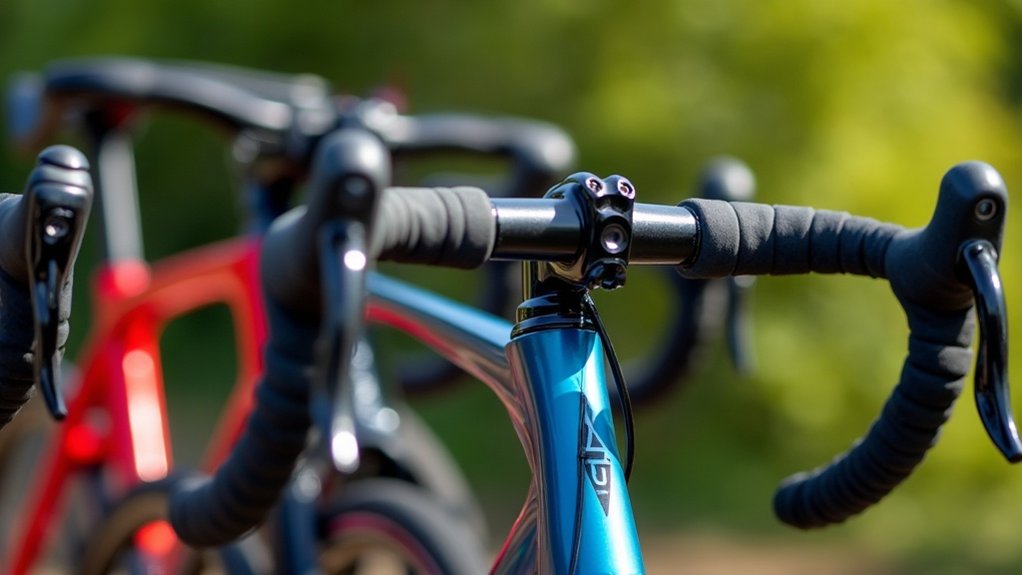
- Maintain a relaxed grip on the handlebars to adapt to changes in traction.
- Shift your weight slightly backward when steering through wet leaves for better rear wheel control.
- Use gentle braking with both brakes to prevent skidding on slick surfaces.
- Approach wet leaves straight and at a consistent speed to maintain grip on wet surfaces.
Choosing the Right Bike Tires
Selecting the right bike tires is essential for maintaining traction on slippery leaves, especially during autumn months.
Opt for wider tires in the 2.5 to 2.6 range to improve floatation on loose leaves. Choose tires with aggressive tread patterns, like the Maxis Minion DHF/DHR, designed to enhance grip on slippery surfaces.
Softer rubber compounds conform better to wet leaves, increasing traction and reducing slipping risks. Regularly check and lower tire pressure to expand the contact patch with the ground, further improving traction.
Consider seasonal tire swaps to guarantee your tires are suited for the changing, slippery conditions of autumn.
Visibility and Gear Considerations
To guarantee safe cycling during autumn’s low-light conditions, enhancing your visibility is vital. Here are some gear considerations to keep in mind:
- Wear reflective clothing to boost visibility for other road users.
- Utilize front and rear lights with flashing modes to make sure you’re noticeable in low-light scenarios.
- Invest in waterproof gear, like jackets and pants, to stay dry and focused on traction rather than discomfort.
- Use gloves for improved grip and warmth, essential for maintaining control during slippery weather conditions.
These steps will help you navigate shorter daylight hours safely and effectively.
Planning Your Routes Carefully
Cycling during autumn requires more than just visibility gear; planning your routes carefully can greatly enhance your safety.
Focus on avoiding areas notorious for heavy fallen leaves, as they can severely reduce traction and increase slipping risks. Use local cycling maps and online resources to identify safer cycling routes, especially those in urban areas with dedicated bike lanes that are routinely cleared.
Riding during daylight improves visibility, helping you spot crossing hazards concealed by leaves. Engage with local cycling communities to gather insights on safer paths that minimize encounters with slippery surfaces, ensuring a smoother and safer ride.