
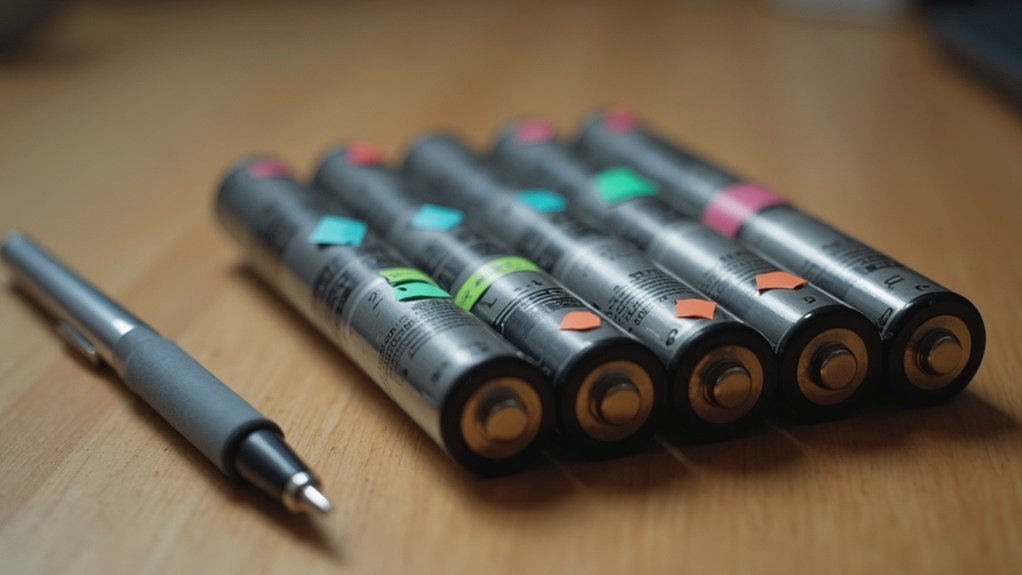
To label batteries with purchase dates, use a black sharpie to mark the date directly on the battery. You might also consider using vinyl labels for durability or contrasting paint pens for visibility. For a permanent solution, engrave the date on the terminal. Additionally, keep a logbook to track details like manufacturer and performance. This systematic approach guarantees you replace batteries timely and manage your inventory effectively. Find out more about organizing your battery information next.
Key Takeaways
- Use a black sharpie to clearly mark the purchase date on the battery in month/year format.
- Opt for durable vinyl labels to ensure moisture and heat resistance.
- Consider engraving or using a punch stamp to permanently mark the purchase date on the terminal.
- Utilize contrasting paint pens for enhanced visibility of the date on the battery.
- Maintain a dedicated logbook or digital record to track purchase dates and performance consistently.
Importance of Labeling Batteries With Purchase Dates
Labeling batteries with purchase dates is essential for effective maintenance and safety, as it allows you to monitor their age accurately. Knowing the purchase date helps you identify the age of your batteries, ensuring timely replacements before breakdowns occur, especially since most batteries last 3-5 years.
Additionally, clear Battery Date Codes facilitate warranty claims, as defects are typically covered for one year. By marking batteries durably, you prevent confusion over their age, particularly when managing multiple units.
Consistent labeling practices promote an organized battery inventory, enhancing your management of replacements and maintenance schedules, ultimately maximizing performance and safety.
Methods for Labeling Batteries
When it comes to ensuring proper identification and tracking of battery purchase dates, several effective methods can be employed.
Start by using a black sharpie to mark the purchase date clearly on the top of the battery. For durability, consider vinyl labels that resist moisture and heat.
Engraving or punch stamping the purchase date onto the terminal offers a permanent solution. Alternatively, use a contrasting paint pen for visibility.
You can also implement a color-coding system, assigning specific colors to each year of manufacture, allowing for quick visual identification of the battery’s age at a glance.
Maintaining a Battery Logbook
Once you’ve implemented effective labeling methods for tracking battery purchase dates, maintaining a battery logbook becomes the next logical step. This logbook should include entries for each battery, documenting purchase date, manufacturer, model, and performance notes.
| Battery Model | Purchase Date | CCA/CA |
|---|---|---|
| Model A | 01/2022 | 600/750 |
| Model B | 03/2021 | 500/650 |
| Model C | 06/2020 | 700/850 |
Regularly update your logbook to track performance and issues, ensuring you replace batteries before they exceed their 3-5 year lifespan and maintain reliability.
Tips for Ensuring Accurate Date Tracking
Accurate date tracking is essential for managing battery performance and ensuring timely replacements. Start by marking your car battery’s purchase date with a black sharpie directly on the surface, using the month and year format.
If preferred, a vinyl label offers a neat, durable option without damaging the battery. For better visibility, opt for paint markers in contrasting colors.
Keep a dedicated notebook or digital record of the purchase date, noting any two letters indicating the month and year. Regularly check the date codes against your records to maintain accuracy in tracking your battery’s age and performance.
Organizing Battery Information for Easy Reference
To effectively manage your battery inventory, it is vital to organize information in a manner that facilitates easy reference. Use a dedicated logbook or spreadsheet to track purchase dates and ownership. Here’s a simple layout to get you started:
| Battery Type | Purchase Date | Status |
|---|---|---|
| AA | Jan 2023 | In Use |
| 9V | Feb 2023 | Expired |
| C | Mar 2023 | In Storage |
| D | Apr 2023 | In Use |
Regularly update this logbook whenever you replace a battery to guarantee accurate tracking and maintain warranty information.