To keep your electronics dry inside bags, start with high-quality waterproof materials that provide robust protection. Use airtight containers or zip-lock bags and add silica gel packets to absorb excess moisture. Make sure to seal your items properly, avoiding over-packing to prevent crushing. Regularly monitor humidity levels and replace desiccants as needed. By following these steps, you can safeguard your devices effectively—discover more strategies to enhance your electronics’ protection.
Key Takeaways
- Use high-quality dry bags rated at least IPX6 to ensure effective waterproofing and protection against moisture ingress.
- Include silica gel packets inside storage bags to absorb excess humidity and reduce the risk of condensation.
- Seal bags tightly using triple-fold or double-Velcro closures to maintain a watertight seal and prevent moisture exposure.
- Regularly monitor humidity levels with a hygrometer and replace desiccants as needed to maintain optimal storage conditions.
- Store electronics in climate-controlled environments to stabilize temperature and humidity, minimizing risks of damage.
Understanding Moisture Risks for Electronics
When you store electronics in bags, understanding the risks posed by moisture is essential to prevent damage. Moisture vapor can condense in sealed bags, especially in cooler conditions, creating liquid that threatens your devices.
Even minimal moisture exposure can cause irreversible harm, so proper sealing is critical. To enhance protection in case of humidity, incorporate silica gel packets in your storage. These packets effectively absorb excess moisture, reducing the risk of corrosion and mold on electronic components.
Additionally, employ sealing techniques like roll-top closures and double-bagging to maintain waterproof integrity and monitor humidity levels with a hygrometer for proactive measures.
Choosing the Right Packing Materials
Selecting the right packing materials is essential for protecting your electronics during transport and storage. Invest in high-quality dry bags rated at least IPX6 and utilize TPU waterproof cases with triple fold or double-Velcro closures for a watertight seal. Inside your bags, include silica gel packs to absorb any moisture and combat condensation. Always make sure that closures are secure to maintain waterproof integrity. Choose durable fabrics like heavy-duty PVC for abrasion resistance and leak prevention.
| Material Type | Key Features | Recommended Use |
|---|---|---|
| Dry Bags | IPX6 rated, robust | Outdoor activities |
| Waterproof Cases | Triple fold closures | Secure electronics |
| Silica Gel Packs | Moisture-absorbing | Inside storage bags |
Effective Moisture Control Techniques
To effectively control moisture when storing electronics, you should use silica gel packs to absorb excess humidity.
Seal your devices in airtight containers to prevent condensation from forming due to temperature changes.
Additionally, monitor humidity levels regularly to guarantee your storage conditions remain ideal for protecting your electronics.
Use Silica Gel Packs
Silica gel packs serve as an essential tool in preventing moisture-related damage to electronics stored in bags.
These silica packets effectively absorb excess moisture, protecting your devices from corrosion and mold growth.
For best results, each electronic device should ideally have its own gel pouch to guarantee sufficient moisture control.
To maximize their lifespan, you can reactivate silica gel by heating it in an oven at 150°C for several hours.
Regularly monitor humidity levels with a hygrometer and replace the packs as necessary.
Seal With Airtight Containers
Airtight containers are fundamental for safeguarding your electronics from moisture damage. Using high-quality ziplock bags or metalized Mylar bags effectively blocks moisture ingress, but remember to seal them in dry environments to avoid trapping humidity inside.
Incorporating silica gel sachets within these containers provides extra protection by absorbing any excess moisture inside. However, keep in mind that the effectiveness of silica gel diminishes after a few days in open air, so regular replacement or reactivation is essential.
Proper sealing techniques are critical to prevent condensation risks, especially with temperature fluctuations, ensuring your electronics remain safe and dry.
Monitor Humidity Levels
Maintaining ideal humidity levels is essential for preserving the longevity of your electronics. To effectively monitor humidity levels, use a hygrometer to guarantee they stay below 30-50% relative humidity. While storing electronics, include silica gel packs to absorb excess moisture and replace them regularly. Seal bags in dry environments to prevent trapping moisture inside, and store your devices in climate-controlled spaces to avoid condensation. Use multiple desiccant sachets based on the volume of air in the container for enhanced protection.
| Action | Purpose |
|---|---|
| Monitor humidity levels | Guarantee safe storage conditions |
| Use silica gel packs | Absorb excess moisture |
| Seal bags in dry areas | Prevent moisture from entering |
Proper Disassembly and Organization of Devices
When disassembling electronic devices, a systematic approach can greatly reduce the risk of damage during transport and storage.
Start by removing detachable parts, placing them in properly sealed, labeled bags or boxes to maintain organization and prevent loss. This guarantees that delicate electronics remain intact.
Use zip ties or cord organizers to bundle cords neatly, offering an extra layer of protection against tangling. Clearly label all boxes with contents and accessories for easy identification during reassembly.
Avoid over-packing to prevent crushing; instead, wrap individual items in soft materials like bubble wrap for added safety while stored.
Best Practices for Packing Electronics for Storage
When packing electronics for storage, it’s essential to prioritize moisture control and use high-quality packing materials.
Consider adding silica gel packs to absorb humidity and guarantee proper airflow by avoiding airtight containers.
Additionally, clearly label all boxes to identify contents and fragile items, enhancing organization and safeguarding your devices.
Moisture Control Techniques
To effectively protect your electronics from moisture damage during storage, it’s crucial to implement a few key moisture control techniques.
First, use desiccants like silica gel packs inside waterproof pouches to absorb excess moisture.
Make sure your electronics are packed in ventilated boxes, allowing airflow and minimizing moisture buildup. Avoid completely sealed environments that trap humidity.
Maintain a stable, climate-controlled storage space to prevent condensation.
Clearly label all packed items with moisture control instructions, reminding handlers to keep devices dry.
Finally, regularly monitor humidity levels with a hygrometer and replace desiccants as needed for ongoing protection.
Proper Packing Materials
Choosing the right packing materials is essential for safeguarding your electronics during storage. Use anti-static zip bags for individual electronic devices, ensuring they’re sealed in a dry environment. Incorporate silica gel packs in airtight containers to absorb moisture. Consider using original packaging or high-quality cushioning materials to prevent damage. Regularly monitor humidity levels and replace desiccants as needed.
| Packing Material | Water Resistance | Use Case |
|---|---|---|
| Anti-static zip bags | Yes | Individual devices |
| Silica gel packs | No | Moisture absorption |
| Original packaging | Yes | Best for delicate items |
| Airtight containers | Yes | Overall storage |
Effective Labeling Strategies
Effective labeling strategies play an essential role in ensuring the safe storage of your electronics. Clearly mark each box with its contents, highlighting fragile items and orientation. Use a permanent marker for durability and visibility.
Color-code labels for easy identification, helping you keep your tech organized. Include an inventory list inside, noting make, model, and accessories to streamline retrieval. Mark boxes with “Fragile” and “Keep Dry” indicators to prevent moisture damage.
Additionally, number the boxes (e.g., Box 1 of 3) for efficient tracking. These practices not only enhance organization but also safeguard your electronics during storage.
Selecting a Suitable Storage Facility
When you’re considering a storage facility for your electronics, prioritizing climate-controlled units is essential, as stable temperature and humidity levels greatly reduce the risk of damage.
To guarantee your electronics inside stay safe from water and other hazards, keep these factors in mind:
- Choose facilities with 24/7 surveillance and robust security features.
- Look for well-maintained, clean units to minimize dust and debris risks.
- Verify a variety of unit sizes to avoid overcrowding your electronics.
- Opt for facilities with positive customer reviews for reliability.
These steps will help protect your valuable electronics during storage.
Tips for Waterproofing Gadgets During Outdoor Activities
To keep your gadgets safe from water damage during outdoor activities, it’s crucial to implement effective waterproofing strategies.
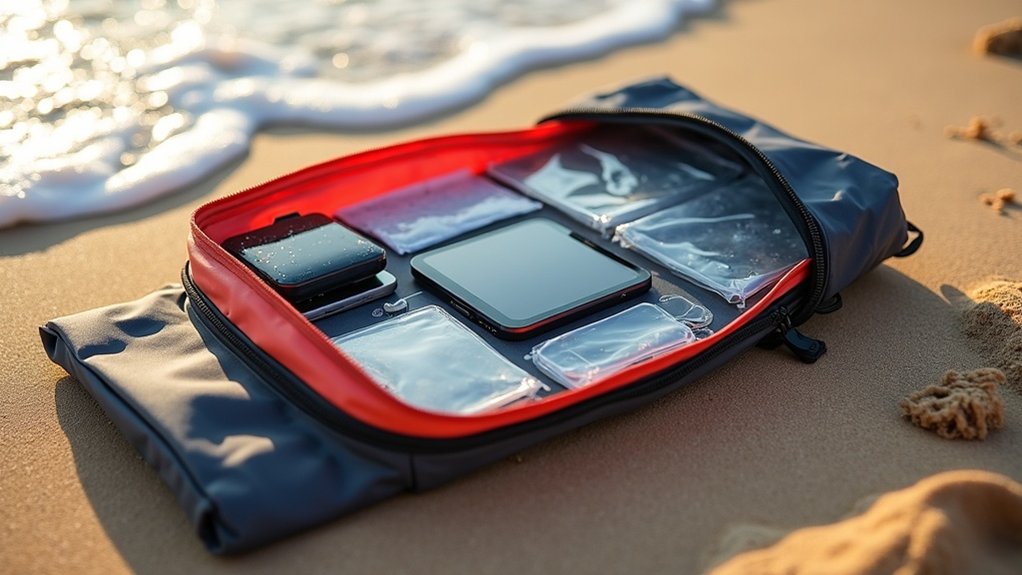
Start by using waterproof pouches rated at least IPX6 for each device, ensuring tight seals before placing them in a dry bag. For added protection, seal electronic devices in ziplock bags, allowing touchscreen functionality while guarding against water, sand, and dirt.
Include silica gel packets inside your waterproof bags to absorb moisture from condensation. Additionally, cushion gadgets with soft materials like clothes or foam padded sleeves to prevent damage.
Finally, double-check seals by squeezing dry bags for leaks and rolling the top for a watertight closure.
Real-Life Scenarios: Wet vs. Dry Bags
While both wet bags and dry bags serve specific purposes, understanding their distinct functionalities can greatly impact your outdoor experience.
Wet bags are perfect for storing damp items, but when it comes to protecting your electronics, a dry bag is essential.
Wet bags excel at holding wet gear, but for safeguarding your electronics, a dry bag is a must.
To guarantee your electronics stay dry inside the dry bag, remember to:
- Use bags with at least an IPX6 rating.
- Place devices in individual waterproof pouches.
- Keep your dry bag elevated above the water.
- Add silica gel packets to absorb potential condensation.