
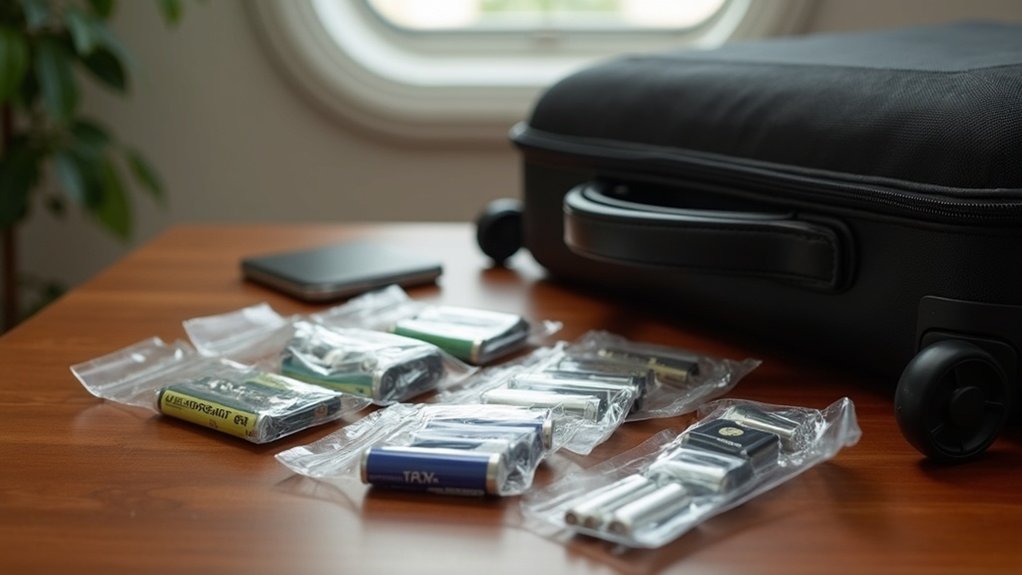
To keep batteries within airline rules for travel, always pack lithium battery-powered devices and spare batteries in your carry-on baggage, never checked luggage. Check watt-hour limits: batteries under 100 Wh don’t need approval, while those between 100-160 Wh do. Confirm spare batteries are in original packaging or have terminals taped. Limit yourself to 20 spare batteries per flight. If you’re uncertain about butane-powered devices, specific regulations apply. Find out how to navigate these rules effectively.
Key Takeaways
- Always pack lithium battery-powered devices and spare batteries in your carry-on baggage, not checked luggage.
- Verify watt-hour limits: batteries under 100 Wh do not need approval, while 100-160 Wh may require airline consent.
- Keep spare batteries in their original packaging or ensure terminals are taped to prevent accidental activation.
- Limit the number of spare batteries in carry-on luggage to a maximum of 20.
- For butane-powered devices, only one is allowed in carry-on luggage, and ensure it is empty of fuel before boarding.
Seven Safety Rules for Traveling With Batteries
When you travel with batteries, it’s crucial to follow specific safety rules to guarantee a smooth journey.
Always pack lithium battery-powered devices and spare batteries in your carry-on baggage, as checked baggage isn’t permitted. Confirm your lithium batteries are within allowed watt-hour limits—up to 100 Wh without approval, 100-160 Wh with approval.
Pack all lithium battery devices and spare batteries in carry-on luggage and verify watt-hour limits for safe travel.
Keep spare batteries in their original packaging or with terminal tape to avoid accidental activation. Report any hot, smoking, or damaged devices to the flight crew immediately.
Finally, remember that butane-powered devices are restricted to one per person in carry-on luggage and aren’t allowed in checked baggage.
Common Misconceptions About Battery Safety
Many travelers mistakenly believe that packing small lithium devices in checked baggage is acceptable, but this is against regulations.
You might also be unsure about the size limits for larger batteries and spare power banks, leading to potential safety risks.
Understanding these misconceptions is essential to ensuring your travel experience is safe and compliant.
Battery Packing Myths
Although you might think it’s safe to pack small lithium devices like smartphones and tablets in checked baggage, this is a dangerous misconception.
These devices must always be stored in your carry-on luggage due to fire risks associated with lithium batteries. Many travelers incorrectly believe power banks can go in the hold, but they’re only allowed in hand baggage.
About 38% of passengers still pack lithium batteries in checked luggage, risking overheating and thermal runaway.
Size Limit Confusion
Misunderstandings about the size limits of lithium batteries contribute considerably to safety risks during air travel.
Many travelers mistakenly believe that packing lithium devices and spare batteries in checked baggage is acceptable. In reality, all batteries must be packed in hand baggage.
You should know the limits for lithium batteries: those up to 100 Wh are allowed without approval, while batteries between 100-160 Wh require airline consent.
Roughly 33% of travelers remain uncertain about these limits, emphasizing the need for clearer guidance.
To fly safely, ascertain you’re aware of and comply with all battery regulations.
Safety Risks Associated With Lithium Batteries
As lithium batteries become increasingly prevalent in consumer electronics, understanding their safety risks during airline travel is essential.
Lithium-ion batteries can overheat, catch fire, or even explode if damaged or packed incorrectly, posing significant hazards. Last year alone, incidents of thermal runaway surged, with 89 occurrences reported. The majority involved battery packs, while vapes and e-cigarettes ranked second.
Lithium-ion batteries pose significant hazards, with 89 thermal runaway incidents reported last year, mainly involving battery packs.
To mitigate risks, always keep your batteries and devices in carry-on baggage. If you notice any hot, smoking, or damaged electronic devices, notify them immediately.
Cabin crew are trained to handle these situations, ensuring a safer travel experience for everyone.
Packing Guidelines for Lithium-Ion Devices
When traveling by air, following proper packing guidelines for lithium-ion devices is essential to guarantee safety and compliance with regulations.
Always pack lithium batteries and spare batteries in your carry-on baggage, as they’re prohibited in checked luggage. Keep spare lithium batteries in their original packaging or use terminal tape to prevent short-circuiting.
For batteries up to 100 watt-hours (Wh), no approval’s needed, but those between 100 and 160 Wh may require airline approval. Limit yourself to 20 spare batteries, and make certain medical devices are also properly packed, ideally in a protective case to avoid damage during travel.
Device-Specific Regulations for Lithium Batteries
Understanding device-specific regulations for lithium batteries is essential for ensuring a smooth travel experience. Here’s what you need to know:
- All lithium battery-powered devices, like smartphones and laptops, must go in hand baggage—checked baggage is a no-go.
- Spare lithium batteries should be in original packaging or have their terminals taped to avoid short-circuiting, also packed in hand baggage.
- Check the wattage—batteries under 100 watt-hours don’t need approval, but those between 100 and 160 watt-hours may require airline consent.
Always verify specific regulations with your airline, especially for e-cigarettes and smart luggage with non-removable batteries.
Understanding Butane-Powered Devices
When traveling with butane-powered devices, you need to understand the strict regulations governing their transport.
Airlines typically allow only one device in your carry-on, while checked baggage is off-limits for these items.
Always check your airline’s specific rules and verify your device meets safety standards to minimize risks during your flight.
Butane Device Regulations
While traveling, it’s essential to grasp the regulations surrounding butane-powered devices, as they can greatly impact your journey.
Here are key points to keep in mind:
- Only one butane-powered device is allowed in your carry-on luggage due to safety regulations concerning flammable materials.
- Any butane-powered devices found in checked luggage will be confiscated by the T.S.A. due to potential fire hazards.
- Verify your device is completely empty of fuel before boarding, as residual fuel poses serious safety threats during flight.
Always check specific airline policies regarding butane-powered devices to verify compliance with safety regulations.
Safety Precautions Required
To guarantee safe travel with butane-powered devices, it’s vital to adhere to specific safety precautions.
Always keep devices in your carry-on, as butane items are strictly prohibited in checked luggage. Only one device is allowed per person, ensuring compliance with fire safety regulations.
Make sure battery terminals are secure to prevent accidental discharges that could lead to overheating. If you use hearing aids that require batteries, double-check their compatibility with airline policies.
Awareness of butane’s flammability is important; improper handling can cause devices to catch fire. Always review your airline’s guidelines before traveling to avoid complications.