
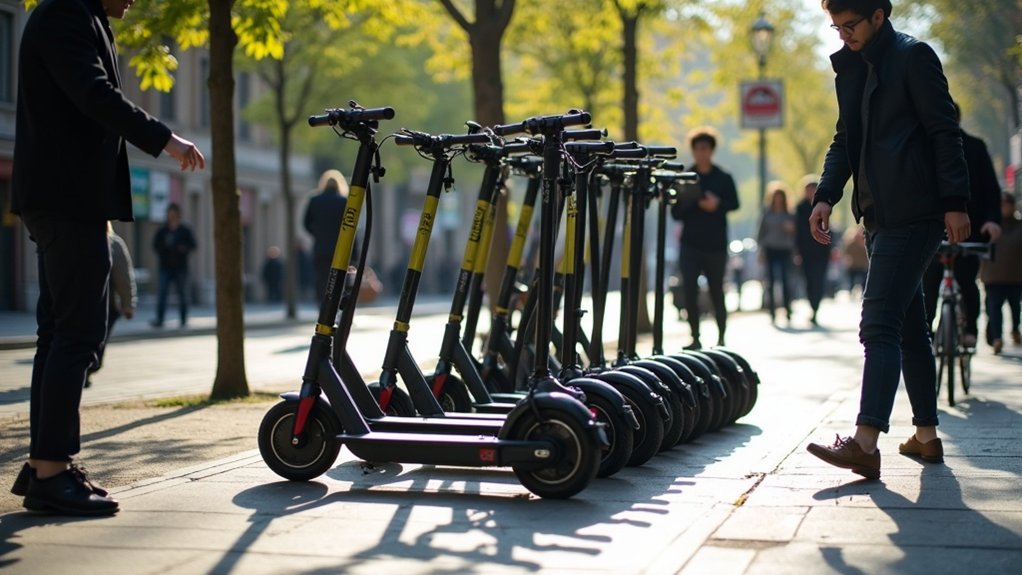
To interpret e-scooter parking guidelines, you should focus on designated parking zones placed every 200 meters in busy areas. These zones help reduce sidewalk clutter and pedestrian conflicts. Always park scooters upright and make certain they don’t block walkways or entrances. Familiarize yourself with local regulations, as compliance is key for safety and accessibility. Effective parking infrastructure also plays an essential role. Understanding these aspects can lead to better practices and encourage responsible riding habits in your community.
Key Takeaways
- Always park e-scooters in designated zones located every 200 meters to ensure safety and accessibility.
- Ensure scooters are upright and do not block sidewalks, entrances, or pedestrian pathways.
- Look for clear signage indicating parking rules to avoid noncompliance and potential fines.
- Participate in educational campaigns to better understand local regulations and proper parking etiquette.
- Recognize that effective infrastructure, like parking corrals, is crucial for organized and compliant e-scooter parking.
Understanding Designated Parking Zones
Have you ever noticed how designated parking zones for e-scooters can transform urban spaces? By establishing these zones every 200 meters in high-traffic areas, you enhance accessibility and visibility while reducing clutter.
Clear signage within these parking zones is essential for ensuring compliance with parking regulations and promoting proper parking behavior among riders of shared scooters. Dedicated parking areas greatly minimize conflicts between e-scooter users and pedestrians, improving safety.
Additionally, infrastructure improvements like designated parking corrals boost compliance rates, supporting better urban mobility and contributing to a more organized street environment, ultimately enhancing public perception of e-scooter programs.
Importance of Compliance With Local Regulations
While it might seem tempting to park your e-scooter wherever convenient, compliance with local regulations is essential for maintaining order in urban environments.
Improper parking creates clutter, disrupts pedestrian traffic, and negatively impacts overall urban mobility. Shared scooters thrive in cities with clear parking rules, reducing noncompliance rates considerably.
Educational campaigns enhance riders’ understanding of these regulations, addressing the perception gap between riders and non-riders.
When you adhere to designated parking zones, you foster a safer atmosphere for everyone. Ultimately, your compliance not only benefits you but also contributes positively to the community and its perception of e-scooter usage.
Proper Parking Etiquette for E-Scooter Riders
As an e-scooter rider, parking in designated zones is essential for maintaining a safe and accessible environment for everyone.
You should always verify your scooter is upright and doesn’t block sidewalks or entrances, as this helps prevent pedestrian obstruction.
Designated Parking Zones
Designated parking zones play an essential role in ensuring that e-scooter riders park responsibly and considerately.
By placing these zones every 200 meters in high-traffic areas, you promote compliance rates and accessibility for e-scooter users. Clear signage within these zones educates riders on the parking policy, encouraging adherence to proper etiquette.
Parking racks or corrals help minimize clutter and prevent conflicts with pedestrians, enhancing safety for everyone.
Additionally, these designated areas support urban mobility by integrating shared e-scooter parking into existing transportation infrastructure, ensuring that pedestrian pathways remain unobstructed and promoting a more organized urban environment.
Avoiding Pedestrian Obstruction
Parking an e-scooter in a way that doesn’t obstruct pedestrian pathways is essential for maintaining safety and accessibility in urban environments.
To guarantee you’re parking responsibly, follow these guidelines:
- Always park your scooter upright in designated parking zones to prevent clutter.
- Look for clear signage that indicates parking rules, helping you understand where to park.
- Participate in educational campaigns that promote compliance; awareness can reduce safety hazards.
The Role of Infrastructure in E-Scooter Parking
Effective e-scooter parking relies heavily on well-planned infrastructure that includes designated racks and parking zones.
Infrastructure improvements, like dedicated scooter parking racks every 200 meters, greatly reduce sidewalk clutter. Designated parking areas enhance visibility at corners, promoting safety for all road users.
By installing parking corrals, cities encourage user compliance with parking regulations, minimizing noncompliant parking instances. Clear signage indicating these rules is essential, as many riders lack understanding of existing regulations.
Urban planners must prioritize integrating e-scooter parking infrastructure to support micromobility growth and guarantee a well-organized street environment that benefits both riders and pedestrians.
Addressing Common Misconceptions About Scooter Parking
Misunderstandings about e-scooter parking regulations are common among riders, often leading to unintended noncompliance.
To enhance your understanding, consider these key points:
- Many riders lack clarity on local laws, causing up to 33% noncompliance rates.
- Designated parking zones every 200 meters can greatly reduce conflicts with pedestrians.
- Clear signage and educational campaigns are essential to improving compliance and responsible parking.
Enhancing Public Perception Through Responsible Parking
Although many riders may not realize it, responsible parking practices can greatly shape public perception of e-scooter usage. By utilizing designated parking zones and reducing clutter, you enhance pedestrian safety and promote the shared micromobility experience.
Research shows compliance rates for parked scooters vary considerably, highlighting the need for effective regulations to encourage responsible parking. Educational campaigns can bridge the gap between users and non-users, improving overall sentiment.
When you prioritize organized parking, you not only reduce conflicts but also foster a positive image of e-scooters, transforming public perception from skepticism to acceptance.