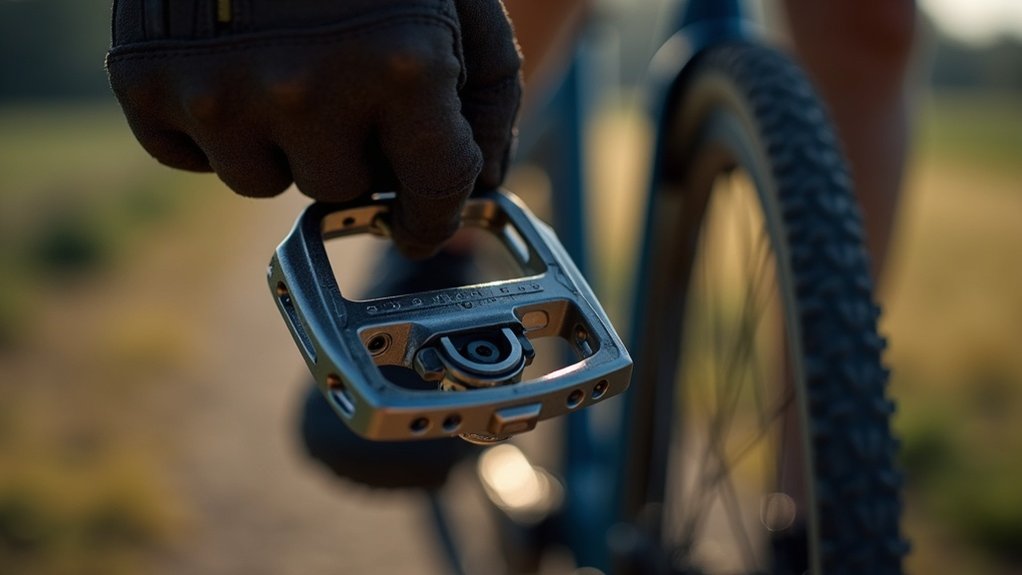
To inspect your pedals for bearing play, securely clamp them in a repair stand. Rock the pedal body back and forth to check for excess movement. If you notice any play, use a wrench to loosen the locknut and adjust the cone until snug without binding. Carefully spin the pedal to assess smoothness; any gritty feel indicates maintenance is needed. Regular checks can prevent bigger issues, and there’s more to explore about keeping your pedals in top shape.
Key Takeaways
- Secure the pedal in a repair stand clamp for stability during inspection.
- Rock the pedal body back and forth to check for excess play.
- Listen for unusual noises like grinding or clicking while spinning the pedal.
- Remove the pedal to inspect the bearings for dirt or corrosion.
- Adjust the cone to eliminate play, ensuring a snug fit without binding.
Securing the Pedal for Inspection
To guarantee a thorough inspection of the pedal, start by securing it in a repair stand clamp, which prevents any movement and maintains stability during your assessment.
Use a wrench to hold the pedal body firmly while you conduct your inspection. It’s essential to service one pedal at a time to avoid confusion with components.
Hold the pedal body steady with a wrench during inspection, servicing one pedal at a time to prevent component confusion.
Next, check for play by rocking the pedal body back and forth with your hand, feeling for any excess movement between the pedal body and axle.
For a detailed evaluation, consider cleaning the pedal and removing the bearing unit to assess the bearings’ condition accurately.
Checking for Excess Play
How can you determine if your pedals have excess play? Start by holding the pedal body and rocking it back and forth. Any noticeable movement indicates bearing wear or misalignment.
For Shimano SPD pedals, check the junction between the pedal body and axle; a gap or excessive side-to-side movement suggests degradation.
If you find excess play, use a wrench to loosen the locknut and cone, then adjust the cone to eliminate play, ensuring the pedal feels snug without binding.
Regularly checking for play is essential for maintaining performance and safety during rides, as even minor wear can lead to issues.
Assessing Smoothness of Pedal Spin
What does a smooth pedal spin feel like? When you hold the pedal body and give it a gentle spin, it should rotate freely without any sticking or grinding noises.
A smooth spin indicates healthy bearings and should feel consistent, with no noticeable resistance or roughness. To assess this, verify the pedal is clean by wiping dirt off the pedal body.
If you’re using Shimano pedals and notice a gritty feel or restricted movement, it may signify worn or contaminated bearings that require maintenance.
Regularly checking the smoothness of your pedal spin helps identify potential issues before they escalate.
Inspecting Bearings for Wear
After ensuring a smooth pedal spin, the next step is to inspect the bearings for wear.
Check for excessive side-to-side movement of the pedal body relative to the axle; this can indicate bearing degradation. Spin the pedal and listen for unusual noises, like grinding or clicking, which suggest worn bearings.
Hold the pedal and gently rock the body back and forth to feel for noticeable play—minimal movement is ideal.
Remove the pedal and inspect the bearing unit for corrosion, dirt, or excessive wear. For thorough evaluation, use a Shimano TL-PD40 tool to access the bearings directly for maintenance.
Making Necessary Adjustments
To guarantee your pedals maintain peak performance, addressing any bearing play promptly is essential.
First, inspect pedals by holding the pedal body and rocking it. If you notice movement, it’s time to adjust bearing play.
For Shimano pedals, loosen the locknut using a cone wrench, then turn the cone clockwise to tighten. Re-tighten the locknut to secure your adjustment.
Regular maintenance, ideally once a season, helps avoid issues. If play persists after adjustments, you may need to replace the axle assembly, indicating wear that simple adjustments can’t fix.
Stay proactive to verify your pedals function smoothly and safely.