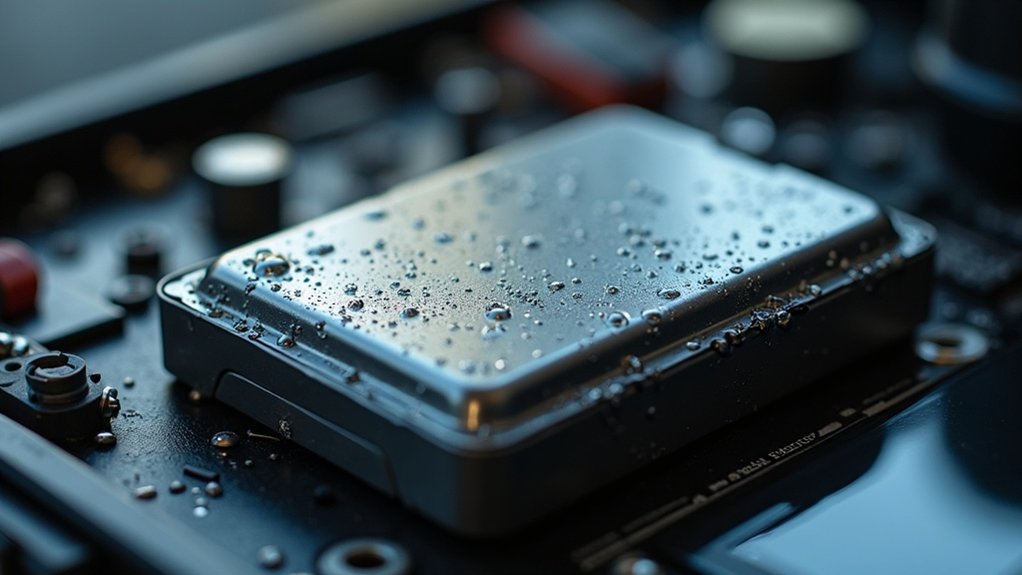
To identify water intrusion in battery housings, look for visible signs like water droplets, corrosion, or distorted casings. Check terminals and connectors for discoloration or greenish deposits indicating corrosion. Inspect seals for debris and drainage holes for blockages that could trap moisture. Using moisture meters, you can get precise readings of moisture levels. Spotting these issues early is essential for battery performance. Learn how to prevent water intrusion and address these problems effectively.
Key Takeaways
- Inspect for visible water droplets, pooling, or corrosion around terminals that indicate moisture exposure inside the battery housing.
- Examine the battery casing for swelling or distortion, suggesting potential internal damage from water intrusion.
- Look for white or greenish foam layers inside the battery compartment, which indicate contamination from leaked electrolytes.
- Use moisture meters to detect hidden water presence, ensuring calibration for accurate readings on various surfaces.
- Regularly check sealing surfaces for debris and inspect drainage holes to prevent moisture accumulation and maintain battery integrity.
Signs of Water Intrusion in Battery Housings
How can you identify water intrusion in battery housings?
Look for visible water droplets or pooling inside the casing, signaling compromised seals or condensation issues.
Corrosion around terminals and connectors often indicates water exposure, leading to performance degradation.
Corrosion around terminals signals water exposure, which can significantly impair battery performance.
Additionally, swollen or distorted battery casings suggest internal problems caused by water ingress.
If you notice white or greenish foam layers inside the battery compartment, it may point to chemical reactions from water exposure, indicating contamination.
Finally, unusual heat generation during operation or charging can be a warning sign of internal damage, necessitating immediate assessment and potential disposal of the affected battery.
Visual Inspection Techniques
When you conduct a visual inspection of the battery housing, focus on identifying external signs of moisture, such as water stains or corrosion.
Pay close attention to discoloration on connectors and terminals, as these can indicate moisture exposure and potential damage.
Additionally, check the o-ring grooves for debris that could compromise the seal and allow water intrusion.
External Signs of Moisture
While performing a visual inspection of battery housings, you should look for external signs of moisture that can indicate potential issues.
Focus on these key areas:
- Water stains or discoloration on the battery housing, which may suggest previous intrusion.
- Swelling or distortion in the casing, indicating internal damage from moisture exposure.
- Debris around seals or seams, which could compromise the battery housing’s waterproof integrity.
- Blockages in drainage holes or vents, trapping moisture and causing condensation inside.
Identifying these signs early can prevent further damage and guarantee the reliability of your battery housing.
Corrosion and Discoloration Indicators
As you inspect battery housings, pay close attention to corrosion and discoloration indicators, as these can reveal underlying moisture issues.
Examine battery terminals and connectors for greenish or white deposits, which signify corrosion from moisture exposure.
Swelling or distortion of the battery case may indicate internal damage and potential water intrusion.
Additionally, foul-smelling electrolyte or discoloration around the battery suggests leakage and contamination.
Inspect seams and external parts for rust, common entry points for water.
Finally, look for water stains or pooling around the battery housing, indicating compromised seals that necessitate immediate attention.
Using Moisture Meters for Detection
When selecting moisture meters for detecting water intrusion in battery housings, consider the types available and their specific features.
Calibration and accuracy are critical for reliable readings, as even slight discrepancies can lead to misinterpretation of moisture levels.
Understanding these factors guarantees you make informed decisions to safeguard battery integrity effectively.
Types of Moisture Meters
Understanding the types of moisture meters is essential for accurately detecting water intrusion in battery housings. Here are the main types you should consider:
- Pin-type moisture meters: Measure electrical resistance with electrodes; ideal for porous materials.
- Pinless moisture meters: Use electromagnetic signals for non-destructive testing; perfect for finished surfaces.
- Advanced moisture meters: Feature extra functions like temperature measurement and data logging.
- Percentage displays: Show moisture content relative to dry weight; levels above 20% indicate potential issues.
Choosing the right moisture meter will enhance your ability to identify water intrusion effectively.
Calibration and Accuracy Considerations
Calibration is essential for ensuring moisture meters deliver accurate readings, especially in detecting water intrusion in battery housings. You should calibrate your moisture meter according to the manufacturer’s specifications before every use.
Remember, accuracy may vary based on the material being tested; some meters perform better on specific substrates. For effective detection, opt for a probe or pin-type meter for direct measurements, as non-invasive models mightn’t penetrate adequately.
Regular maintenance and recalibration of your moisture meter are vital to avoid false readings, ensuring reliable performance important to your battery management system and safety in battery operations.
Common Causes of Water Ingress
Water ingress in battery housings can stem from various factors that compromise their protective integrity. Understanding these causes is essential to prevent water inside the battery.
Here are some common sources of water ingress:
- Debris accumulation on sealing surfaces and o-ring grooves, weakening seals.
- Condensation from temperature fluctuations and humidity, especially in unsealed packs.
- Mechanical damage to the battery shell due to corrosion or vibration, creating breaches.
- Poorly designed cooling systems that leak, allowing moisture to enter.
Identifying these issues early can help maintain your battery’s performance and longevity.
Preventive Measures to Protect Battery Housings
To safeguard battery housings from water ingress, implementing effective preventive measures is vital.
Regularly inspect and clean o-ring grooves and sealing surfaces to prevent debris that can compromise seals. Utilize appropriate sealants and lubricants to maintain watertight integrity, especially during temperature fluctuations.
Regular inspection and cleaning of o-ring grooves are essential to ensure seals remain uncompromised and watertight.
Incorporate moisture-absorbing materials, like silica gel packets, inside battery housings to mitigate condensation. Ascertain all battery packs are properly sealed during manufacturing to minimize moisture entry from humid conditions.
Finally, conduct routine test dives or water exposure tests without installed batteries to check for leaks and assess the housing’s integrity before further use.
Steps to Take if Water Intrusion Is Detected
When you detect signs of water intrusion in battery housings, it’s crucial to act swiftly to mitigate potential damage. Follow these steps:
- Check for visible signs of water accumulation or corrosion inside the housing.
- Inspect seals and o-rings for debris or damage; clean and grease them properly.
- Conduct a submersion test (without the battery) to identify leaks; look for bubbles indicating compromised seals.
- If water intrusion is detected, discontinue use immediately to prevent corrosion and short circuits.
Document your findings and report them to the manufacturer to help improve future designs.