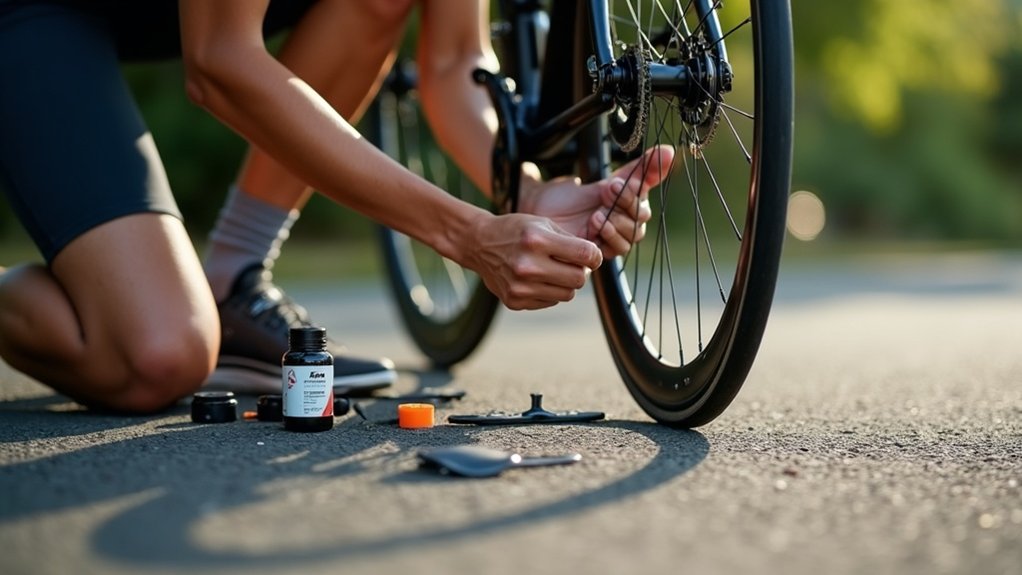
To fix a tubeless puncture on your commute, start by locating the puncture using soapy water or by listening for hissing sounds. Clean the area around the hole, then use a tubeless repair kit to insert a plug into the puncture. Inflate the tire with a CO2 canister or mini pump. If you encounter a sidewall puncture, use a tire boot for support. For additional tips on preventing future punctures, you’ll want to explore further.
Key Takeaways
- Identify the puncture by listening for hissing sounds or using soapy water to locate air leaks with bubbles.
- Clean the puncture site by removing debris and ensuring the area is dry before repairing.
- Insert a plug from a tubeless repair kit into the puncture hole using an insertion tool for a secure seal.
- Inflate the tire with a CO2 canister or mini pump, ensuring the sealant is evenly distributed.
- Consider carrying a spare tube and regularly check tire pressure to prevent future punctures.
Identify the Puncture Location
To effectively identify the puncture location on a tubeless tire, start by listening for hissing sounds or feeling for escaping air with your lips, as these methods can quickly reveal where air is leaking.
Next, visually inspect the tire for any embedded debris like thorns or glass shards that may have caused the puncture. If necessary, remove the wheel to check the tire’s interior for torn or damaged areas.
Applying soapy water to the tire surface can also help; bubbles will form at the puncture site, pinpointing the exact location of air leakage for effective repairs.
Clean the Area
Once you’ve pinpointed the puncture location, the next step is to clean the area thoroughly.
Start by removing any debris or sharp objects to prevent further damage. Use a cloth or paper towel to wipe away dirt and sealant around the puncture. If needed, employ a small brush or compressed air to dislodge fine particles lodged in the hole.
Verify everything is completely dry, as moisture can compromise the repair’s effectiveness.
After cleaning, inspect the puncture‘s size and type to know how to patch it properly, confirming you have the right tools ready for the fix.
Insert a Plug With a Tubeless Repair Kit
A tubeless repair kit is essential for quickly addressing punctures in your tire without the hassle of removing it from the rim.
To fix a tubeless tyre puncture, start by removing any sharp object that caused the damage. Next, use the insertion tool to firmly insert the plug into the hole, ensuring it goes in completely.
Start by removing the sharp object, then insert the plug with the tool for a complete tubeless tire repair.
Gently pull the insertion tool out, leaving the plug securely in place for effective puncture repair. Trim any excess plug protruding from the tire to maintain performance.
Always carry a tubeless repair kit on commutes for efficient roadside repairs and minimal downtime.
Use a CO2 Canister or Mini Pump
Using a CO2 canister or mini pump is essential for quickly inflating your tubeless tire after a puncture. Here’s what you need to know:
- Verify the CO2 cartridge is tightly screwed onto the Presta valve for rapid inflation.
- Rotate the tire post-inflation to distribute sealant evenly.
- A mini pump can work but requires more effort and time.
- Keep both tools handy to reseat the tire bead if it comes off the rim.
- Always have a spare tube as a backup for emergencies.
These tools guarantee you stay mobile and safe during your commute, even in unexpected situations.
Address Sidewall Punctures With a Tyre Boot
When dealing with sidewall punctures in tubeless tires, addressing the issue promptly is vital to maintain safety and performance.
Start by cleaning the area around the puncture to guarantee a good seal. Next, insert a tire boot, like a dollar bill or energy bar wrapper, over the puncture on the tire’s inner surface. This provides support and prevents bulging.
Clean the puncture area thoroughly, then place a tire boot over it to ensure support and prevent bulging.
After placing the boot, apply a tubeless sealant to fill any remaining gaps and enhance leak protection.
Regularly inspect your tire for wear or additional punctures, and replace it if the damage is extensive or the boot fails after multiple uses.
Carry a Spare Tube for Emergencies
While addressing sidewall punctures with a tire boot is a valuable temporary fix, having a spare tube on hand guarantees you’re prepared for more severe punctures that sealants can’t handle.
Here’s why you should carry a spare inner tube:
- Provides a reliable backup solution for significant punctures
- Fits easily in a saddle bag or jersey pocket
- Enables quick and efficient tire changes, minimizing downtime
- Check regularly to verify it’s in usable condition
- Pair with a mini pump or CO2 cartridge for quick inflation
Preparedness with a spare tube verifies you can tackle emergencies and keep your commute smooth.
Tips for Preventing Future Punctures
To prevent future punctures, start by choosing puncture-resistant tires that offer enhanced protection against sharp objects.
Regularly check your tire pressure, as properly inflated tires greatly reduce the likelihood of flats.
Implementing these practices can lead to a smoother and safer riding experience.
Choose Puncture-Resistant Tires
Choosing the right tires can make a significant difference in preventing punctures during your rides. Opt for puncture-resistant tires that enhance durability and reduce the risk of flats.
Here are some key features to look for:
- Tough rubber layers or puncture-proof materials
- Thorn-resistant or reinforced designs for extra protection
- Higher PSI ratings for reduced ground contact
- Positive user feedback on longevity and performance
- Regular maintenance and inspection for wear and sharp objects
Regularly Check Tire Pressure
Maintaining ideal tire pressure is essential for preventing punctures and ensuring a smooth ride. Regularly check your bike tires with a reliable gauge, aiming for perfect pressure between 30-40 PSI for tubeless tires.
Higher pressure reduces the risk of pinch flats and minimizes road contact, lowering puncture chances. Before each ride, inspect your tires for visible damage or embedded debris, identifying potential sources of punctures.
Additionally, monitor the sealant level and refresh it every 2-6 months. Familiarize yourself with tread wear indicators, replacing tires when they’re too worn to enhance puncture resistance and maintain performance during your commute.