To evaluate road surfaces for safe speeds, assess material types, surface conditions, and drainage capabilities. Different materials, like asphalt and concrete, each have unique durability and repair characteristics that impact speed management. Look for potential issues such as cracking or rutting, which can affect performance and driver behavior. Additionally, consider how permeable or non-permeable the surface is, as this influences runoff and safety. You’ll discover even more critical factors as we explore further.
Key Takeaways
- Assess road surface materials for flexibility, durability, and maintenance needs to ensure they support safe vehicle speeds under varying traffic loads.
- Evaluate the condition of the surface for cracks, ruts, and wear that could compromise driving safety and speed management.
- Consider environmental factors, such as precipitation and temperature, as they affect surface performance and vehicle handling.
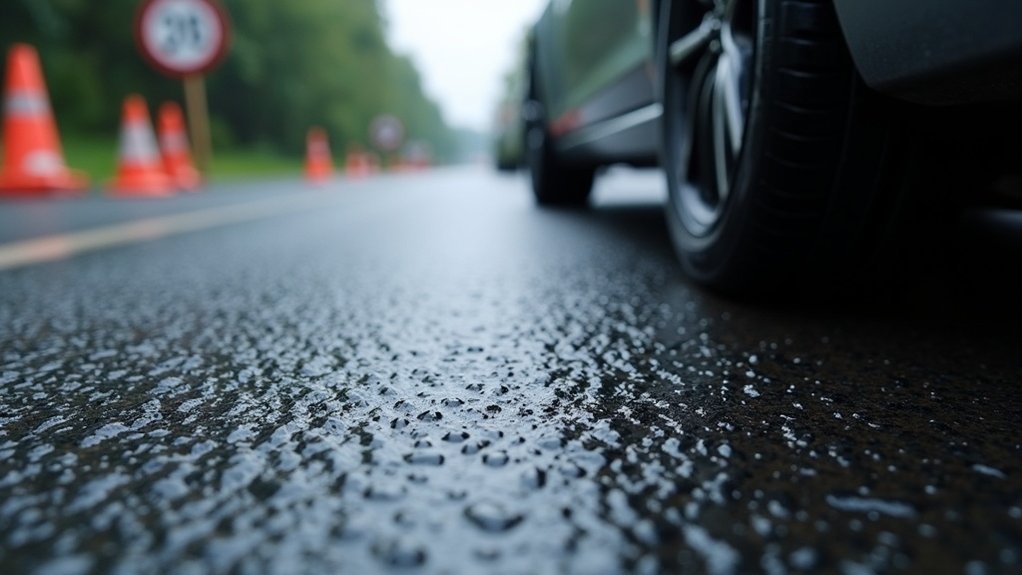
- Analyze drainage capabilities of the surface to prevent water pooling, which can lead to hazardous driving conditions and reduced speed limits.
- Implement regular inspections and maintenance practices to address issues early and maintain optimal surface conditions for safe driving speeds.
What Is a Road Surface?
A road surface serves as the crucial interface between vehicles and the roadway, directly influencing driving safety and comfort. Engineered to endure traffic loads and environmental stresses, road surfaces must maintain durability while supporting safe vehicle speeds.
The material used, whether asphalt or concrete, greatly impacts performance, affecting how well the surface manages speed. Regular maintenance is essential; deteriorating surfaces can lead to hazards like cracking and unevenness, compromising safety.
Ultimately, the design and condition of road surfaces play an essential role in speed management, guiding drivers’ behavior and enhancing the overall safety of the roadway environment.
What Are the Different Types of Road Surface Materials?
Road surface materials considerably influence driving dynamics and safety.
Asphalt, widely used, offers flexibility and a lifespan of 15-30 years but may suffer from rutting under high vehicle speeds.
Asphalt provides a versatile road surface with a lifespan of 15-30 years, though it can experience rutting at high speeds.
Concrete provides superior durability for heavy loads, lasting up to 40 years, yet its repair challenges and higher costs are drawbacks.
Bituminous seals suit low-volume roads, offering waterproofing but a shorter lifespan.
Gravel roads, cost-effective for rural areas, demand regular maintenance and can create dust, impacting air quality.
Finally, block paving combines aesthetics and durability, though it requires careful upkeep to avoid becoming a trip hazard, affecting overall Traffic Safety in the road environment.
Permeable Vs Non-Permeable Road Surfaces
When evaluating permeable and non-permeable road surfaces, you must consider their drainage efficiency, maintenance needs, and environmental impact.
Permeable surfaces enhance drainage by allowing water to pass through, but they require regular maintenance to prevent clogging.
In contrast, while non-permeable surfaces protect underlying layers, they can exacerbate runoff issues if drainage isn’t effectively managed.
Drainage Efficiency Comparison
While comparing permeable and non-permeable road surfaces, it’s clear that drainage efficiency plays an essential role in urban planning.
Permeable surfaces, such as concrete block paving, allow water to drain through, reducing surface runoff by up to 50%. This capability minimizes pooling and flood risks on urban streets, supporting safe speeds for vehicles.
Conversely, non-permeable surfaces restrict water entry, necessitating extensive drainage systems that increase maintenance costs.
Ultimately, choosing permeable over non-permeable materials not only enhances drainage efficiency but also contributes to long-term sustainability and safety in urban environments, ensuring efficient management of stormwater and improved groundwater recharge.
Maintenance Requirements Overview
Maintaining road surfaces is essential for guaranteeing their performance and longevity, particularly when comparing permeable and non-permeable options.
- Permeable surfaces require regular maintenance to prevent clogging and maintain drainage efficiency.
- Non-permeable surfaces need less frequent upkeep but face issues like cracking that necessitate repairs.
- Both types require regular inspections to identify and resolve issues early.
To guarantee a safe road, you must understand the specific maintenance requirements for each surface type.
Proactively caring for permeable surfaces is vital, as neglect can lead to increased flood risks and reduced lifespan compared to their non-permeable counterparts.
Environmental Impact Assessment
Understanding the maintenance requirements of road surfaces sets the stage for evaluating their environmental impact.
Permeable road surfaces excel in managing stormwater runoff by allowing water to drain through, effectively reducing flooding risks in urban areas. In contrast, non-permeable surfaces hinder water infiltration, contributing to increased runoff and urban flooding.
Implementing permeable paving is essential for sustainable urban drainage systems (SUDS), as these surfaces absorb and manage rainfall efficiently. While permeable materials like concrete block paving enhance flood resilience, regular maintenance is critical to prevent clogging and guarantee peak functionality, ultimately promoting safer road conditions for all users.
Factors Influencing Road Surface Selection
When selecting a road surface, several critical factors come into play, each influencing the overall effectiveness and longevity of the pavement.
- Traffic volume and load requirements dictate material durability.
- Environmental conditions, like precipitation, require suitable surface types.
- Budget constraints balance initial costs with maintenance needs.
Understanding these factors is essential for effective road design, ensuring surfaces can handle expected traffic while adhering to speed limits.
For instance, concrete might be chosen for high-traffic areas due to its longevity, while asphalt may be preferred in less demanding situations for its lower upfront costs.
Choose wisely to optimize safety and performance.
How Long Does a Road Surface Last?
When considering how long a road surface lasts, you must evaluate various factors, including material type and maintenance practices.
Asphalt and concrete have distinct lifespans influenced by traffic loads and environmental conditions, while bituminous seals and gravel surfaces require regular upkeep to maintain their durability.
Factors Affecting Longevity
While various factors play an essential role in determining how long a road surface lasts, the choice of material and maintenance practices are vital. For road users, understanding these factors can guide decisions around safety and longevity.
- Vehicle load requirements directly impact surface wear.
- Weather conditions influence material degradation and lifespan.
- Traffic volume necessitates tailored selection for durability.
Concrete surfaces can last up to 40 years, while asphalt typically endures 20 to 30 years.
Regular inspections and proactive maintenance are essential for all types, especially permeable surfaces, which require consistent upkeep to prevent clogging and extend their effective lifespan.
Maintenance Impact on Durability
Effective maintenance is essential for maximizing the lifespan of road surfaces, directly influencing their durability and overall performance.
For instance, concrete can last up to 40 years with minimal upkeep, while asphalt typically endures 20 to 30 years when maintained properly. Regular inspections and timely actions like crack sealing can prevent significant degradation, primarily caused by oxidation.
Permeable surfaces also require consistent maintenance to avoid clogging, which shortens their effectiveness.
Material Lifespan Comparisons
Understanding the lifespan of various road surface materials is essential for planning maintenance and guaranteeing safety on the roads. Here’s a comparison of common materials:
- Asphalt: 15-30 years, extendable through maintenance.
- Concrete: Up to 40 years, ideal for high-load areas.
- Bituminous seals: 5-10 years, suitable for low-volume roads.
When designing features like pedestrian refuge islands, consider how different surfaces manage vertical deflection and wear.
Choosing the right material not only impacts longevity but also safety, as regular upkeep guarantees roads remain navigable and secure for all users, regardless of traffic volume or environmental conditions.
What Are the Types of Asphalt Road Surface Maintenance Methods?
Asphalt road surfaces require regular maintenance to guarantee safety and longevity.
Key asphalt maintenance methods include surface dressing, which enhances durability and prevents water infiltration by applying liquid bitumen and stone chippings.
Slurry seal improves skid-resistance and seals cracks on existing roads, extending surface lifespan.
Full-depth reclamation addresses deep-seated issues by recycling existing materials to form a new base layer.
Micro-surfacing, using polymer modified bitumen, offers a quicker curing time while creating a durable layer without heat.
Regular inspections and timely interventions, like crack sealing, are essential traffic calming measures to maintain pavement integrity and safety.