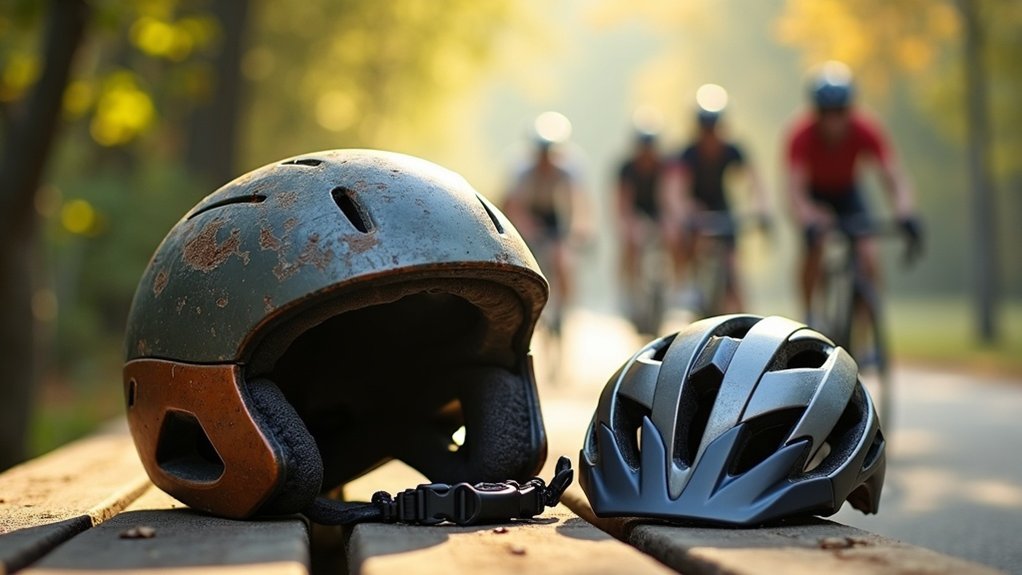
To decide when to retire your helmet, inspect it regularly for visible signs of wear, like cracks or fading. Replace it immediately after any crash, even if there’s no visible damage. You should also consider a replacement if it’s over five years old or shows foam compression. Environmental factors like UV exposure and high temperatures can degrade its integrity. Understanding these elements will keep you safer, and there’s more to uncover about helmet maintenance.
Key Takeaways
- Replace helmets every 3 to 5 years due to material degradation and evolving safety standards.
- Inspect for visible damage, such as cracks or significant scratches, which indicate the need for replacement.
- Immediately retire a helmet after any crash, regardless of visible damage, to ensure maximum protection.
- Check for foam compression or flat spots, signaling reduced protection and the need for a new helmet.
- Regularly inspect straps and retention systems; loose or frayed components require prompt helmet replacement.
Understanding Helmet Lifespan
When you consider the lifespan of a helmet, it’s essential to recognize that materials degrade over time, which can greatly impact its protective capabilities.
Typically, helmet manufacturers recommend replacing your helmet every 3 to 5 years due to wear and tear. Environmental factors like UV exposure and extreme temperatures also shorten this lifespan.
After a crash, you should replace your helmet immediately, especially if you see signs of wear such as cracks or fraying straps.
Newer models often meet updated safety standards, offering enhanced protection, so consider upgrading for better safety as technology advances.
The Importance of Regular Inspections
Understanding helmet lifespan is just the beginning; regular inspections play an essential role in maintaining your helmet’s safety. By checking for visible signs of wear like scratches or fading, you can guarantee your helmet’s protective capabilities remain intact.
Inspecting the straps and retention system helps prevent an unsafe fit that could lead to helmet failure during rides. Experts recommend conducting these inspections every few months, especially if you frequently use your helmet or expose it to harsh conditions.
Signs Your Helmet Needs Replacement
Although helmets are designed to protect you, they don’t last forever, and recognizing the signs that your helmet needs replacement is crucial for your safety.
Replace your helmet immediately if it’s been involved in a crash, as even minor impacts can damage the foam’s ability to absorb energy.
Inspect for visible damage like cracks or significant scratches, which may compromise structural integrity.
Check for foam compression or flat spots; these indicate reduced impact protection.
Confirm a secure fit—if the helmet feels loose or the retention system is frayed, it’s time to replace it, especially if it’s over five years old.
Impact of Crashes on Helmet Integrity
Crashes can greatly compromise a helmet’s integrity, making it essential to assess any damage immediately afterward.
Even if your helmet looks fine, the foam designed for impact absorption might be compromised.
Even if there’s no visible damage, the impact-absorbing foam in your helmet could still be compromised.
- Replace your helmet after any crash to guarantee maximum protection.
- Minor bumps can also affect structural integrity, leading to unseen damage.
- Retaining an old helmet considerably reduces safety, as compromised EPS padding won’t absorb energy effectively.
Prioritizing safety means understanding that even a seemingly intact helmet can fail to protect you in future incidents.
Always choose to replace your helmet post-crash for your well-being.
Environmental Factors Affecting Helmet Condition
When you wear a helmet regularly, it’s crucial to take into account how environmental factors can affect its condition and safety. UV rays can weaken the outer shell, while high temperatures may degrade helmet materials. Humidity and sweat can break down adhesives, compromising impact absorption. Chemical exposure from lotions or gasoline can also lead to deterioration that’s not immediately visible. To maintain helmet safety, regularly inspect for signs of wear.
| Environmental Factor | Impact on Helmet | Inspection Tips |
|---|---|---|
| UV Rays | Weakens shell | Look for brittleness |
| High Temperatures | Degrades materials | Check for soft spots |
| Humidity | Breaks down liners | Watch for odors |
| Chemical Exposure | Compromises integrity | Note discoloration |
| General Wear | Indicates degradation | Regularly inspect |
Manufacturer Recommendations for Helmet Replacement
To guarantee your helmet remains effective in protecting you, it’s essential to follow manufacturer recommendations for replacement.
Generally, it’s advised to replace your helmet every five years, especially if it’s been well-used or exposed to UV damage. Significant impacts also warrant an immediate replacement, regardless of visible wear.
Replace your helmet every five years, or sooner if it’s been impacted or shows signs of UV damage.
- Check the manufacture date inside your helmet to assess its shelf life.
- Remember that material degradation can lead to serious head injury risks.
- Regularly inspect your helmet for signs of wear or damage.
Choosing a Replacement Helmet: Key Considerations
How can you guarantee your new helmet offers the best protection possible? First, confirm it meets safety certifications like CPSC, EN1078, or AS/NZS 2063.
Experts agree that helmets need to be replaced every few years or after an impact. Choose models designed to reduce rotational forces, such as those featuring MIPS or WaveCel technology.
Look for adjustable fit systems for a better fit and ventilation features to enhance comfort. Lightweight materials improve overall riding experiences, and visibility features, like reflective accents or built-in lights, considerably enhance safety in low-light conditions.
Prioritize these aspects for ideal protection.