To cool brakes on long descents, use intermittent braking techniques. Apply short, firm bursts of braking to manage heat generation effectively. Alternate between front and rear brakes to allow for even cooling. Consider using larger rotors for better thermal capacity. Keep an eye out for signs of overheating, like a spongy lever feel or unusual smells. Staying aware of your braking technique can enhance performance and safety. There’s more to discover about optimizing your braking strategy.
Key Takeaways
- Use intermittent hard braking to allow cooling periods and prevent overheating during long descents.
- Alternate between front and rear brakes to distribute heat evenly and enhance cooling efficiency.
- Engage in tactics like tacking or coasting to minimize continuous brake use and reduce heat buildup.
- Regularly check for signs of overheating, such as spongy brake lever feel or unusual smells, and take breaks if necessary.
- Opt for larger rotors (203mm or 180mm) and appropriate brake pads, like sintered or ceramic, for better heat management.
Understanding Brake Heat Generation During Descents
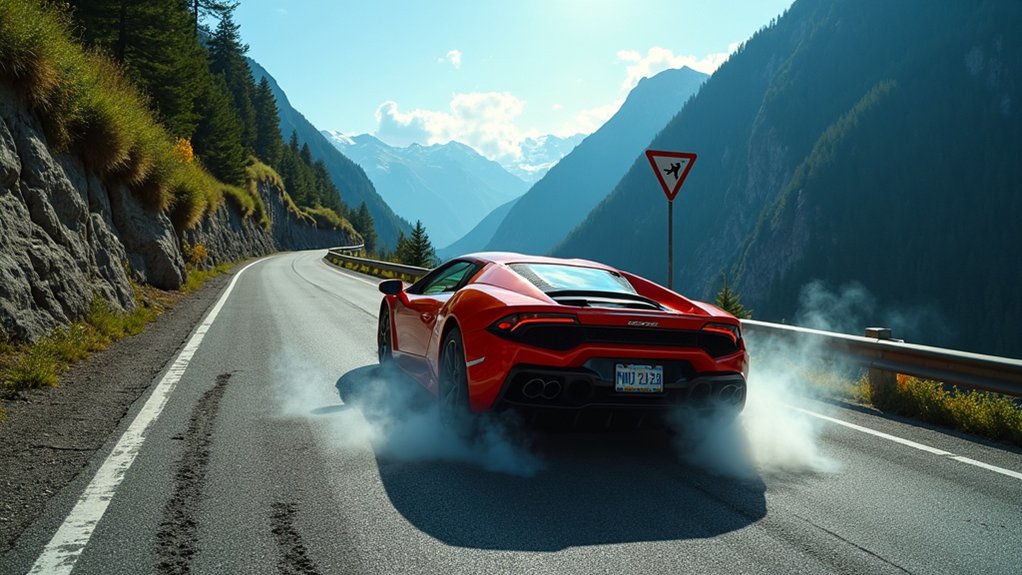
When you descend a hill, your brakes work hard to convert kinetic energy into thermal energy through friction, which can lead to significant heat buildup.
The faster and steeper the descent, the more heat your braking system generates. Continuous braking exacerbates this issue, risking brake fade and reduced effectiveness.
To manage heat, it’s essential to employ intermittent braking techniques that allow periods for cooling. Symptoms of overheating, like a spongy lever feel or unusual smells, indicate potential brake fluid boiling or pad degradation.
Effective heat management prevents rotor warping and maintains consistent braking performance throughout your descent.
Techniques for Effective Braking and Cooling
To effectively manage brake heat during long descents, employing a combination of techniques is essential.
Use intermittent hard braking by applying the brakes firmly for short bursts, allowing cooling periods. Alternate between the front brake and rear rotor to evenly distribute heat, enhancing overall cooling.
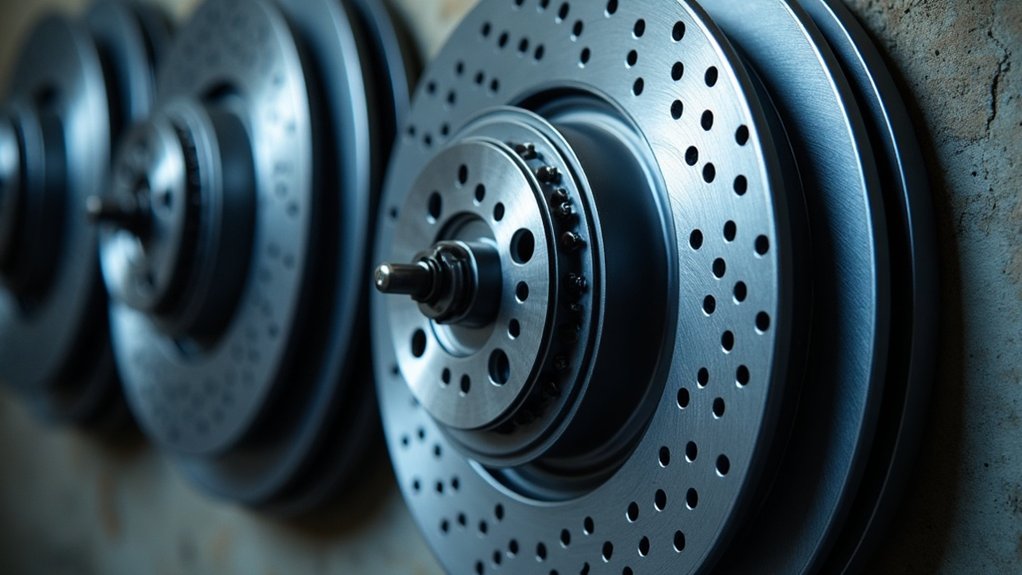
Consider larger rotors, like 203mm or 180mm, to increase thermal capacity and minimize brake fade risks. Engage in tactics such as tacking or coasting to reduce continuous brake application.
Regularly inspect your brake pads and rotors for wear and overheating signs, ensuring your braking system remains effective throughout challenging descents.
The Importance of Intermittent Braking
Intermittent braking plays an essential role in maintaining ideal brake performance during long descents, as it allows for necessary cooling periods between applications.
By applying the brakes firmly for short durations, rather than dragging them, you minimize heat buildup and reduce the risk of brake fade.
Alternating between the front and rear brakes enhances cooling efficiency, letting one brake cool while the other engages.
This technique supports effective speed management, preserving brake performance and ensuring rider safety.
Testing different intermittent braking methods can help you find the best approach for controlling speed and preventing overheating on steep descents.
Choosing the Right Brake Pads for Heat Management
Selecting the right brake pads is essential for effective heat management during long descents. Sintered pads are your best choice, offering high durability and resistance to fade under extreme heat, perfect for aggressive mountain biking.
If you’re seeking superior heat dissipation, consider graphene brake pads; they excel in tough conditions. On the other hand, organic pads have low heat tolerance and aren’t suited for prolonged descents.
Ceramic brake pads provide excellent heat resistance, outperforming organic options and enhancing braking performance.
Ultimately, match your brake pad compound to your riding style and terrain to guarantee ideal heat management on challenging descents.
Signs of Overheating and When to Take Breaks
Recognizing the signs of brake overheating is essential for maintaining control during long descents. Common indicators include a spongy brake lever feel, discoloration of brake components, a burning smell, and visible smoke.
If you notice diminished brake performance, like reduced stopping power or levers bottoming out, take a cooling break immediately. Regularly check rim temperatures; if they’re too hot to touch, it’s time to pause.
Be mindful of tube blowouts, as overheating rims pose significant risks. Taking breaks not only cools your brakes but also enhances control and safety, particularly when approaching sharp turns or steep gradients.