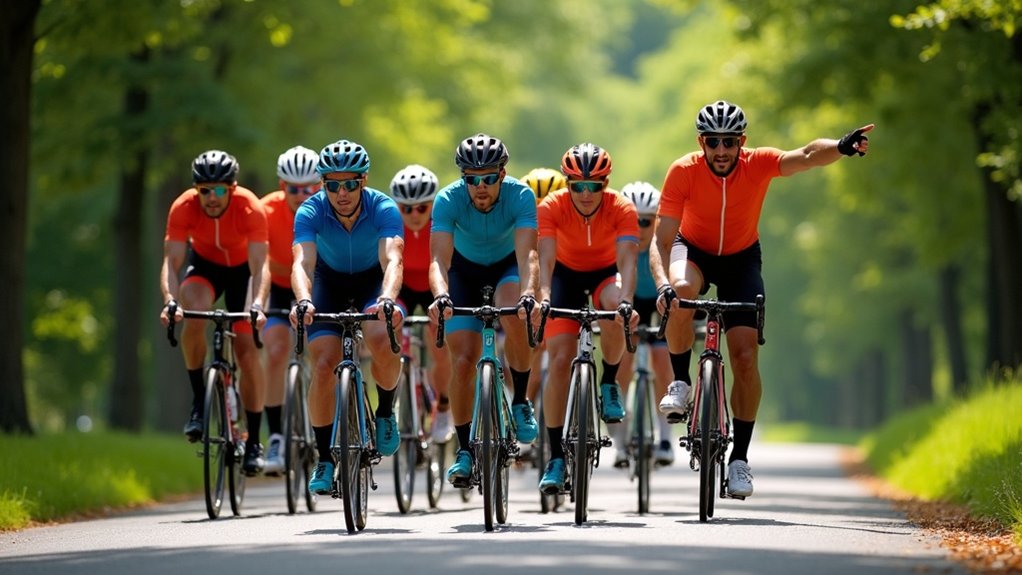
In group rides, clear communication is key to ensuring safety and enjoyment. Use verbal commands like “Car Back” for warnings and “All Here?” to check in. Hand signals help indicate turns and stops—extend your left arm for a left turn, raise your fist to stop, and use flat palms to show slowing. Consistent signaling keeps everyone aware and united. By practicing these methods, you’ll enhance your riding experience and build camaraderie with fellow cyclists. Discover more essential tips for effective communication.
Key Takeaways
- Use verbal commands like “Car Back” and “Biker Down” to alert riders of hazards and ensure immediate communication of important information.
- Implement hand signals for turns and stops; extend arms to indicate direction and raise a fist to signal halting.
- Establish and practice a standard set of signals before rides to ensure all members are familiar with communication methods.
- Regularly check in with the group using “All Here?” to confirm everyone is accounted for after stops or breaks.
- Encourage non-verbal communication to reduce distractions and enhance awareness, allowing for quick signals without needing to stop.
Importance of Communication in Group Rides
When you ride in a group, effective communication is essential for everyone’s safety and enjoyment. Utilizing group ride etiquette, like clear hand signals, keeps all riders informed about turns and obstacles.
This non-verbal communication allows you to stay focused on the road while sharing important information. Consistently using designated signals fosters a culture of awareness and cooperation, reducing misunderstandings.
Open lines of communication enable real-time feedback, accommodating different fitness levels and ensuring everyone can participate comfortably.
Verbal Commands and Their Meanings
Effective communication in group rides extends beyond hand signals; verbal commands play an essential role in ensuring everyone’s safety and cohesion.
Commands like “All On” signal that the group is reassembled after a stop, while “All Here?” helps the ride leader check if all riders are accounted for. If you hear “Biker Down,” it’s a call for immediate assistance.
Use “Car Back” to alert cyclists of an approaching vehicle from behind, and repeat it for emphasis. Additionally, “Gap” indicates the group is splitting, while “Dog” and “Debris” warn of potential hazards ahead.
Stay alert and communicate effectively!
Hand Signals for Safe Riding
Hand signals are essential for safe riding in group situations, helping you communicate turns and hazards effectively.
By using clear and consistent gestures, you can guarantee everyone in the group stays informed and alert.
Let’s explore the key signals for direction, movement, and hazard communication that keep your ride smooth and safe.
Essential Hand Signals
Clear communication is vital in group rides, and using essential hand signals can enhance safety for everyone involved.
To signal a left turn, extend your left arm horizontally; this alerts riders behind. For a right turn, do the same with your right arm.
When stopping, raise a fist above your head, letting the group know to halt safely. To slow down, hold your palm flat behind you and move it downward.
Finally, if you need to communicate hazards, point with one hand toward the danger, ensuring everyone can navigate safely around it.
Master these hand signals for smoother rides!
Communicating Hazards Effectively
When riding in a group, communicating hazards effectively is essential for everyone’s safety and smooth navigation.
Use clear hand signals to alert fellow riders of potential dangers. Here are three key signals:
- Pothole: Extend your arm downward and call out “Hole” to warn others.
- Debris: Point in the direction of the debris and say “Debris left” or “Debris right” to guide attention.
- Oncoming traffic: Raise your hand and shout “Biker Up” or “Walker Up” to prepare your group for interactions.
Directional and Movement Signals
Effective communication in group rides hinges on using directional and movement signals that everyone can understand. These signals help maintain safety and coordination.
| Signal | Description |
|---|---|
| Left Turn | Extend left arm straight out |
| Right Turn | Extend right arm, say “Right Turn” |
| Parked Car | Raise right arm, bend elbow for space |
| Slowing | Tap brakes and call out “Slowing” |
| Rolling | Clearly announce “Rolling” to proceed |
Common Hazards and Alerts
As you ride in a group, staying alert to common hazards is essential for everyone’s safety.
You’ll want to use clear verbal commands and hand signals to communicate effectively about obstacles, approaching vehicles, and other potential dangers.
Verbal Commands Overview
Clear communication is essential during group rides, especially when it comes to verbal commands that alert riders to common hazards and situations.
These commands enhance safety and keep everyone informed. Here are three important alerts you should know:
- “Car Back” – Warns riders about an approaching vehicle, guaranteeing they’re prepared.
- “Gap” – Indicates the group is breaking apart, prompting adjustments for those lagging.
- “Debris” – Alerts riders to obstacles on the road, allowing safe navigation.
Using these commands helps maintain cohesion and guarantees all riders are aware of their surroundings, enhancing the overall riding experience.
Hand Signals Usage
Hand signals play an essential role in guaranteeing safety and communication during group rides. You can use your left arm extended sideways to signal a left turn and your right arm for a right turn, helping all riders behind know your direction.
To alert about hazards, point downwards and specify if it’s on the left, right, or middle. Raise a fist to signal a stop or extend a flat palm to slow down, keeping the group’s pace steady.
When a car approaches, yell “Car Back!” and make the call to make sure everyone reacts promptly to maintain safety.
Hazard Awareness Tips
When you’re riding in a group, staying alert to potential hazards is crucial for everyone’s safety.
Clear communication can help protect you and the riders around you. Here are some hazard awareness tips to keep in mind:
- Call out specific hazards like “Debris” or “Hole,” using hand signals to point them out.
- Alert with “Car Back” when a vehicle approaches from behind, repeating the call to guarantee awareness.
- Signal “Walker Up” when pedestrians are near, preparing everyone to give space.
Directional Signals for Turns and Stops
Effective communication during group rides is essential for maintaining safety and cohesion, especially when maneuvering turns and stops.
To signal a left turn, extend your left arm horizontally; for a right turn, do the same with your right arm.
When you’re preparing to stop, tap your brakes and call out “Stopping” to alert those behind you.
To indicate you’re slowing down, use a flat palm signal while saying “Slowing.”
If you need to merge or change lanes, announce “Take the Lane” to guide the group in shifting positions safely.
Clear directional signals keep everyone informed and secure.
Group Movement and Management Signals
Clear communication is essential for the smooth movement of your group during rides.
To guarantee safety and coordination, use these key signals:
- Slowing: Announce “Slowing” and tap your brakes to alert those behind you to reduce speed.
- Stopping: Call out “Stopping” and repeat while tapping your brakes, making certain everyone knows the group will halt.
- Single Up: Use the command “Single Up” to instruct riders to line up in single file, especially in narrow areas.
Etiquette for Effective Communication
Successful group rides depend not only on proper signals but also on etiquette that enhances communication among participants.
Use clear verbal commands like “Slowing” or “Stopping” to let everyone know about pace changes. Incorporate hand signals, such as pointing for turns and a flat palm for slowing, to navigate effectively around stop signs and traffic.
Regularly check in with calls like “All Here?” to guarantee everyone’s accounted for, especially after stops.
Tips for New Riders on Communication
As you join a group ride, remember that communication is key to ensuring a smooth and enjoyable experience for everyone involved.
Here are some tips to help you connect with fellow riders, especially those at the back:
- Introduce Yourself: Let the group know who you’re to foster a welcoming atmosphere.
- Use Clear Commands: Communicate your intentions with phrases like “Slowing” or “Stopping” to keep everyone informed.
- Utilize Hand Signals: Signal turns or obstacles with gestures, enhancing non-verbal communication and safety.