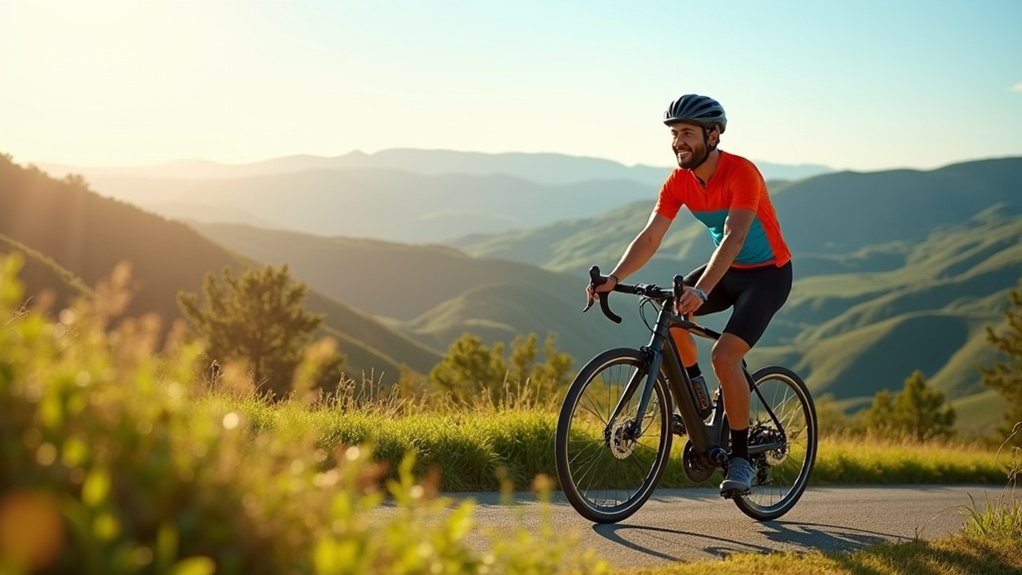
To climb hills efficiently on your e-bike, start with a motor that has at least 250W of power and 60-80 Nm of torque. Shift to lower gears before hitting inclines to maintain a steady cadence of 60-80 RPM. Lean slightly forward to enhance traction and keep your weight balanced. Manage your battery by using lower assist levels on flat terrain and actively pedaling during climbs. There’s so much more you can learn to conquer those steep hills with confidence!
Key Takeaways
- Shift to lower gears before inclines to reduce resistance and improve climbing efficiency.
- Maintain a cadence of 60-80 RPM for optimal energy use during climbs.
- Lean slightly forward to enhance traction and prevent front wheel lift.
- Utilize lower assist levels on flat sections to conserve battery for steep climbs.
- Actively pedal during ascents to boost effort and extend battery life.
Understanding Your E-Bike’s Hill Climbing Capabilities
When you’re tackling steep hills on your e-bike, understanding its climbing capabilities can make all the difference in your ride.
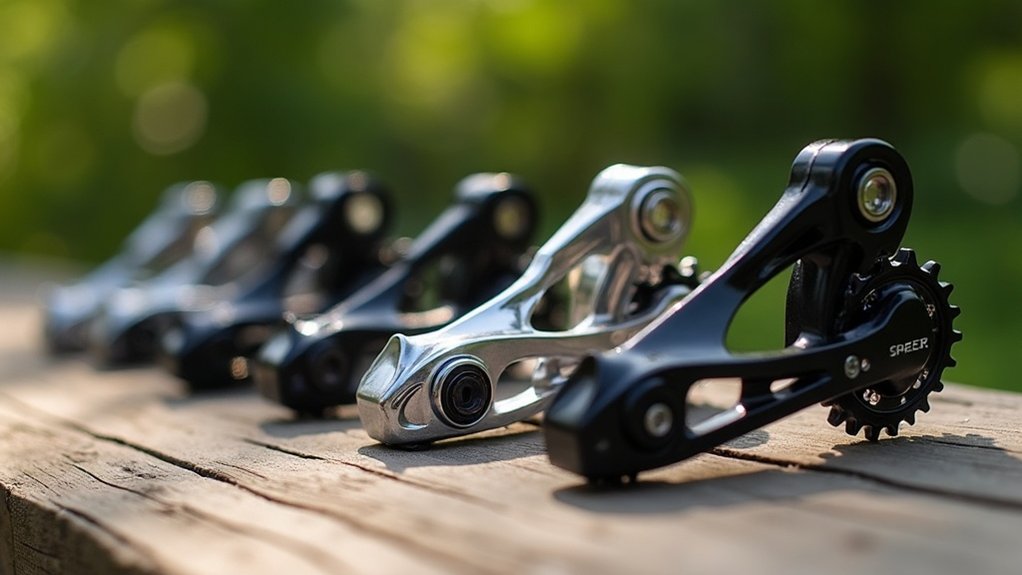
Look for a motor with at least 250W, ideally over 1000W, to guarantee effective climbing. Torque is key—aim for 60-80 Nm for steep gradients. Mid-drive motors excel in climbing since they use the bike’s gears for efficient power delivery.
Also, consider battery capacity; a minimum of 500Wh will help you conquer significant elevation gains.
Finally, remember that weight distribution affects stability; keeping the motor near the center of gravity enhances your hill climbing experience.
Effective Pedal-Assist Techniques for Climbing
As you tackle steep climbs on your e-bike, utilizing effective pedal-assist techniques can transform your ride experience.
Here are three key strategies to enhance your hill performance:
- Choose Lower Gears: Shift to lower gears before the incline to reduce resistance and allow for smoother pedaling.
- Maintain Steady Cadence: Aim for a steady cadence of 60-80 RPM, optimizing both your energy use and motor power.
- Focus on Body Position: Lean slightly forward to enhance traction and control, maximizing your pedal-assist efficiency.
Optimal Gearing Strategies for Steep Inclines
Climbing steep inclines on your e-bike becomes considerably easier with ideal gearing strategies in place. Shift to lower gears before tackling a hill; this reduces pedal resistance and enhances climbing performance.
Aim for a steady cadence of 60-90 RPM to optimize motor responsiveness and efficiency. Anticipate inclines so you can make smooth gear adjustments, avoiding mid-climb shifts that could lead to chain slips.
A wide gearing system allows for efficient power transfer, helping you maintain momentum while reducing fatigue. By mastering these strategies, you’ll conquer steep hills with confidence and ease, maximizing your e-bike experience.
Body Positioning and Balance While Climbing
To maximize your climbing efficiency and stability, it’s essential to focus on your body positioning and balance.
Maximizing your climbing efficiency and stability hinges on effective body positioning and balance.
Here are three key tips to improve your climb:
- Lean slightly forward: Shifting your weight to the front wheel enhances traction and prevents the front from lifting off.
- Maintain a centered weight distribution: Keeping your body low with elbows bent provides better stability and control, optimizing power transfer.
- Stand on the pedals: This engages different muscle groups, increasing your power output, especially on steep sections.
Battery Management for Extended Climbing Range
While you’re tackling those demanding climbs, effective battery management is essential for maximizing your e-bike’s range.
To conserve battery power, use lower assist levels on flat sections and actively pedal during climbs. This not only boosts your pedaling effort but also prolongs battery life, especially on steep inclines.
Regularly check your battery capacity, aiming for at least 500Wh for routes with significant elevation gain.
Keep in mind that cold temperatures can reduce battery performance, so plan accordingly.
Taking breaks during long climbs allows the motor to cool down, reducing strain and ensuring you have enough power for an extended climbing range.