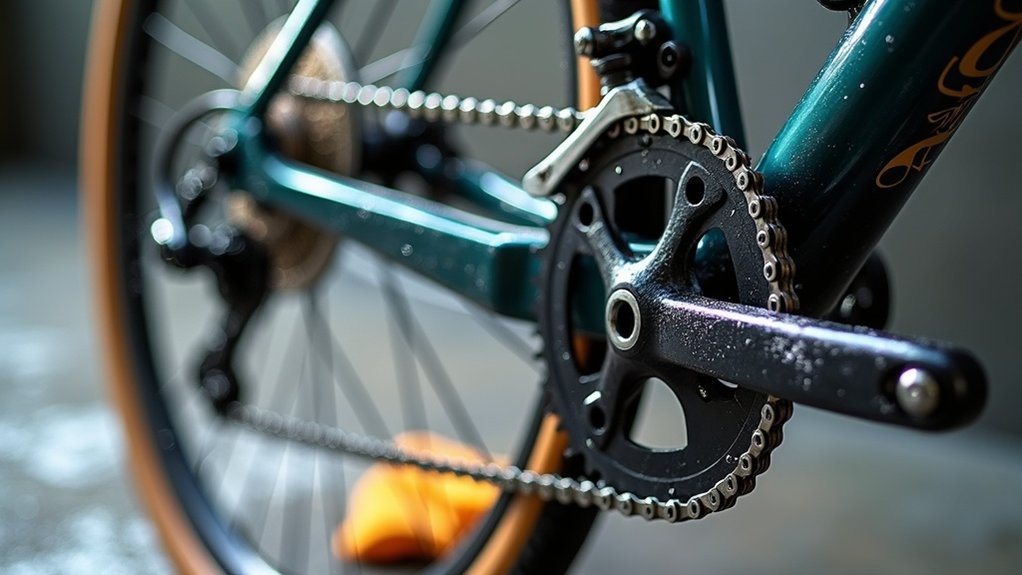
To clean bike drive components without degreaser overspray, start with a soft brush to remove loose dirt. Use a precision spray nozzle for targeted degreaser application and cover sensitive parts with cloth or plastic wrap for protection. Apply degreaser using a small brush, then rinse components with a controlled water stream. Don’t forget to follow up with proper lubrication techniques to keep everything running smoothly. There’s more to guarantee an efficient cleaning process ahead.
Key Takeaways
- Use a precision spray nozzle to apply degreaser directly and reduce overspray risk.
- Employ a chain cleaning device to contain the degreaser and minimize mess.
- Cover sensitive components with cloth or plastic wrap to protect them from overspray.
- Utilize a small brush for targeted degreaser application, avoiding wider sprays.
- Lay down a protective tarp to catch any excess degreaser and keep your workspace clean.
Importance of Cleaning Bike Drive Components
When you neglect to clean your bike’s drive components, dirt and grime can accumulate, leading to decreased efficiency and performance.
The importance of regular cleaning can’t be overstated; it guarantees all bike parts, particularly the chain, function smoothly.
Regular cleaning is essential for smooth-functioning bike parts, especially the chain, ensuring optimal performance on every ride.
Regular maintenance prevents dirt and grit from increasing friction, which can wear down vital parts like the cassette and derailleur.
By prioritizing chain maintenance and keeping a clean chain, you enhance your riding experience, assuring reliable gear shifting and braking.
Ultimately, maintaining a clean drivetrain not only extends the lifespan of your bike parts but also fosters enjoyable, efficient rides.
Essential Tools for Cleaning Without Overspray
Cleaning your bike’s drivetrain effectively requires the right tools to prevent degreaser overspray. Utilize a precision spray nozzle on your degreaser bottle to precisely target drivetrain components.
A chain cleaning device is invaluable, containing degreaser within a chamber to eliminate overspray risks. For manual application, use a sponge or cloth soaked in cleaning solvent, ensuring you minimize mess.
Implement a drip tray to catch excess degreaser from smaller parts, keeping your workspace tidy. Finally, maintain a controlled environment by covering sensitive components with plastic wrap or cloth, safeguarding them from degreaser overspray during the cleaning process.
Preparation Steps Before Cleaning
Before diving into the cleaning process, it’s essential to prepare your bike’s drivetrain thoroughly. Start by using a soft bristle brush to remove loose dirt from the components, minimizing degreaser usage later.
Next, disassemble components where possible; remove the chain and rear wheel for focused cleaning. Lay down a protective tarp or cardboard to catch any overspray and protect your work area.
As you proceed, wear gloves and protective eyewear to safeguard against degreaser splashes.
Finally, make sure you wipe off excess dirt before applying degreaser, setting the stage for an effective and controlled cleaning process.
Step-by-Step Cleaning Process
With the preparation steps complete, you can now move on to the step-by-step cleaning process.
Follow these precise actions to effectively clean your drivetrain components:
- Use a spray bottle with a narrow nozzle to apply degreaser directly to targeted areas.
- Cover sensitive parts, like brakes and derailleurs, with cloth or plastic wrap.
- Utilize a small brush or toothbrush for detailed application of degreaser, avoiding overspray.
- Rinse the components with a controlled stream of water from a spray bottle or hose, minimizing excess moisture on other bike parts.
This method guarantees a thorough clean without unintentionally affecting surrounding components.
Proper Lubrication Techniques
Proper lubrication is essential for maintaining your bike’s performance.
You should apply chain lube the night before a ride to allow it to bond effectively, and remember to wipe away any excess to prevent dirt attraction.
Regularly lubricate your chain and check the derailleur pulley wheels to guarantee smooth operation.
Chain Lubrication Timing
To achieve ideal chain performance, timing your lubrication is essential. Proper timing guarantees that your chain remains clean and performs at its best.
- Apply lube to the chain rollers while backpedaling for even distribution.
- Lubricate your chain the night before a ride for best results.
- Wipe off excess lube with a dry cloth post-application to prevent dirt attraction.
- Regularly assess your chain’s lubrication status, reapplying every 100-200 miles based on conditions.
Using bike-specific lube helps reduce friction and repel dirt, guaranteeing your chain stays clean and efficient on every ride.
Excess Lubricant Removal
After ensuring your chain is well-lubricated, the next step involves removing any excess lubricant to maintain peak performance.
Use a clean, lint-free cloth to wipe the chain immediately after applying lube, preventing it from attracting dirt. Apply only a small drop of lube per link on the chain’s rollers, avoiding outer links to minimize excess.
Backpedal the chain while holding a cloth against it, effectively cleaning off surplus during rotation. Regularly inspect for build-up and use a degreaser sparingly, focusing on areas needing thorough cleaning without risking overspray.
This method keeps your drivetrain in good, clean condition.
Lubrication Frequency Recommendations
Regular lubrication is essential for ideal bike performance, and it’s best to apply lubricant to your chain every 100-200 miles of riding, especially in wet or muddy conditions.
For best results, consider the following:
- Apply lubricant specifically to the chain rollers, avoiding the outer links.
- Lubricate the night before a ride to allow penetration.
- Wipe off excess lubricant with a clean, dry cloth to prevent dirt buildup.
- Regularly inspect and clean the chain and rear derailleur to prevent wear.
Maintaining Cleanliness After Cleaning
To maintain cleanliness after cleaning your bike’s drive components, focus on preventing degreaser overspray during the process.
Use directed spray nozzles and cover sensitive parts to shield them from contamination.
Additionally, consider the environment where you clean to minimize the risk of overspray affecting other surfaces.
Preventing Overspray Techniques
One effective strategy for preventing overspray while cleaning bike drive components involves using a cardboard shield or large plastic sheet to cover surrounding areas.
Additionally, apply the degreaser in controlled, small amounts from a distance to minimize overspray risk. Consider using a nylon brush or sponge as a degreaser applicator to target components directly without aerosolizing.
Always work in a well-ventilated area to contain any overspray and facilitate cleanup.
- Wipe down surfaces with a shop rag post-cleaning
- Use a degreaser applicator for precision
- Limit spray distance
- Designate a cleaning zone
Post-Cleaning Maintenance Tips
While maintaining cleanliness after cleaning bike drive components, it’s essential to adopt a consistent routine.
Regularly wipe down the drivetrain with a damp cloth to eliminate dust and prevent dirt buildup. After rides in wet or muddy conditions, promptly wipe the chain and cogs with a clean, dry rag to remove moisture and avoid rust.
Apply a small amount of bike-specific lubricant directly to the chain rollers, ensuring you don’t use excess that attracts debris.
Store your bike in a clean, dry area and cover it to protect against dust when not in use.
Consistent maintenance keeps performance ideal.