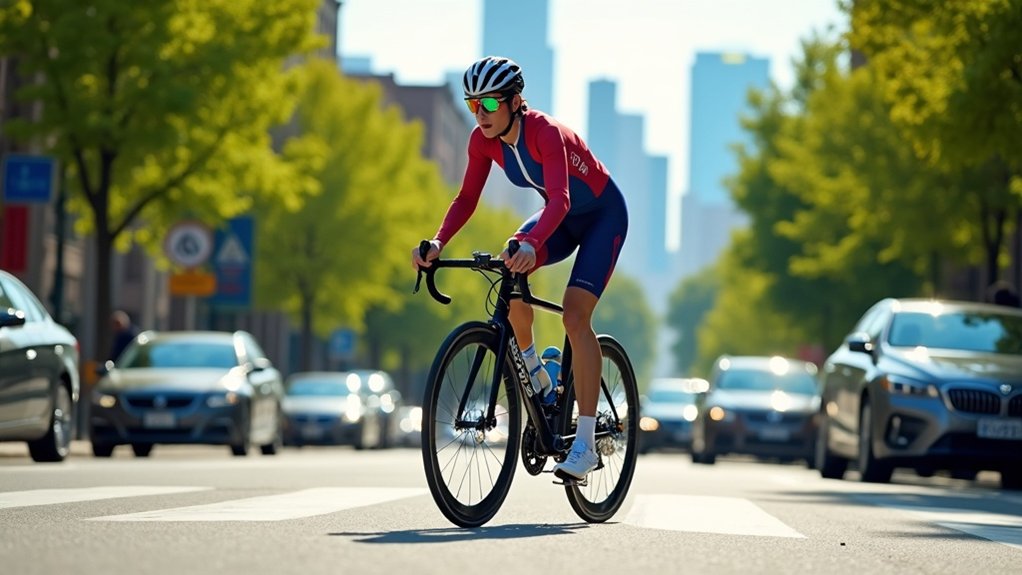
To claim a lane where permitted, assess traffic conditions and enter a center left turn lane about 200 feet before your turn. Always activate your turn signal early to communicate your intentions clearly. Position yourself in the center of the lane for visibility, keeping your wheels straight to avoid collisions. Maintain a steady pace and use hand signals as needed. Prioritize safety and compliance with traffic laws, and you’ll find valuable insights on enhancing your driving experience further.
Key Takeaways
- Assess traffic conditions to find safe gaps before entering the lane, ensuring smooth transitions without abrupt stops.
- Activate your turn signal well in advance to clearly communicate your intent to other drivers.
- Position yourself in the center of the lane for optimal visibility and maintain a steady pace to enhance predictability.
- Use hand signals when changing lanes to indicate your intentions clearly to nearby motorists.
- Stay aware of your surroundings, including blind spots, to maximize safety and compliance with traffic laws.
Understanding Center Left Turn Lanes
Understanding center left turn lanes is essential for safe and efficient driving, especially since these lanes serve a specific purpose in managing traffic flow.
Designated between opposing lanes, these lanes allow you to wait safely for a left turn without disrupting traffic. Marked by solid yellow lines on the outer edges and broken lines inward, they’re for turning vehicles only.
Always enter the lane about 200 feet before your turn, ensuring your car is fully within its boundaries. Remember to activate your turn signal well in advance and keep your wheels straight to avoid collisions with oncoming traffic.
Proper Timing for Entering the Lane
When entering the lane, assess traffic conditions to determine the safest moment for your maneuver.
Use clear signals to communicate your intentions to motorists, ensuring they understand your plans.
This proactive approach not only enhances your safety but also contributes to smoother traffic flow.
Assess Traffic Conditions
How do you determine the right moment to claim your lane? To assess traffic conditions effectively, consider these key factors:
- Speed and Volume: Gauge the traffic flow and guarantee ample space exists for a safe maneuver.
- Gaps in Traffic: Look for openings that allow a smooth shift, avoiding abrupt stops or swerves.
- Driver Behavior: Monitor drivers around you; if vehicles approach quickly, wait for them to pass before claiming your lane.
Use Clear Signals
To safely and effectively enter a lane, you must use clear signals that inform other drivers of your intentions. Activate your turn signal well in advance when approaching a turn lane, allowing others to anticipate your movements.
Always check your mirrors and glance over your shoulder to ascertain it’s safe before making the maneuver. Enter the lane smoothly and decisively, maintaining a steady speed to enhance predictability.
Position yourself in the center of the lane to assert your presence and discourage unsafe overtaking. Always be aware of traffic conditions and adjust your signaling to follow traffic effectively, especially in fast-moving situations.
Signaling and Communication With Other Drivers
When you’re on the road, clear signaling is essential for safe navigation.
Using turn signals and hand signals not only communicates your intentions but also fosters mutual awareness with other drivers.
Making eye contact can further enhance this communication, ensuring that everyone understands each other’s movements and intentions.
Importance of Turn Signals
Although it may seem like a small detail, using turn signals effectively is essential for clear communication with other drivers, particularly when claiming the lane.
Proper signaling not only indicates your intentions but also enhances your visibility, fostering safety.
Here are three key reasons to use turn signals:
- Prevent Misunderstandings: Clear signals help avoid confusion and accidents.
- Increase Reaction Time: Signaling well in advance gives other motorists time to react.
- Promote Mutual Respect: Consistent use of turn signals encourages understanding between cyclists and drivers.
Hand Signals for Cyclists
Effective communication between cyclists and drivers is essential for safety on the road, and hand signals play an important role in this interaction.
You should use clear hand signals to indicate your intentions, such as extending your left arm for a left turn or your right arm for a right turn. For stopping, extend your left arm downward.
Consistently using these hand signals enhances your visibility and helps drivers respond appropriately. Always check traffic before signaling, and communicate your moves well in advance of turns or stops.
This predictability, alongside lane markings, creates a safer environment for everyone on the road.
Eye Contact With Drivers
Establishing eye contact with drivers is essential for enhancing your safety as a cyclist on the road. It signals your presence and intentions, fostering better communication.
Here are three key points to remember:
- Gauge Awareness: Making eye contact helps you assess if a driver sees you, especially at intersections and traffic lights.
- Reinforce Signals: Combine eye contact with hand signals to clarify your maneuvers, like turns or stops.
- Promote Respect: Regularly practicing eye contact can enhance mutual respect between cyclists and motorists, improving overall traffic dynamics and safety around lane markings.
Positioning Within the Lane
When you position yourself within the lane, it’s crucial to ride in a way that maximizes your visibility and signals to motorists that passing isn’t an option without changing lanes.
Ideally, maintain a primary position in the center of the lane, particularly in heavy traffic or near traffic lights. If the road is wide and traffic is light, consider a secondary position about 1 meter to the left, allowing safe overtaking.
Always stay aware of your surroundings, and use hand signals to indicate your intentions when you need to change lanes, ensuring a cooperative relationship with other road users.
Interactions With Other Vehicles
Interactions with other vehicles require a proactive approach to guarantee your safety and visibility on the road.
Proactive interactions with vehicles are essential for ensuring your safety and visibility on the road.
To navigate these interactions effectively, consider the following:
- Always use hand signals and make eye contact with drivers, communicating your intentions, especially when changing lanes or turning.
- If oncoming traffic occupies the center lane, allow them to complete their maneuver before proceeding.
- Maintain a steady pace to discourage unsafe overtaking by vehicles attempting to use the lane for passing.
Safety Considerations While Using the Lane
Claiming your lane safely requires careful assessment of your surroundings and adherence to traffic laws. Always evaluate traffic conditions and road layout before making your move.
Maintain a steady pace to enhance predictability for nearby drivers. Use hand signals to communicate your intentions clearly, especially when approaching traffic lights or preparing to change lanes.
Be aware of blind spots, positioning yourself where you can be seen. By following these safety considerations, you minimize risks and enhance your visibility, ensuring a safer experience for both you and other road users.
Prioritize safety and compliance to navigate confidently.
Compliance With Traffic Regulations
Adhering to traffic regulations is essential for cyclists who want to navigate roads safely and confidently. Understanding and following these rules guarantees compliance with traffic regulations, protecting your rights and safety.
Here are three key points to remember:
- Position yourself correctly within the lane, ideally at the center, to assert your presence.
- Use hand signals to communicate your intentions when changing lanes or making turns.
- Stay informed about local traffic laws and lane markings, as they can change and impact your responsibilities.