
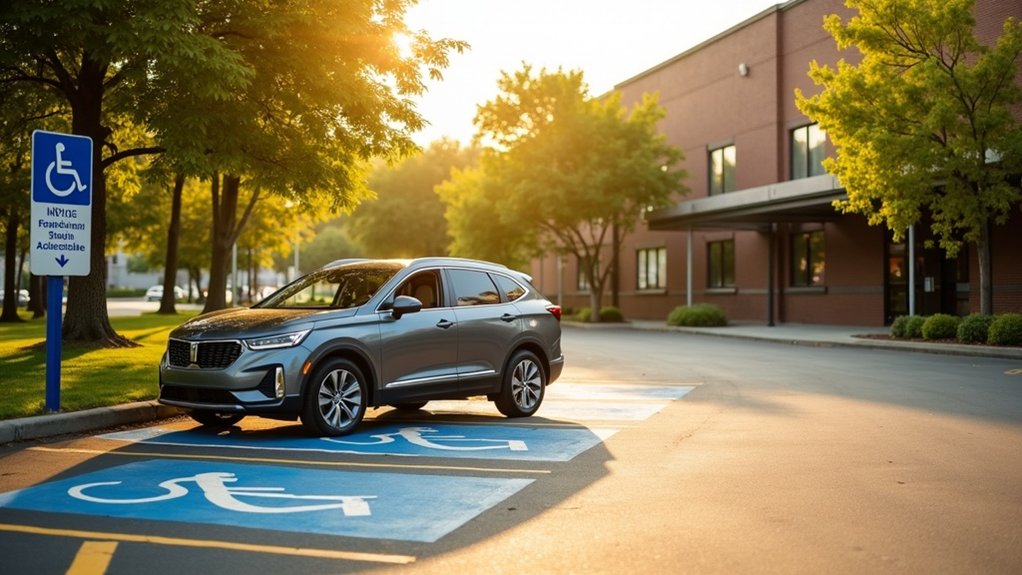
To choose parking spots that won’t block ADA access, look for clearly marked accessible spaces with the international symbol of access. Make sure these spots are wide enough and free of obstructions like access aisles, curbs, and ramps. Avoid parking too close to building entrances and verify that nearby crosswalks are clear. By following these guidelines, you help create a safer environment for individuals with mobility challenges. There’s more to take into account to enhance accessibility and compliance.
Key Takeaways
- Always look for clearly marked accessible parking spaces with the international symbol of access to ensure compliance with ADA requirements.
- Avoid parking in areas that block ramps, curb cuts, or pathways necessary for wheelchair users to navigate safely.
- Check for visible access aisles with diagonal stripes that provide safe maneuvering space for individuals using mobility aids.
- Ensure that your chosen spot is close to building entrances for easier access to facilities.
- Regularly update your knowledge on accessible parking features and community resources for the latest information.
Understanding ADA Accessibility Requirements
When it comes to choosing parking spots that comply with ADA accessibility requirements, it’s crucial to understand the specific standards in place.
Designated parking must be clearly marked with the international symbol of access and located near building entrances. Each accessible space should have a minimum width of 60 inches for mobility aids, with van-accessible spots requiring 96 inches and adjacent access aisles for side entry.
All spaces need to be on level surfaces to guarantee easy access. Finally, signs must stand at least 5 feet tall for visibility, preventing any accidental blocking of these important parking spots.
Importance of Designated Accessible Parking Spaces
Designated accessible parking spaces are vital for ensuring compliance with legal requirements while providing essential support for individuals using mobility aids.
These spaces enhance safety and convenience, making it easier for everyone to access buildings and facilities without unnecessary obstacles.
Legal Requirements Compliance
Ensuring compliance with legal requirements for accessible parking spaces is essential not only for meeting regulations but also for fostering inclusivity.
By adhering to these standards, you help create a welcoming environment for everyone.
Remember:
- Accessible parking must be near building entrances.
- Spaces need clear markings with the international symbol of access.
- A 60-inch access aisle is required for mobility aids.
- Van-accessible spaces must be 96 inches wide.
- Local laws may require additional accessible spots.
Failing to comply can lead to penalties, so prioritize accessible parking spaces to support individuals with disabilities and enhance your community’s accessibility.
Accessibility for Mobility Aids
Accessible parking spaces play an essential role in supporting individuals who rely on mobility aids. These designated areas must be wide enough and conveniently located to guarantee ease of access. Here’s a quick overview of key features:
| Feature | Description |
|---|---|
| Width | At least 96 inches for single-sided entry vans |
| Location | Shortest route to building entrance |
| Signage | Clear visibility with the international symbol of access |
| Van-accessible Spaces | 1 in every 6 must accommodate larger mobility devices |
| Compliance | Parking without a valid permit can incur fines |
Enhancing Safety and Convenience
When you think about the importance of parking spaces for individuals with disabilities, safety and convenience stand out as vital factors.
Designated accessible spaces play a significant role in ensuring everyone can access their vehicles without hassle.
- They must be at least 60 inches wide.
- Positioned close to building entrances.
- Clearly marked with ADA-compliant signage.
- Free from obstructions and include access aisles.
- Blocking these spaces can restrict access and lead to penalties.
Identifying Accessible Parking Space Features
When identifying accessible parking spaces, pay close attention to their dimensions and the markings that indicate them.
These spaces should be wide enough to accommodate mobility aids, and the access aisles need clear, visible stripes for safe maneuvering.
Proper signage is essential too, as it helps guarantee everyone knows where these important spots are located.
Signage and Markings
To guarantee everyone can easily identify accessible parking spaces, clear signage and markings are essential.
Here are some key features to look for:
- The international symbol of access should be prominently displayed.
- Signs must be at least 5 feet tall for visibility.
- Each accessible space needs a marked access aisle with white diagonal stripes.
- Minimum width for accessible spaces is 96 inches for single-sided-entry vans.
- Permits for accessible parking must be clearly visible, including temporary options.
Dimensions and Access Aisles
Accessible parking isn’t just about having a designated spot; it’s vital to understand the dimensions and access aisles that make these spaces truly functional for everyone.
For ADA access, accessible spaces must be at least 60 inches wide, with adjacent access aisles for wheelchair users. Single-sided-entry vans need 96-inch-wide spaces with 60-inch access aisles, while two-sided-entry vans require similar dimensions but with access on both sides.
Assessing the Surrounding Area for Accessibility
How do you verify that your parking choice promotes accessibility for everyone? Evaluating the surrounding area is essential for making accessible parking.
Keep these points in mind:
- Check for accessible parking signs and markings.
- Look for white diagonal stripes indicating access aisles.
- Avoid blocking ramps, curb cuts, or pathways.
- Confirm nearby crosswalks remain unobstructed for pedestrian safety.
- Regularly update yourself on any new accessibility features.
Respecting Access Aisles and Their Purpose
While parking in designated spots, it’s important to remember the significance of access aisles and their role in promoting mobility for individuals with disabilities.
These aisles, typically 60 inches wide for cars and 96 inches for vans, provide necessary space for wheelchair users and others with mobility aids. Parking in access aisles is illegal and can hinder their independence, obstructing safe entry and exit from vehicles.
Always respect these marked areas, clearly indicated by white diagonal stripes, to guarantee everyone has unobstructed access to buildings and facilities. Your consideration helps create a more inclusive environment for all.
The Consequences of Improper Parking
Improper parking can have serious repercussions, not just for the offender but for those who rely on accessible spaces.
When you park incorrectly, you might face:
- Fines ranging from $250 to $1,000 for unauthorized use of parking spaces.
- Legal consequences for blocking access aisles essential for wheelchair users.
- Increased safety hazards for individuals with mobility challenges.
- Potential felony charges if you falsify a handicap permit.
- Additional fines for failing to display proper handicap signage.
Best Practices for Parking With Mobility Devices
Parking with mobility devices requires careful attention to guarantee safe and accessible spaces for everyone.
Always use designated accessible spaces that comply with ADA regulations, complete with proper signage and ample room for mobility devices.
Position your vehicle to keep accessible aisles clear for wheelchair users, avoiding any obstruction.
Steer clear of areas that block ramps or crosswalks to confirm safe access for individuals with disabilities.
Remember, accessible vehicles, especially vans, need extra room for side entry and maneuverability.
Familiarize yourself with local handicap parking regulations to show respect for those who rely on these designated spots for accessibility.
Resources for Finding Accessible Parking Options
Finding accessible parking can be a challenge, but there are plenty of resources to help you navigate this process effectively. Consider these options:
- Use online resources and mobile apps for real-time accessible parking information compliant with ADA regulations.
- Check local government websites for maps of accessible parking spaces, detailing dimensions and access aisles.
- Familiarize yourself with ADA guidelines regarding the location of accessible parking spots.
- Look for parking facilities with clear signage, including the international symbol of access.
- Contact local disability advocacy organizations for recommendations on accessible parking in your area.
These resources can enhance your parking experience considerably.