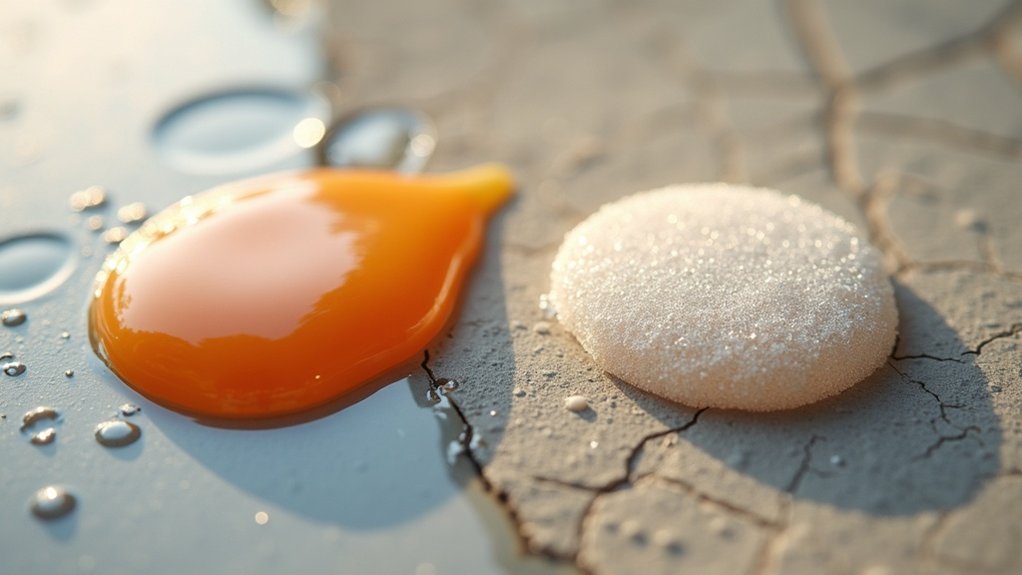
Choosing the right lubricant depends on your riding conditions. Use Dry Lube for dry trails; it repels dirt but needs frequent application as moisture washes it away. Opt for Wet Lube in wet or muddy conditions; it offers water resistance and prevents rust but attracts dirt. Clean your chain before applying and wipe off excess lube to avoid grime buildup. For more detailed techniques and tips on chain lubrication, further insights await you.
Key Takeaways
- Choose Wet Lube for wet or muddy conditions; it offers superior water resistance and prevents rusting of the chain.
- Opt for Dry Lube in dry or rocky environments; its wax-based formula repels dirt and reduces grime buildup.
- Clean the chain thoroughly before applying any lube to ensure proper adhesion and performance.
- Apply Wet Lube after degreasing and allow it to dry for at least an hour for optimal effectiveness.
- Regularly maintain your chain; Wet Lube attracts dirt, while Dry Lube requires frequent application in moisture-prone areas.
Understanding the Basics of Chain Lubes
When you’re maintaining your bike, understanding the basics of chain lubes is vital for peak performance.
Chain lubes fall into two categories: Wet Lube and Dry Lube.
Chain lubes are essential for bike maintenance, categorized into Wet Lube for wet conditions and Dry Lube for dry conditions.
Wet Lube is thicker, ideal for wet conditions, offering superior lubrication but attracting dirt and grime. Regular cleaning and degreasing are essential to maintain chain health.
On the other hand, Dry Lube is lighter, perfect for dry conditions, as it prevents dirt from sticking but can wash off easily in moisture.
Proper application involves applying the lube on the bottom run of the chain and allowing time for penetration before riding, ensuring peak performance.
Differences Between Dry Lube and Wet Lube
Choosing between dry lube and wet lube can greatly impact your bike’s performance based on the riding conditions. Dry lube, a wax-based lubricant, repels dirt and is ideal for dry trails, while wet lube, oil-based and water-resistant, excels in wet conditions. However, wet lube attracts dirt, necessitating frequent cleaning and maintenance.
| Feature | Dry Lube | Wet Lube |
|---|---|---|
| Composition | Wax-based | Oil-based |
| Lifespan | ~80 miles in dry conditions | >100 miles in wet conditions |
| Dirt Attraction | Repels dirt | Attracts dirt |
| Maintenance | Less frequent cleaning needed | Requires solid cleaning routine |
When to Use Dry Lube
For riders tackling dry or rocky trails, using dry lube is often the best choice due to its ability to repel dirt and reduce grime buildup.
It’s ideal for beginner riders because it’s easy to use and requires frequent lubrication. Dry lube performs effectively in the right conditions, providing less dirt attraction compared to wet lubes.
However, keep in mind that it can wash away easily in rain or puddles, necessitating reapplication.
While it’s a practical option for low-maintenance riders, be aware that a noisy drivetrain may result, potentially leading to premature wear of drivetrain components.
When to Use Wet Lube
If you’re riding in wet or muddy conditions, wet lube is the best choice for maintaining your chain’s performance and longevity.
It provides superior water resistance, preventing rust and wear on your chain links. To achieve ideal chain health, it’s vital to apply wet lube after thorough cleaning and degreasing of the drivetrain.
Keep in mind that wet lube attracts more dirt and grime, so regular maintenance is essential. When applied correctly, wet lube can last over 100 miles in wet conditions, ensuring smooth, quiet operation throughout your ride.
Don’t underestimate the importance of proper lubrication practices.
Tips for Applying Chain Lubes Effectively
Applying chain lube effectively requires careful attention to detail, as it greatly impacts your bike’s performance and longevity.
Always clean the chain before you apply lube to guarantee ideal adhesion. When using wet lube or dry lubes, use the individual link method; apply lube to the bottom run while pedaling backwards for even distribution.
Clean your chain for optimal adhesion and apply lube to the bottom run while pedaling backwards for even coverage.
Allow the lubricant to dry for at least an hour, then wipe off excess to prevent dirt accumulation. Regularly maintain your drivetrain to maintain chain health, especially in varying weather conditions.
Avoid applying lube just before riding to let it penetrate properly into the right chain links.