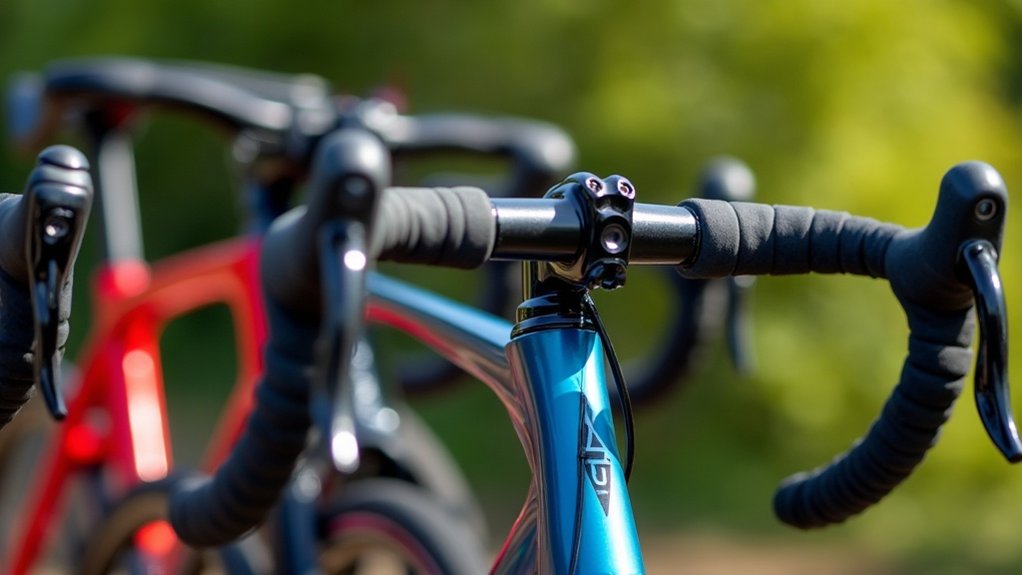

To choose handlebar width for comfort, start by measuring your shoulder width at the acromion process. Ideally, go for a width between 38 cm and 40 cm, as this range provides a good balance of stability and control. Consider your riding style; wider handlebars offer more stability, while narrower bars enhance aerodynamics. Guarantee compatibility with your bike’s components, and test different widths to find the most comfortable fit for you; more insights await you on optimizing this choice.
Key Takeaways
- Measure your shoulder width at the acromion process to determine the ideal handlebar width for comfort.
- Choose handlebars between 38 cm and 40 cm for optimal comfort and control during rides.
- Consider wider handlebars for improved stability and control, especially on mixed terrain.
- Ensure handlebar width aligns with shifter and brake lever positioning to maintain ergonomic comfort.
- Regularly test different widths during rides to find the most comfortable option for your riding style.
Understanding Handlebar Width and Its Importance
Handlebar width plays a fundamental role in your cycling experience, directly impacting comfort and performance.
Choosing the correct handlebar width, typically ranging from 36cm to 46cm, is essential for achieving comfortable wrist positioning. Proper width guarantees your wrists remain straight and relaxed, reducing the risk of discomfort in your shoulders, back, and neck.
If the width is incorrect, you may experience locked wrists and shoulders, leading to pain and hindered performance. Wider handlebars provide stability for less experienced riders, while narrower ones enhance aerodynamics for seasoned cyclists.
Ultimately, selecting the right width can greatly improve your overall riding experience.
Measuring Your Shoulder Width
To measure your shoulder width accurately, find the acromion process, the bony prominence at the top of your shoulders, and measure the distance between them.
This measurement will help you determine the ideal handlebar width, which typically ranges from 36 cm to 46 cm, based on your shoulder width and riding style.
Adjusting your handlebar width according to this measurement guarantees better control and comfort during your rides.
Acromion Measurement Technique
When measuring your shoulder width, it’s crucial to accurately gauge the distance between your acromion processes, as this measurement directly influences your handlebar width selection.
To perform the acromion measurement technique, stand with your arms relaxed at your sides. Using a measuring tape, measure from the outer edge of one acromion to the outer edge of the other, ensuring you’re at the widest point.
This precise shoulder width assessment will help you choose a handlebar width that promotes relaxed wrists and prevents discomfort in your shoulders, back, and neck during rides. Avoid widths that are too narrow or too wide.
Ideal Width Ranges
Selecting the ideal width for your handlebars hinges on accurately measuring your shoulder width, which typically falls between 36 cm and 46 cm.
To find the right fit, measure the distance between the acromion of your shoulder blades. Ideal width ranges guarantee your wrists remain straight and relaxed, minimizing the risk of shoulder, back, and neck pain.
For beginners or those riding mixed terrain, wider handlebars are often recommended, as they provide greater stability and reduce shoulder tension.
Conversely, experienced riders may prefer narrower handlebars to enhance wrist positioning and decrease aerodynamic drag during high-speed riding.
Adjusting for Riding Style
Finding the right handlebar width isn’t just about comfort; it also directly impacts your riding style and performance. To determine suitable handlebar width, measure the distance between your shoulder blades‘ acromion points, typically ranging from 36 cm to 46 cm. This alignment helps maintain relaxed wrists, boosting comfort during rides.
Using handlebars that are too narrow or wide can cause discomfort in your shoulders, back, and neck. Wider options provide stability for less experienced riders, while narrower handlebars reduce aerodynamic drag for seasoned cyclists.
Remember to adjust stem length accordingly to maintain proper bike fit and handling characteristics.
Determining the Right Width for Your Riding Style
How can you confirm your handlebar width complements your riding style? Start by measuring the distance between your shoulder blade acromions, usually between 36 cm to 46 cm for road bikes.
Consider these factors:
- A comfortable handlebar width typically ranges from 38 cm to 40 cm.
- Wider handlebars enhance stability and comfort for mixed terrain.
- Personal preference is key; make certain your wrists remain straight and relaxed.
The Impact of Wider vs. Narrower Handlebars
When choosing between wider and narrower handlebars, consider how each affects your ride.
Wider handlebars enhance stability, which is essential for maneuvering varied terrain, while narrower options reduce aerodynamic drag for increased speed.
Your selection should balance comfort and performance based on your riding style and experience level.
Stability With Wider Handlebars
While many riders prioritize speed and aerodynamics, opting for narrower handlebars, wider handlebars offer significant advantages regarding stability and control. They enhance your grip and provide better handling, especially on mixed terrains. This is particularly beneficial for inexperienced riders.
- Wider handlebars starting at 800 mm improve stability.
- They alleviate shoulder tension and hand fatigue during long rides.
- Accommodate accessories for bike packing without compromising control.
When choosing your handlebar width, consider how wider handlebars can enhance your riding experience by boosting stability while ensuring the best possible bike handling and fit with possible stem adjustments.
Aerodynamics of Narrower Handlebars
Although wider handlebars have their advantages in stability, narrower handlebars are often favored for their aerodynamic benefits, especially among experienced riders.
Narrow bars noticeably reduce aerodynamic drag, allowing you to achieve higher speeds with less effort. Eliminating excess width improves wrist positioning, promoting a more streamlined arm alignment that lowers energy expenditure.
While some prefer the comfort of wider options, they increase frontal area and wind resistance. Historical racing designs highlight the effectiveness of narrow handlebars, and wind tunnel tests confirm that an elbow-bent position with narrow bars can offer aerodynamic efficiency similar to aggressive drop positions.
Choose wisely for ideal performance.
Adjusting Handlebar Width for Comfort
Finding the right handlebar width is essential for your comfort on the bike. Measure from the acromion of your shoulder blades, with comfortable widths typically ranging from 36 cm to 46 cm.
Wider handlebars can enhance stability and alleviate shoulder tension, while narrower options may improve wrist positioning for experienced riders.
- Guarantee a relaxed wrist position to prevent discomfort.
- Adjust stem length as needed for ideal bike fit.
- Select handlebar width based on riding style and terrain.
Compatibility With Other Bike Components
When selecting handlebar width, it’s crucial to guarantee compatibility with your bike’s other components, as this directly impacts your control and comfort.
Verify that the handlebar width aligns with your shifter and brake lever positioning for ideal reach. Wider handlebars may necessitate adjustments to stem length, balancing fit without compromising handling.
Ensure handlebar width matches shifter and brake lever positioning for optimal reach, adjusting stem length if necessary for better handling.
Additionally, check if flared handlebars affect shifter ergonomics, as they can alter hand positioning. For mountain bikes, standard widths start at 800 mm, which can be customized based on rider size and style.
Ultimately, your handlebar width should complement all contact points, including saddle width and stem length, for a cohesive experience.
Expert Tips for Finalizing Your Handlebar Choice
After guaranteeing compatibility with your bike’s components, it’s time to finalize your handlebar choice.
Consider the following tips to select the right handlebar width for your comfort:
- Measure the distance between your acromion points; a width of 38 cm to 40 cm suits most riders.
- Think about your riding style; wider handlebars enhance stability for beginners, while narrower options improve aerodynamics for experienced cyclists.
- Always prioritize your personal preferences; guarantee a natural wrist position to avoid discomfort during longer rides.