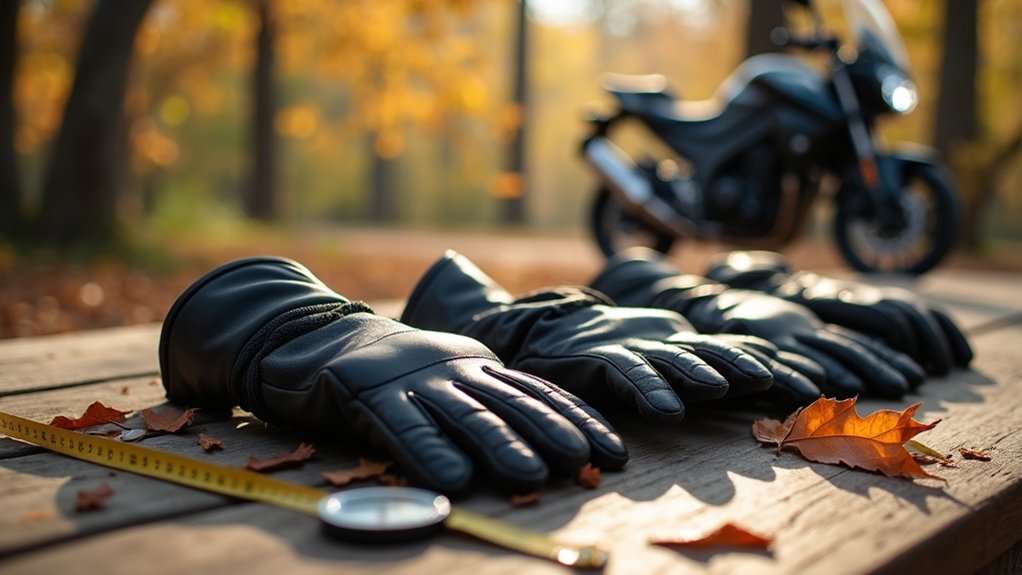
To choose gloves for year-round riding, consider options that suit different weather conditions. Look for lightweight, breathable gloves for warm weather, and insulated, waterproof pairs for colder days. Make sure you select gloves that fit snugly but allow natural finger movement. Safety is key, so opt for D3O protected models for impact absorption. Also, check for safety certifications like CE. Explore various styles to find what suits your riding needs best, and you’ll uncover even more insights ahead.
Key Takeaways
- Choose three-season gloves for versatility, providing ventilation for warm weather and insulation for colder conditions.
- Look for waterproof features to keep hands dry during rainy rides, essential for year-round use.
- Select gloves made with durable materials like leather or textile, ensuring longevity and protection against wear.
- Ensure proper fit by measuring hand circumference and consulting sizing charts for comfort and natural finger movement.
- Prioritize safety certifications like CE or UKCA and consider D3O protection for enhanced impact safety without sacrificing comfort.
Benefits of Motorcycle Gloves
When you ride, having the right gear is essential, and motorcycle gloves offer a range of benefits that enhance your safety and comfort.
They protect your hands from cold weather, guaranteeing you stay warm with specially designed warm gloves for cold weather.
Motorcycle gloves also shield against road debris and impact during crashes, considerably reducing injury risk.
With added grip on the palms, they prevent slipping, allowing you better control while riding.
Durable materials guarantee longevity for thousands of miles, while a proper fit enhances movement and safety, making it vital to select the right size and style for your riding conditions.
How to Find the Right Motorcycle Gloves
When you’re choosing motorcycle gloves, start by checking for safety certifications like CE or UKCA to guarantee they meet the necessary protection standards for your riding style.
You’ll also want to pay attention to the material and fit; the right combination not only enhances comfort but also maximizes grip and control.
Safety Certifications to Consider
To guarantee you’re choosing the right motorcycle gloves, it’s crucial to look for CE/UKCA certifications, which signify compliance with essential safety standards.
These certifications indicate the gloves’ level of protection against impacts and abrasions. For maximum safety, consider gloves classified as Level 1 or Level 2—Level 1 gloves require a cuff length of at least 15mm, while Level 2 gloves need a minimum of 50mm.
Verify the gloves’ restraint effectiveness, tear strength, and seam strength to confirm they stay secure during an accident. Additionally, check the impact abrasion resistance; Level 1 must last 3 seconds, and Level 2 at least 6 seconds.
Material and Fit Selection
Choosing the right material and fit for your motorcycle gloves is vital for both comfort and protection, especially when you’re riding year-round.
Look for high-quality materials like leather or reinforced textiles to guarantee durability in various weather conditions. A proper fit is essential—measure your hand circumference at the widest part of your knuckles and consult sizing charts for accuracy.
For added safety, opt for gloves with CE/UKCA certification and make sure they feature impact protection like D3O padding.
Also, consider cuff length; Level 1 gloves should have a minimum 15mm cuff, while Level 2 gloves require at least 50mm for enhanced protection.
D3O Protected Motorcycle Gloves
While riding, you can’t compromise on safety, which is where D3O protected motorcycle gloves come into play.
These gloves offer lightweight and flexible impact protection, ensuring comfort without sacrificing safety. Look for D3O protected models that feature impact protection in critical areas like knuckles and palms, enhancing your safety during falls.
Popular choices, such as the Furygan Jet All Season and Richa Hypercane GTX, combine D3O protection with essential features like waterproofing and touchscreen compatibility.
Types of Gloves for Different Weather Conditions
Riding gloves are essential gear that varies greatly based on weather conditions.
For warm weather riding, lightweight gloves with breathability and a snug fit enhance grip without causing overheating.
In cold weather, insulated winter gloves keep your hands warm while allowing dexterity; consider waterproof features to guarantee dryness.
Shifting between seasons, three-season gloves offer versatility with perforations for ventilation.
When facing rain, opt for waterproof gloves, with brands like Aerostitch and Klim excelling in keeping hands dry.
For winter, gauntlet gloves provide added wrist coverage and insulation, securing a fit that protects against cold air and moisture.
Importance of Proper Fit and Sizing
When choosing motorcycle gloves, proper fit and sizing are essential for maintaining control and maximizing protection.
Start by measuring your hand circumference at the widest part of your knuckles and consult the sizing chart provided by the manufacturer.
Make sure the gloves feel snug but comfortable, allowing for natural finger movement while gripping the handlebars.
Measuring Hand Circumference
Getting the right fit for your gloves is essential, as ill-fitting gloves can hinder your control and comfort on the bike.
Start by measuring hand circumference; wrap a measuring tape around the widest part of your knuckles, snugly but not tightly. This measurement helps you determine your glove size. Most manufacturers provide sizing charts that correlate hand circumference to sizes like XS to XL, guiding you to a good pair.
When trying on gloves, verify a little space at the fingertips for proper grip. Remember that materials and styles can differ in fit, so test various options to find your best match.
Sizing Chart Reference
Finding the right glove size goes beyond just measuring hand circumference; it’s about understanding how that measurement translates into a perfect fit. A sizing chart reference is vital to guarantee you select the right pair of gloves.
- Measure your hand circumference at the widest part of your knuckles.
- Refer to the manufacturer’s specific sizing chart, as sizes can vary between brands.
- Always try on gloves to assess fit and comfort.
A proper fit is critical; gloves that are too tight restrict movement, while loose ones may slip off during an accident.
Prioritize accurate sizing for safety and comfort.
Comfort and Flexibility
While selecting gloves, comfort and flexibility are essential for ensuring an enjoyable riding experience. Proper fit is important; measure your hand circumference at the knuckles and consult sizing charts to find your size.
Gloves should allow for full movement without being restrictive, as tightness can hinder dexterity. A snug fit is critical for safety, ensuring gloves stay on during an accident.
The materials you choose also matter—breathable fabrics enhance comfort in warm weather, while insulated options keep you warm without bulk in colder conditions.
Always try on gloves before purchasing to assess their fit and feel, as these can vary by brand.
Recommendations for Multi-Weather Riding
When you’re gearing up for year-round riding, choosing gloves that can handle various weather conditions is essential for both comfort and safety.
Selecting versatile gloves for year-round riding is crucial for ensuring both comfort and safety in changing weather conditions.
Consider the following recommendations:
- Opt for breathable materials for summer riding and insulated gloves for cold weather.
- Look for waterproof features to keep your hands dry in unexpected rain.
- Choose gloves with D3O impact protection for enhanced safety.
Additionally, adjustable wrist closures guarantee a snug fit against cold air and rain.
Carry multiple pairs—summer, winter, and waterproof—to adapt quickly to changing weather conditions on long rides.
Your hands deserve the best protection, regardless of the elements.
Personal Preferences and Community Insights
How do you choose the right gloves for your riding style? It often boils down to personal preferences and community insights.
Many riders recommend having at least two pairs—one for summer and another for winter—to adapt to changing weather. Some prefer gloves with armor for added protection during crashes, while others find comfort in heated grips for colder rides.
Although cheaper work gloves may appeal for casual outings, they lack safety features. Community feedback emphasizes the importance of waterproofing and breathability, especially for long-distance touring.
Take these insights to heart, and you’ll find gloves that suit your needs perfectly.