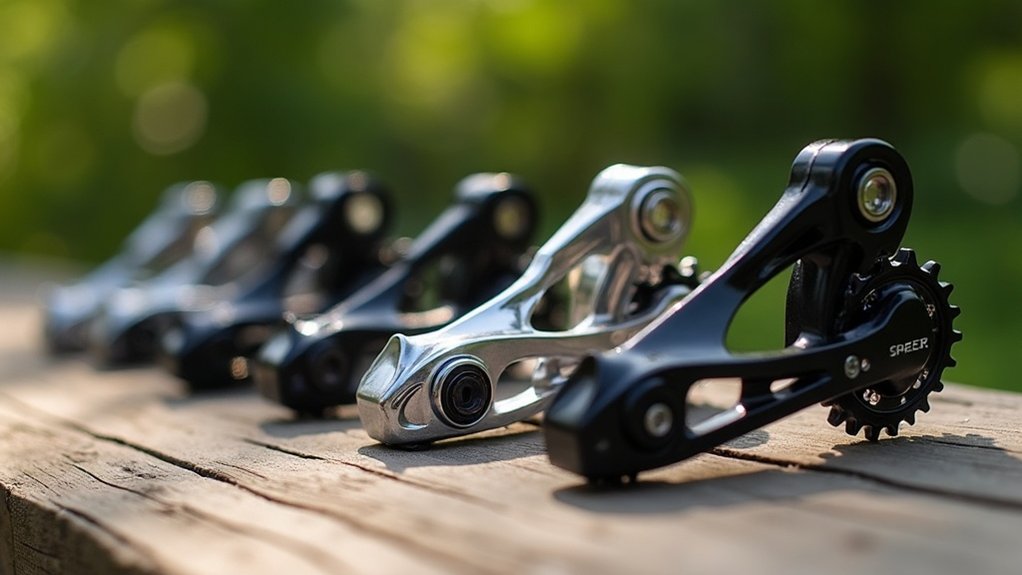
To choose flat pedals with the right pins, consider the platform size for comfort and stability, especially on rough terrains. Opt for lightweight materials like aluminum for durability. Pay attention to pin height and placement; longer pins provide grip but can risk injury, while medium heights balance traction and mobility. Tailoring your pedal choice to your riding style, whether aggressive or cross-country, will optimize performance. Discover how these factors contribute to your riding experience for even better results.
Key Takeaways
- Consider your riding style; aggressive riders need longer, sharper pins, while cross-country cyclists may prefer shorter, flatter profiles for mobility.
- Evaluate pin height; medium-height pins (12-14mm) typically offer a good balance between grip and foot mobility.
- Look for perimeter pin placement to enhance traction and allow easier foot repositioning on the pedal.
- Customize pin height based on your shoe type; deeper lugged shoes require longer pins for optimal traction.
- Test different pin configurations to find the setup that maximizes grip and control for your specific riding conditions.
Platform Size
When choosing flat pedals, it’s crucial to contemplate platform size, as it directly impacts your comfort and performance on the bike. A larger platform accommodates bigger feet, providing adequate support and reducing fatigue.
Consider platform size when selecting flat pedals; it greatly affects comfort, performance, and fatigue during rides.
This enhanced size improves stability and control on rough terrains, helping you navigate technical sections with ease. Wider platforms distribute pressure evenly, minimizing hot spots during long rides.
Your riding style also influences this choice; downhill and enduro riders favor larger platforms for support, while cross-country cyclists may seek a balance between size and weight.
A concave pedal shape maximizes engagement with your shoe sole for aggressive riding.
Material
Material choice plays a pivotal role in the performance and longevity of flat pedals. Aluminum is favored for its lightweight durability, while composite materials offer budget-friendly options. High-end pedals often combine aluminum bodies with chromoly steel spindles for increased strength. The material affects not only durability but also grip and traction, with metal pedals typically offering superior pin designs. Here’s a quick comparison:
| Material | Price Range |
|---|---|
| Aluminum | $113 – $168 |
| Composite | $40 – $50 |
| Steel | Varies |
| Nylon Fiber | Varies |
| Premium | Higher |
Choosing wisely guarantees peak performance.
Pins
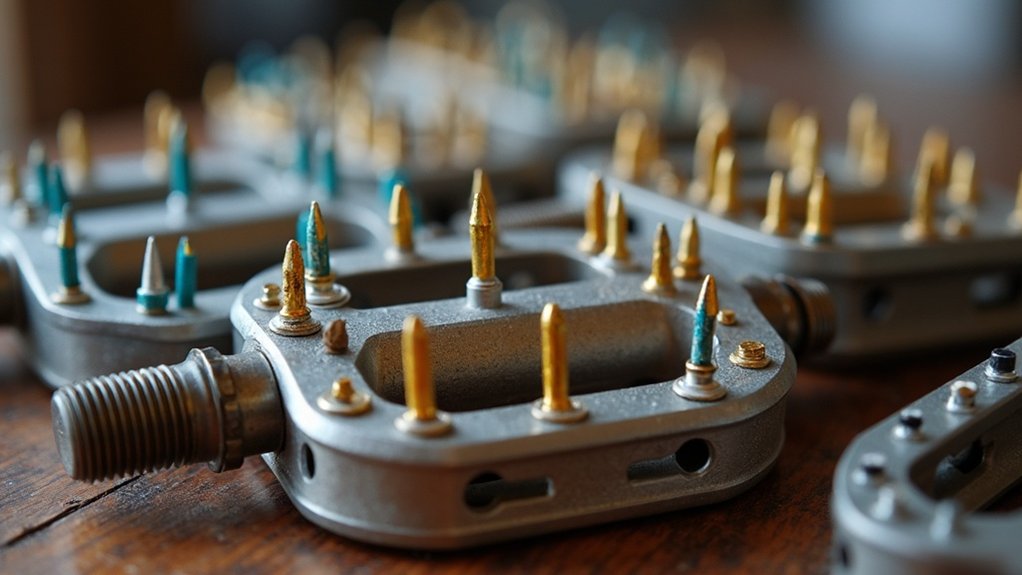
How do the pins on your flat pedals impact your ride? The number, placement, and height of pins notably affect grip and foot mobility. Consider these factors:
- Pins around the perimeter enhance traction while allowing for foot repositioning.
- Longer pins provide better grip but can increase injury risk.
- Medium-height pins (12-14mm) strike a balance for best foot mobility.
- Customization of pin height can elevate pedal performance, letting you tailor your setup.
Experiment with different configurations to find the ideal mix of grip and comfort, ensuring that pedal strikes don’t hinder your ride experience.
Profile and Concavity
When choosing flat pedals, the profile and concavity play an important role in foot support and stability.
A concave design cradles your foot, enhancing pin engagement and grip, which is especially beneficial for aggressive riding styles.
However, finding the right balance between concavity and pin height is vital to guarantee you maintain freedom of movement while maximizing traction.
Foot Support and Stability
While selecting flat pedals, the profile and concavity play essential roles in foot support and stability. A well-designed pedal can greatly enhance your riding experience.
Consider these aspects:
- Concave profile cradles your foot, ensuring better support on rough terrain.
- Larger pedal platforms distribute pressure evenly, reducing discomfort during long rides.
- Improved traction from effective pin engagement enhances stability in wet conditions.
- Deeper concave profiles cater to aggressive riding, boosting control during descents.
Adjusting pin height also affects concavity, providing a balance between grip and foot movement.
Prioritize these features for peak performance on the trails.
Pin Engagement and Grip
Effective pin engagement is essential for maximizing grip on flat pedals, as the pedal’s profile and concavity directly influence how well your foot stays connected.
Concave shapes allow your foot to sink into the pedal, enhancing stability and traction.
Pin height plays a critical role; longer pins provide better grip but can compromise comfort. Most riders prefer medium-height pins for an ideal balance between grip and foot mobility, allowing easy repositioning.
Additionally, customized pin configurations can tailor the grip experience to your foot shape and riding styles, ensuring you achieve the best possible connection with your pedals during every ride.
Weight
Choosing the right weight for flat pedals is essential, as it can greatly influence your riding experience.
Lighter pedals enhance acceleration and climbing efficiency, while heavier options offer durability for aggressive riding.
Consider these factors:
- High-end flat pedals weigh between 350g to 450g.
- Aluminum pedals provide a lightweight advantage over steel.
- Premium models feature titanium spindles for further weight reduction.
- Cross-country cyclists may prefer lighter options, while downhill riders often choose sturdier, heavier pedals.
Durability
When selecting flat pedals, durability is a critical factor that directly impacts your riding performance and safety.
Opt for pedals made from high-quality aluminum alloy or chromoly steel, as these materials offer superior durability for aggressive riding styles. Look for sealed bearings to resist contamination and extend the lifespan of your pedals.
Choose pedals with replaceable pins made from hardened steel; they maintain sharpness longer than softer alternatives. Reinforced platforms enhance durability by resisting bending and breaking during impacts.
Finally, regular maintenance, like cleaning and lubricating moving parts, guarantees your flat pedals perform efficiently over time.
Price
Durability plays a substantial role in the overall value of flat pedals, which brings us to an important consideration: price.
- Budget-friendly composite options start around $40-$50.
- High-end aluminum models can range from $113-$168.
- Advanced materials often enhance performance and longevity.
- Customization features like adjustable pin heights boost rider experience.
Investing in quality pedals can greatly improve grip and safety, reducing injuries and enhancing performance.
Quality pedals enhance grip and safety, helping to reduce injuries and boost overall performance.
Remember, brand reputation and features directly affect the price.
Assess your specific needs and budget to choose flat pedals that align with your riding style and performance expectations.
Riding Style
Your riding style considerably influences your choice of flat pedals, as different disciplines demand varying features.
For instance, cross-country riders prioritize lightweight options for speed, while enduro and downhill enthusiasts require larger, robust designs for superior grip on steep descents.
Understanding your terrain and grip needs will guide you in selecting the right pins to enhance your performance.
Riding Style Preferences
Riding style greatly influences pedal choice, as different disciplines require distinct features for peak performance.
- Cross-country riders lean towards lighter, flatter pedals for quick foot repositioning.
- Downhill and enduro riders prefer larger platforms with aggressive pin configurations for enhanced grip.
- Riders tackling technical trails benefit from concave designs that cradle the foot.
- Personal preference can lead to pin adjustments based on shoe shape for maximum feel.
Selecting the right pedals involves considering factors like grip, platform size, and pin height to guarantee comfort and performance on varied terrain.
Make your choice wisely to elevate your riding experience.
Terrain Considerations
While the terrain you tackle directly impacts your pedal selection, understanding the specific demands of each environment guarantees peak performance.
For instance, downhill and enduro riders often choose larger flat pedals with aggressive pins for maximum grip on steep descents. In contrast, cross-country riders prefer lighter pedals for efficiency across varied terrain.
Concave pedal shapes enhance stability on rough terrain, cradling your foot to reduce slippage. The pin height also matters; deeper lugged shoes need longer pins for effective traction, while shallower lugs benefit from shorter pins.
Tailoring your pedal choice to your riding style is essential for superior performance.
Grip Needs
Grip needs vary greatly based on riding style, with each discipline requiring specific pedal characteristics to optimize performance.
- Aggressive riders benefit from longer, sharper pins for maximum traction.
- Downhill and enduro styles require a larger, concave pedal platform that cradles the foot.
- Cross-country riders may prefer flatter profiles for easy foot repositioning.
- Adjusting pin height based on foot placement can enhance grip.
Understanding these nuances in pin configuration and grip needs helps you choose the right flat pedals.
With the right setup, you’ll maximize traction and control, enhancing your riding experience across various terrains.