To carry a bike pump and CO2 cartridges safely, mount a mini pump on your bike frame for easy access. Store CO2 cartridges in a secure seat bag, ensuring they won’t discharge accidentally. Consider carrying two spare cartridges for emergencies. Use electrical tape to secure cartridges, and check compatibility with your inflator. Organize your gear for quick access during rides. There’s more to explore about efficient storage and handling techniques!
Key Takeaways
- Use a mini pump mounted on the bike frame for easy access and to keep your hands free.
- Store CO2 cartridges in a secure seat bag or specialized pouch to prevent accidental discharge.
- Carry at least two spare CO2 cartridges for emergencies to ensure you can inflate tires when needed.
- Regularly check attachment mechanisms for tightness and cleanliness to avoid any accidental puncturing of cartridges.
- Use an insulator when handling CO2 inflators in wet conditions to protect your hands from freezing effects.
Proper Storage Methods for Bike Pumps
When you’re out on a ride, storing your bike pump properly is crucial for both accessibility and safety.
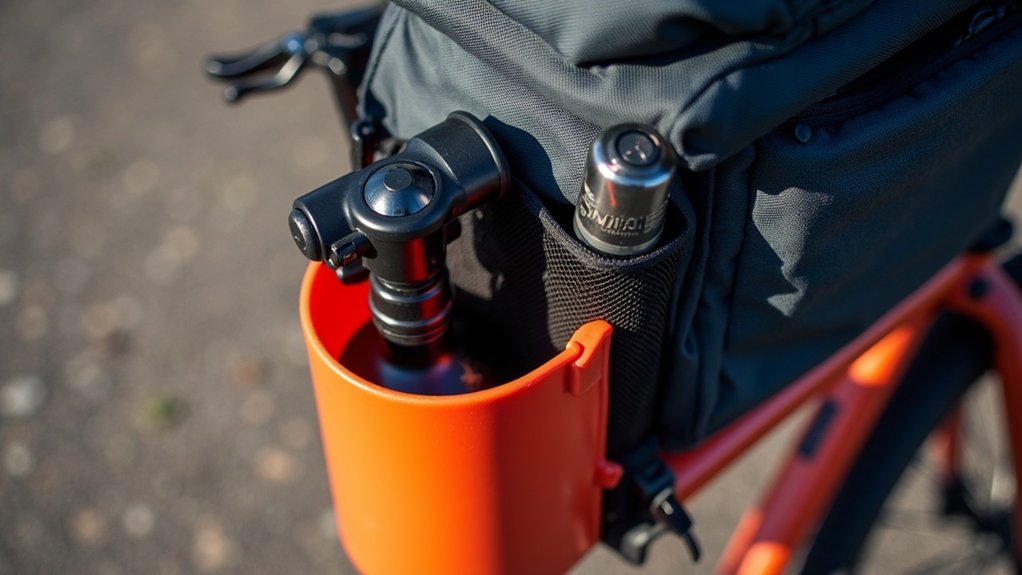
Consider using a mini pump that can be mounted on your bike frame with Velcro straps or brackets for easy access. If you prefer a seat bag, make sure it’s compact and secure to maintain bike balance.
Using a mini pump mounted on your bike frame ensures easy access, while a compact seat bag keeps your ride balanced.
For short rides, a jersey pocket allows quick access, though it might limit space for other essentials. Additionally, a frame bag on mountain bikes offers organized storage for the pump and tools.
Regular maintenance is key—check that attachment mechanisms are tight and free of dirt to prevent malfunction.
Best Practices for Carrying CO2 Cartridges
To guarantee you’re prepared for any flat tire situation, it’s essential to carry CO2 cartridges securely and efficiently. Store them in a seat bag or specialized pouch to prevent puncturing and make sure they’re easily accessible. Here are some best practices:
| Best Practice | Description |
|---|---|
| Secure with Electrical Tape | Prevent accidental discharge of cartridges. |
| Carry Spare Cartridges | Always have at least two for emergencies. |
| Check Inflator Compatibility | Confirm inflator matches your cartridge type. |
Finally, remember to recycle used CO2 cartridges responsibly to minimize waste and environmental impact while cycling.
Weight Considerations for Bike Gear
As you gear up for your ride, understanding the weight of your bike equipment is essential for optimizing performance and comfort.
Carrying a pump and CO2 inflator together offers flexibility for flat repairs without greatly impacting your overall load, adding only about 175 grams.
Combining a pump and CO2 inflator provides versatile flat repair options while adding minimal weight to your gear.
Choosing lightweight bike gear and smart storage solutions, like bike-mounted options, can enhance convenience while maintaining comfort.
Commuters might prioritize different factors than long-distance riders, but the weight remains consistent whether you store items on your bike or in a backpack.
Ultimately, find a balance that suits your riding style and conditions.
Safety Precautions for CO2 Inflation
Carrying a CO2 inflator and cartridges can enhance your flat repair strategy, but safety should be a top priority. Follow these essential safety precautions:
- Always securely attach CO2 cartridges to your inflator; use electrical tape to prevent accidental puncturing during transport.
- Avoid puncturing CO2 cartridges before use to prevent accidental discharge and potential injury.
- Store your inflator and cartridges in a dedicated location, like a seat bag, to avoid accidental activation.
Additionally, apply blue Loctite on the threads of your inflator and consider using an insulator to protect your hands from freezing effects in wet conditions.
Stay safe while cycling!
Personal Preferences for Pump and CO2 Usage
Many cyclists find themselves weighing the benefits of a mini pump versus CO2 inflators when preparing for rides.
You might prefer carrying a mini pump for its reliability and continuous air supply, especially on long road bike excursions. However, CO2 cartridges offer compactness and speed for quick repairs. Some cyclists carry both for flexibility, ensuring backup in case of CO2 failure.
Organizing your gear is essential; secure CO2 cartridges in a seat bag or alongside your pump for easy access. For short rides, jersey pockets can work, but a seat bag balances weight better for longer trips, especially with a spare tube.
Community Insights on Bike Inflation Solutions
Cyclists frequently share insights about their preferred inflation solutions, emphasizing the balance between convenience and reliability. Many opt for a mini pump for its dependable performance, while others appreciate CO2 inflators for quick tire inflation.
Here are some key community recommendations:
- Always carry at least two CO2 cartridges to avoid running out during emergencies.
- Use electrical tape to secure cartridges in your seat bag for safe transport.
- Combine a mini pump and CO2 inflator for flexible inflation options and effective tool organization.
These strategies enhance your readiness for flat repairs, ensuring you’re well-prepared on every ride.