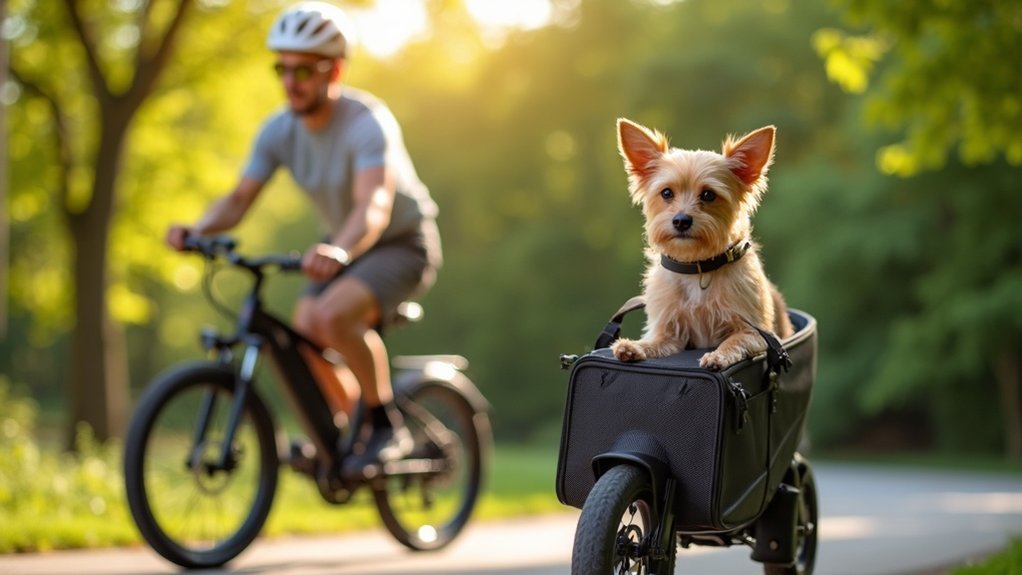
To carry your pet safely on an e-bike, start by choosing a sturdy, secure carrier that fits your dog comfortably. Prepare your dog with short rides, positive reinforcement, and basic commands. During rides, monitor their comfort, maintain a steady speed, and avoid sudden movements. Take frequent breaks and provide fresh water. After your ride, check for any signs of discomfort and reward your dog to create a positive association. There’s much more to guarantee safe biking adventures together.
Key Takeaways
- Choose a sturdy and secure pet carrier that fits your dog and is compatible with the e-bike’s weight limits.
- Gradually acclimate your dog to the bike and carrier using treats and positive reinforcement.
- Maintain a steady speed of 8-12 mph, avoiding sudden movements to ensure your dog’s comfort.
- Use a harness instead of a collar for better safety and consider using a protective helmet for your dog.
- Regularly check the carrier’s stability and your dog’s comfort during the ride, making adjustments as needed.
Choosing the Right Carrier for Your Dog
When you’re selecting a carrier for your dog, it’s crucial to confirm it fits their size and weight requirements. Always check the weight limits; for example, most front baskets max out at 5kg.
Opt for carriers with secure attachment points and sturdy bases to prevent wobbling during rides. Ascertain adequate ventilation and comfort by choosing well-padded carriers made from breathable materials.
Look for features like front doors and safety belts that allow easy access while keeping your dog secure. Finally, select lightweight carriers to avoid adding excessive weight, which can affect your bike’s handling.
Your dog’s safety depends on it!
Preparing Your Dog for E-Bike Rides
Before hitting the road with your dog on an e-bike, it’s essential to prepare them for the experience. Start with a gradual introduction to the carrier, letting them explore it calmly while using treats for positive reinforcement.
Begin with short, stationary sessions to help your dog acclimate, and then increase ride lengths in quiet areas to build confidence. Teach basic commands like “stay” and “quiet” for better control.
Always check your dog’s comfort level during rides, adjusting the carrier setup and taking breaks as needed. Remember, a safety belt can enhance stability, ensuring your dog enjoys the ride.
Ensuring Safety and Comfort During Rides
To guarantee your dog’s safety and comfort while riding, start by securely attaching the carrier to your e-bike and checking its stability regularly.
Gradually acclimate your dog to the carrier with short sessions, using treats to make the experience positive.
Always monitor your pet for any signs of discomfort during the ride and be ready to adjust your speed or take breaks as needed.
Secure Carrier Attachment
Ensuring your pet’s safety and comfort while riding an e-bike hinges on a securely attached carrier. Use robust mounting systems to keep the carrier stable, preventing any wobbling or detachment.
Regularly inspect attachment points to confirm they can handle the weight capacity of both the carrier and your pet. Incorporate secure tethering options to prevent your dog from jumping out during the ride.
Additionally, choose carriers with ventilation features and padding to enhance comfort and prevent overheating. These steps are essential for a safe, enjoyable experience for both you and your furry friend.
Gradual Acclimatization Process
As you prepare to take your pet on e-bike rides, it’s important to gradually acclimatize them to the carrier. Start by introducing your dog to the carrier in a calm environment, using treats to create positive associations. Engage in short stationary sessions, gradually increasing the duration. Once comfortable, practice short rides in safe areas. Use verbal cues and positive reinforcement to keep your dog calm. Always monitor your dog for signs of stress or discomfort, adjusting the process as needed for safe and comfortable rides.
| Step | Action | Purpose |
|---|---|---|
| Introduction | Treats in carrier | Create positive associations |
| Stationary sessions | Gradually increase time | Build comfort and security |
| Short rides | Practice in quiet areas | Adjust to movement and sounds |
| Monitor your dog | Watch for stress signs | Maintain a positive experience |
Monitor Dog’s Comfort
While you enjoy the thrill of biking with your dog, it’s important to keep a close eye on their comfort level throughout the ride. Regularly monitor your dog’s comfort by observing their body language for signs of stress or fatigue, like heavy panting.
Make sure the carrier is well-padded and provides proper ventilation. Use a secure tether to keep your dog safely in place.
Gradually increase ride duration and complexity, starting with short routes. Always carry water and take breaks, especially in warmer weather, to make certain your dog is comfortable and hydrated during your adventures together.
Adjusting Your Riding Style With a Dog
Adjusting your riding style with a dog on an e-bike is vital for a safe and enjoyable experience for both of you.
Maintain a steady speed of 8-12 mph to match your dog’s fitness level and guarantee comfort. Avoid sudden stops, sharp turns, and rough terrains to minimize anxiety and potential injury.
Communicate with hand signals and verbal cues to enhance safety. Plan routes with minimal traffic and noise, promoting a calm environment for outdoor adventures.
Regularly check for signs of discomfort, like heavy panting, and adjust your riding style accordingly or take breaks as needed to keep your dog happy.
Pre-Ride Preparations and Equipment Checks
Before you head out on your e-bike with your dog, taking the time to prepare properly can make all the difference in guaranteeing a smooth ride. Start with a pre-ride checklist:
| Task | Details | Notes |
|---|---|---|
| Check Tires | Confirm they’re inflated | Avoid flats |
| Verify Brakes | Test functionality | Safety first |
| Battery Status | Confirm it’s fully charged | Don’t get stranded |
| Stability of Carrier | Test with your dog’s size | Make sure securely attached |
Use harness clips to safely secure your dog and test the setup before riding. Gradually introduce biking to build comfort.
Importance of Breaks and Monitoring
Taking regular breaks during your e-bike ride is essential for your dog’s well-being, especially on longer journeys.
Frequent monitoring is vital; watch for signs of stress like excessive panting or restlessness. Aim to stop every 20-30 minutes to assess your dog’s comfort and adjust riding conditions as needed.
Use these breaks to allow your dog to stretch, hydrate, and relieve themselves, preventing discomfort and anxiety. Always make sure they’re securely tethered in their carrier.
Maintain an open line of communication with verbal reassurances and gentle touches to keep them calm and comfortable throughout the ride. Your awareness makes all the difference.
Post-Ride Care and Rewarding Your Dog
After your ride, make sure to give your dog fresh water to stay hydrated and help them recover.
Keep an eye out for any signs of discomfort, and let them rest if needed.
Don’t forget to check their paws for injuries, especially if you’ve been on uneven terrain, to prevent any issues later on.
Hydration and Rest
Once you’ve finished your ride, it’s important to prioritize your dog’s hydration and rest. Always offer fresh water to keep them hydrated, especially in warm weather.
After biking, allow your dog some time to recover in a comfortable space. They may experience fatigue, so rest is vital.
Inspect your dog for any signs of discomfort or stress, like heavy panting or reluctance to move. After ensuring their well-being, reward them with treats or favorite toys to create a positive association with biking.
This not only encourages enthusiasm for future outings but also reinforces the bond between you and your dog.
Check for Injuries
Checking for injuries is essential after your ride to guarantee your dog’s well-being.
First, inspect your dog’s paws for any cuts, abrasions, or excessive wear, especially if you rode on rough terrain. Look for signs of discomfort, like heavy panting or reluctance to move, which may indicate your dog needs a break or further care.
Keep in mind the weight of your dog; medium-sized dogs may require more attention.
After checking, provide fresh water and a soft crate for rest to prevent wobbling.
Finally, reward your dog with treats or toys, reinforcing positive associations with biking adventures.