
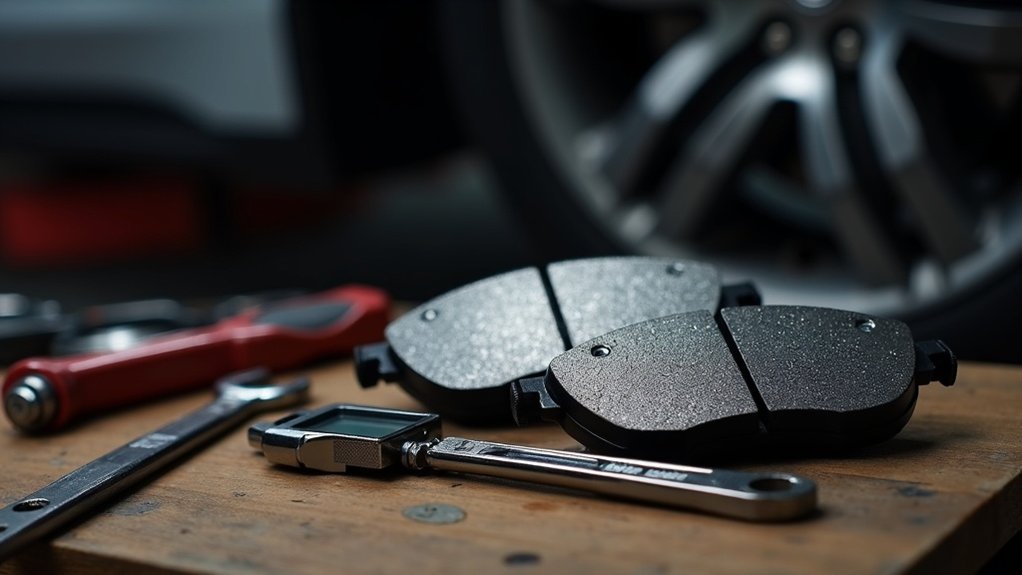
To bed in new brake pads, start by warming up your brakes with gentle driving. Then, accelerate to 30-40 mph and apply moderate braking without fully stopping. Perform firmer stops from 50 mph, followed by 3-4 hard stops from 45 to 5 mph and 8-10 from 60 to 15 mph. Allow cooling time between sets and monitor for unusual noises. Proper bedding enhances braking efficiency and prevents uneven wear—discover more techniques to guarantee your brakes function at their best.
Key Takeaways
- Warm up the brakes by driving gently for a few minutes before starting the bedding process.
- Perform moderate braking from 30-40 mph without coming to a complete stop to establish initial contact.
- Execute 3-4 hard stops from 45 mph to 5 mph, followed by 8-10 stops from 60 mph to 15 mph.
- Allow for cooling periods between sets of hard stops to ensure even pad material formation and prevent overheating.
- Monitor for unusual noises or issues throughout the process to ensure optimal brake performance.
Understanding Brake Bedding
When you install new brake pads, understanding the bedding process is essential for guaranteeing ideal braking performance.
Brake bedding involves transferring a thin layer of brake pad material onto the rotor surface, which guarantees optimal contact and friction. This bedding process typically requires a series of controlled stops to heat and cool the brakes, allowing the pads to conform to the rotor shape.
Proper bedding enhances braking efficiency and minimizes uneven wear, brake noise, and vibrations. Skipping this step can lead to decreased braking performance, so always follow manufacturer guidelines tailored for your specific brake pad type to achieve the best results.
Tools and Preparations Needed for Brake Bedding
Before you begin the brake bedding process, gather the necessary tools and make certain your vehicle is prepared for peak performance. Verify your new brake pads and rotors are securely installed and functioning properly.
Find an empty stretch of road, free from heavy traffic and obstacles, to conduct the bedding safely. Avoid wet, icy, or loose surfaces, which can lead to uneven pad wear and compromise brake performance.
While optional, a temperature gun can help monitor rotor temperatures during the process. Stay aware of your surroundings to maintain control, guaranteeing effective bedding for ideal braking system performance and a reliable complete stop.
Step-by-Step Guide to Bed Your Brakes
With your tools at the ready and your vehicle prepared, it’s time to begin the brake bedding process. Start by securely installing your new brake pads and rotors, ensuring everything functions properly.
Warm up the brakes by driving gently for a few minutes. Accelerate to 30-40 mph, applying moderate braking without stopping completely.
Next, increase your speed to 50 mph and perform firmer braking, avoiding ABS engagement. Conduct 3-4 hard stops from 45 mph to 5 mph, followed by 8-10 hard stops from 60 mph to 15 mph.
Allow cooling between sets and monitor brake performance for any unusual noises or issues.
Common Mistakes to Avoid During Brake Bedding
As you commence on the brake bedding process, avoiding common mistakes is crucial to guarantee peak performance.
Overheating your brakes by slamming on them can lead to improper bedding and glazing, reducing braking effectiveness.
Don’t skip the bedding process; it can cause uneven wear on your brake pads and components.
Always monitor brake temperature to prevent rotor damage from excessive heat.
Allow adequate cooling time between hard stops to ascertain an even layer of pad material forms.
Finally, practice controlled braking and avoid ABS engagement, as this can disrupt essential pad-to-rotor contact, leading to brake fade and diminished performance.
Maintaining Your Brakes After Bedding
Maintaining your brakes after bedding is essential for ensuring their longevity and peak performance.
Regularly inspect the brake pads and rotors for signs of uneven wear or glazing, as these issues can arise from improper bedding.
Consistent driving style is vital; avoid aggressive braking to prevent overheating, which can compromise braking performance.
After intense use, allow your brakes to cool to prevent thermal damage.
Periodically check brake fluid levels, ensuring the system is free from contamination to maintain hydraulic pressure.
Finally, stay alert for any unusual noises or vibrations during braking, as these can indicate problems that need immediate attention.