
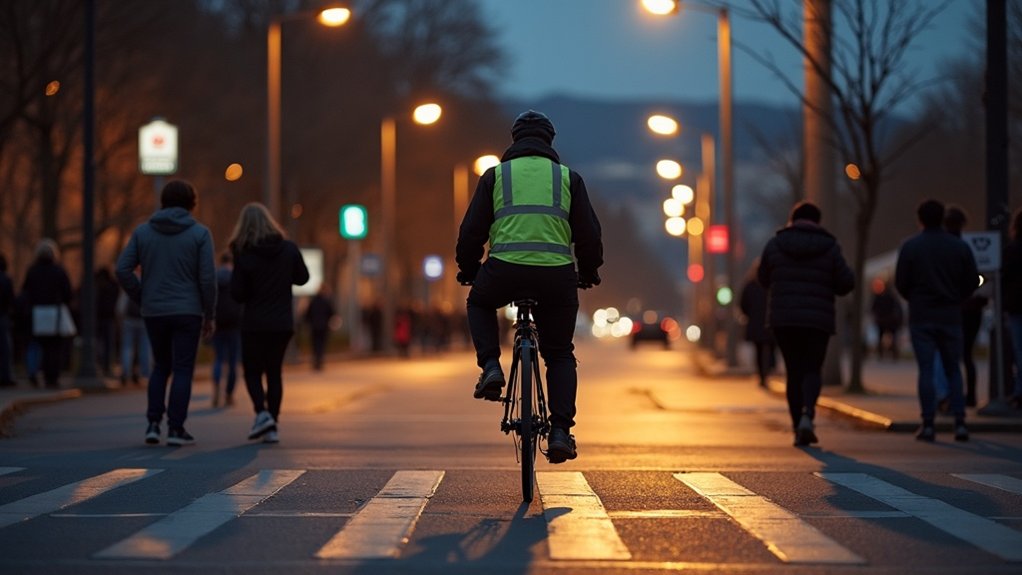
To avoid startle reactions in pedestrians, prioritize clear visibility and maintain low speeds. Use sound alerts, like bells or verbal warnings, to increase driver awareness and alert pedestrians. Stay attentive, avoid distractions like texting, and practice defensive walking techniques. Wearing bright or reflective clothing enhances your visibility. By implementing these strategies, you create a safer environment for pedestrians and can considerably reduce the risk of accidents. There’s more to explore about enhancing safety in urban areas.
Key Takeaways
- Ensure vehicles operate at lower speeds to give pedestrians more time to react and reduce startle incidents.
- Utilize sound alerts, such as bells or verbal warnings, to signal vehicle presence to pedestrians.
- Encourage pedestrians to wear bright or reflective clothing for improved visibility in all lighting conditions.
- Promote awareness of surroundings by discouraging distractions like texting or using headphones while walking.
- Implement effective communication strategies between drivers and pedestrians, including eye contact and using designated crosswalks.
Understanding Startle Reactions in Pedestrians
When pedestrians encounter sudden movements or noises from vehicles, they’re often caught off guard, leading to startle reactions that can create dangerous situations.
To reduce these risks, you need to pay attention to your surroundings and stay alert. Factors like poor visibility and unexpected obstacles heighten the chances of being startled, particularly in busy areas.
Distractions can worsen these responses, so being aware of approaching cyclists or vehicles is essential. Effective communication, such as cyclists using bells or verbal alerts, can also help.
The Role of Speed in Pedestrian Safety
When you consider pedestrian safety, speed limits play an essential role in minimizing risks.
Lower speed zones, particularly near schools and playgrounds, not only enhance reaction times for drivers but also reduce the severity of potential accidents.
Impact of Speed Limits
Although many factors contribute to pedestrian safety, speed limits play an essential role in minimizing the risk of accidents and enhancing survival rates.
By enforcing lower speed limits, especially in high-traffic and residential areas, you can help protect pedestrians.
Consider these key points:
- Speed limits reduce collision severity.
- A vehicle traveling at 20 mph offers a 90% survival rate.
- School zones often have limits as low as 15 mph.
- A 5 mph reduction can decrease fatal accidents by 30%.
- Compliance with speed limits fosters a predictable environment, allowing pedestrians to look left and react safely.
Reaction Time Considerations
Understanding how vehicle speed affects pedestrian reaction time is vital for enhancing safety on our roads. At 20 mph, you have about 1.5 seconds to react to oncoming traffic, but that drops to under one second at 40 mph. This drastic reduction increases accident likelihood, making it imperative for drivers to adhere to speed limits.
When you’re crossing, make eye contact with drivers to guarantee they see you. Slower speeds, especially in residential areas and near schools, can mitigate startle reactions, providing you with the necessary time to react.
Prioritizing speed awareness leads to improved outcomes for everyone.
Safe Speed Zones
Speed plays a pivotal role in pedestrian safety, greatly influencing the likelihood of accidents. Implementing safe speed zones is essential, especially in high-traffic areas. Here’s why:
- Lower speed limits increase pedestrian survival rates.
- A vehicle traveling at 30 mph gives a pedestrian a 50% survival chance.
- Designating safe speed zones during peak times reduces accidents.
- Authorities enforce penalties to guarantee compliance in these areas.
- Legal representation may be necessary if accidents occur due to speeding.
Importance of Sound Alerts for Drivers
Sound alerts play an essential role in enhancing your awareness as a driver, especially in urban environments where pedestrians are prevalent.
By using auditory signals, you can effectively alert pedestrians to your presence, reducing the chance of surprise encounters.
Implementing consistent sound alert systems not only promotes safety but also fosters a more harmonious relationship between drivers and pedestrians.
Enhancing Driver Awareness
While maneuvering through urban environments, drivers often face challenges in detecting nearby pedestrians, particularly in low-visibility conditions.
Sound alerts can greatly enhance driver awareness, especially for those in quieter electric or hybrid vehicles. By utilizing auditory cues, you can improve your ability to notice pedestrians, thereby reducing the risk of collisions.
- Reflective clothing increases pedestrian visibility.
- Auditory warnings prompt drivers to slow down.
- Sound alerts are vital in dense traffic areas.
- Enhanced awareness leads to more vigilant driving.
- Implementation of sound systems in all vehicles is necessary.
These measures collectively foster a safer urban environment for everyone.
Alerting Pedestrians Effectively
Effective communication between drivers and pedestrians is essential for enhancing safety in urban environments, particularly as vehicle technology evolves.
Sound alerts, like vehicle horns, play an important role in warning pedestrians of approaching vehicles, greatly reducing pedestrian accidents. Research shows that pedestrians are more alert to low-speed vehicles when sound alerts are employed.
The National Safety Council advocates for clear auditory signals, allowing pedestrians to anticipate traffic. With over 60% of pedestrian accidents linked to a lack of awareness, implementing sound alerts in high foot traffic areas can minimize startle reactions, fostering a safer atmosphere for everyone on the road.
Encouraging Pedestrian Awareness and Focus
How can pedestrians enhance their safety in an increasingly distracted world? By prioritizing awareness and focus, you can greatly reduce your risk of accidents.
Here are some key strategies:
- Remain alert and aware of your surroundings.
- Avoid distractions like texting or using headphones.
- Wear bright or reflective clothing for better visibility.
- Engage in defensive walking, like making eye contact with drivers before crossing.
- Follow traffic signals and use designated crosswalks.
Best Practices for Approaching Crosswalks
As you approach a crosswalk, slowing down is essential for ensuring the safety of both yourself and pedestrians.
Watch for individuals waiting to cross the street, and be ready to yield, as they typically have the right of way.
Always be on the lookout for pedestrians at crosswalks and be prepared to yield, as they usually have the right of way.
Use your vehicle’s headlights in low visibility to enhance your presence, ensuring pedestrians can see you.
Activate your turn signals early to clarify your intentions, reducing confusion among all road users.
Stay vigilant for unexpected movements, especially from children or those with mobility impairments, as they may not recognize oncoming motor vehicle traffic.
Your attentiveness is vital for preventing startle reactions.
Legal Implications of Pedestrian Accidents
Approaching crosswalks with caution not only protects pedestrians but also reduces the risk of serious legal consequences for drivers. When drivers fail to pay attention, they may face penalties, including fines and higher insurance rates.
In 2023, pedestrian accidents represented 17.9% of traffic fatalities, emphasizing the need for awareness. Remember:
- Pedestrians have the right of way.
- Negligence can lead to liability for damages.
- State laws vary on pedestrian rights.
- Consult a lawyer for legal options post-accident.
- When a sidewalk is available, encourage pedestrian use for safety.
Understanding these implications safeguards both you and pedestrians.