
To avoid speed wobble on downhills, make certain your bike’s components are tight and well-maintained, especially the headset and wheels. Position yourself by getting into the drops and clamping your knees against the top tube to stabilize vibrations. Keep a relaxed grip on the handlebars to allow natural bike movement. Be mindful of your weight distribution over the pedals and maintain an even posture. There are more techniques to enhance stability that you might find beneficial.
Key Takeaways
- Position yourself in the drops to lower your center of gravity and improve stability during downhill rides.
- Clamp your knees against the top tube to help dampen vibrations and enhance control.
- Maintain a relaxed grip on the handlebars to allow the bike to self-stabilize effectively.
- Ensure regular bike maintenance, including tight headsets and aligned wheels, to prevent speed wobbles.
- Gradually increase your speed on familiar descents to build confidence and reduce the likelihood of wobbling.
Understanding Speed Wobble in Cycling
When you’re cycling downhill at high speeds, it’s essential to understand speed wobble, as it can pose a serious risk.
Speed wobble occurs due to oscillations influenced by factors like rider tension, upper body stiffness, and external conditions. Loose front hubs, misaligned wheels, and poor bike fit can exacerbate this issue. Heavier riders often experience more pronounced wobbles due to weight distribution.
To minimize wobble, guarantee proper bike fit and maintain a relaxed grip. Adjusting your body position—like clamping your knees against the top tube—can help stabilize the bike, making your descent safer and more controlled.
Techniques to Stabilize Your Ride
To stabilize your ride during fast descents, it’s crucial to adopt specific techniques that enhance your control and minimize the risk of speed wobbles.
Position yourself in the drops to lower your center of gravity, enhancing balance. Clamp your knees against the top tube to dampen vibrations, which helps stabilize the bike during unexpected wobbles.
Maintain a relaxed grip on the handlebars to allow the bike to self-stabilize. Pedaling can disrupt natural frequencies, so do so judiciously.
Regularly shrug your shoulders and adjust your posture to absorb shocks from road imperfections, further contributing to a smoother ride.
Equipment Choices for Enhanced Stability
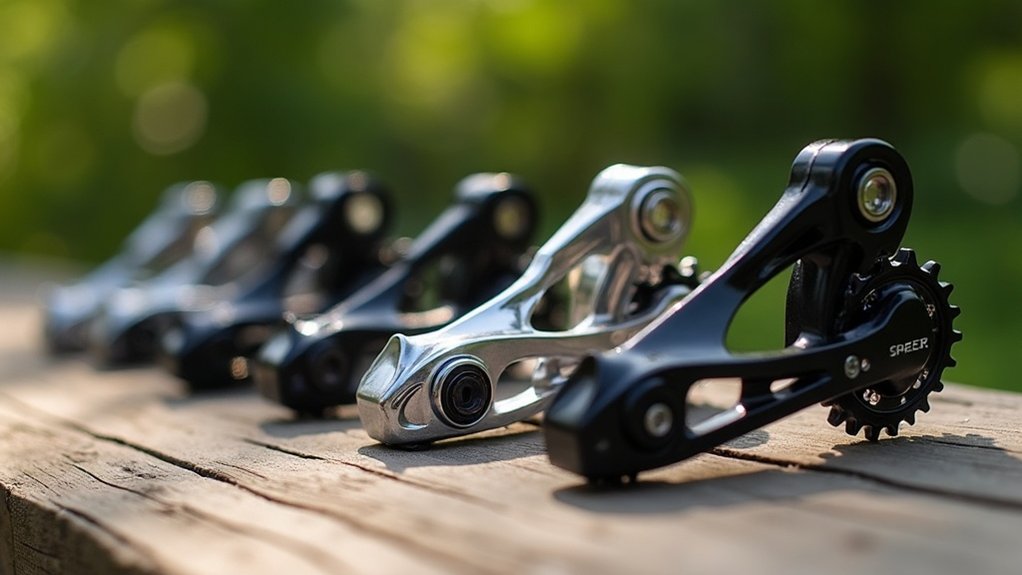
Selecting the right equipment is vital for enhancing your stability during high-speed descents. A bike frame made from thicker gauge tubing provides the stiffness needed to combat wobble, while high spoke count wheels offer better stability. Opting for a fork with less rake increases trail, improving handling. Don’t forget to guarantee a proper bike fit; an ill-fitting bike can lead to poor weight distribution. Regular maintenance of components like the headset and wheels is essential to prevent misalignment.
| Equipment Type | Impact on Stability |
|---|---|
| Thicker Gauge Frame | Increased stiffness |
| High Spoke Count Wheels | Better stability |
| Less Rake Fork | Enhanced handling |
Rider Positioning for Better Control
Even with the right equipment, rider positioning plays a key role in maintaining control during high-speed descents.
To enhance stability and reduce the risk of speed wobbles, consider these tips:
- Keep your knees pressed against the top tube to dampen vibrations.
- Get into the drops to lower your center of gravity.
- Distribute your weight evenly over the pedals for better balance.
- Relax your grip on the handlebars to allow natural bike movement.
Community Insights and Best Practices
While you might’ve your own techniques for managing speed wobbles, connecting with fellow cyclists can offer invaluable insights and best practices.
Engage with your community to discuss personal experiences and effective methods. Experienced riders often recommend clamping your knees against the top tube to help stabilize your bike.
Gradually increasing your speed on familiar descents builds confidence, as understanding the terrain reduces wobbles. Participating in group rides allows you to observe others’ body positioning, gaining valuable tips.
Finally, regular bike maintenance, like ensuring a tight headset and balanced wheels, is essential to minimize the chances of encountering speed wobbles.